
Crochet Tulip Bouquet Ideas
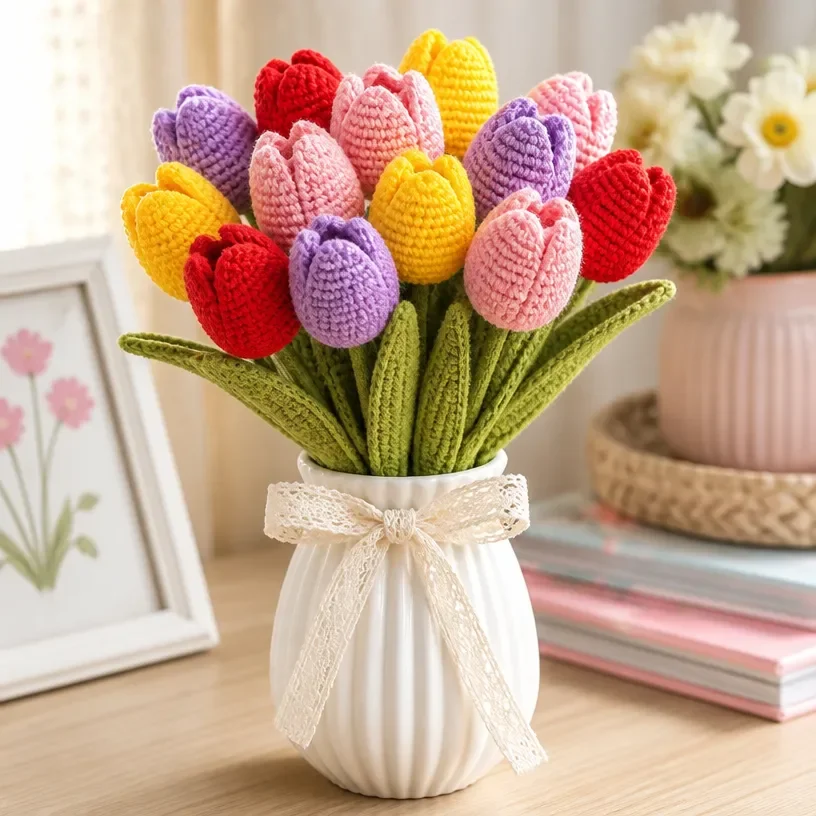
Crochet tulip bouquet ideas center on a simple, recognizable floral concept: gathered handmade flowers presented as one coordinated arrangement. The strongest visual appeal comes from repetition the tulip shape appears across the bouquet, creating a unified floral identity rather than a mixed collection of unrelated blooms. A colorful arrangement can feel cheerful and seasonal, while a restrained palette can create a softer, more refined display.
Because the project information identifies the design as inspiration rather than a complete pattern, its value lies in the visual decisions it suggests: how flower color affects mood, how repeated blooms create bouquet rhythm, and how presentation can turn individual crochet flowers into meaningful decor or a handmade gift. The following ideas focus on those design qualities without adding unsupported construction details.
What Makes This Bouquet Stand Out
The defining feature is its tulip-focused composition. Using one recognizable flower concept throughout gives the bouquet a clear identity and makes the arrangement feel intentional. Instead of relying on many flower varieties, the design can draw interest from repetition, color distribution, and the way the blooms are grouped.
Tulips also bring a naturally upright, graceful character to floral styling. Even when the exact proportions and construction are not specified, the flower concept suggests a bouquet with a clean silhouette and a spring-inspired mood. This makes crochet tulip bouquets especially useful for readers who want handmade flowers that feel decorative without becoming visually complicated.
The bouquet idea can be understood through four design elements:
- Repeated flower form: Consistent tulip-inspired blooms create cohesion.
- Color grouping: Similar or contrasting colors can change the overall mood.
- Bouquet rhythm: Repeated flowers create visual movement across the arrangement.
- Presentation: The final display determines whether the bouquet feels casual, romantic, modern, or gift-ready.
These principles can inspire an original crochet flower project while leaving technical decisions open for the maker or for a separately supplied pattern.
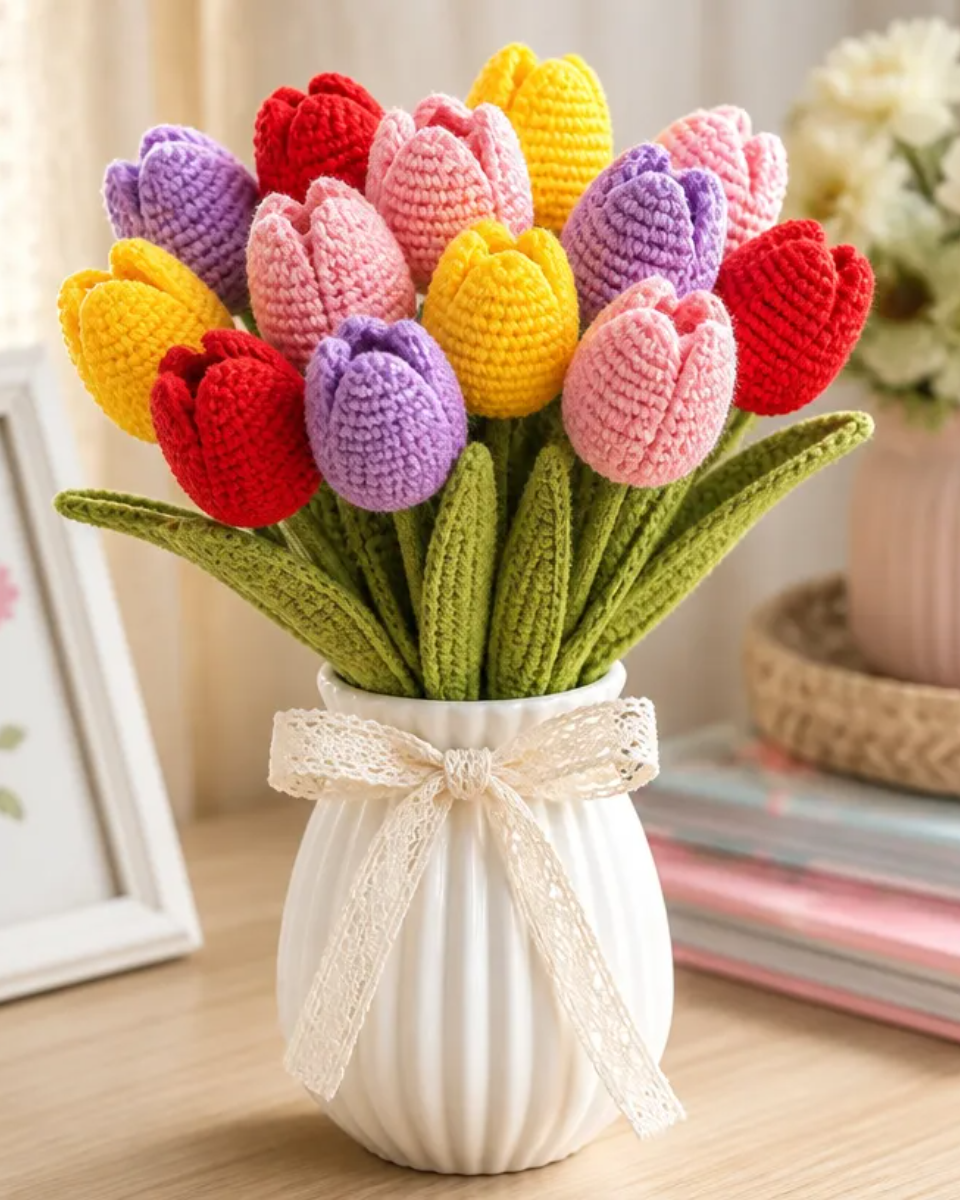
Materials Identified
Materials are not specified in the available project information. No yarn fibre, yarn weight, hook size, stem material, wrapping material, adhesive, measurements, or other supplies can be confirmed for this design.
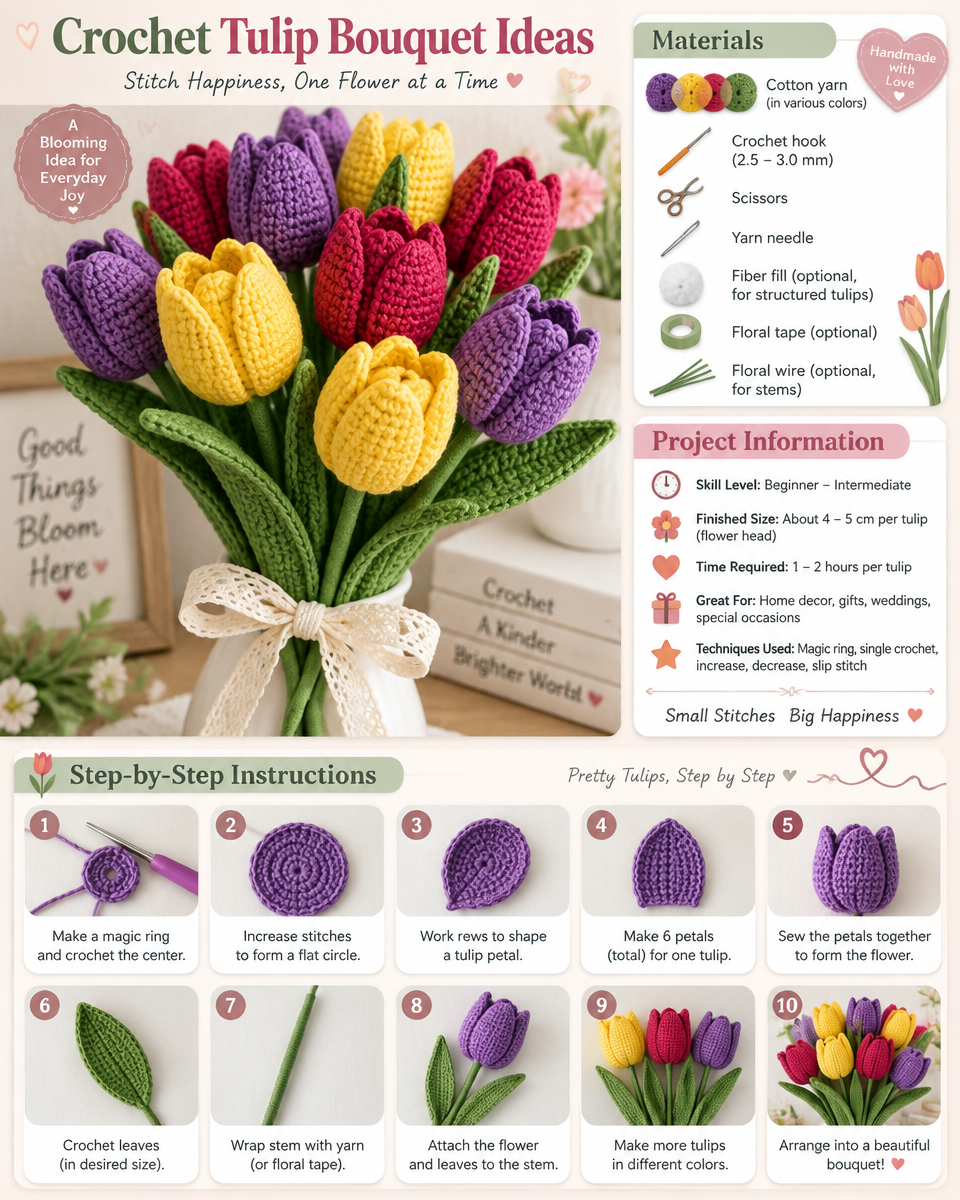
Reading the Floral Composition
A tulip-centered bouquet gains much of its impact from repetition. When several flowers share the same general form, the eye reads them as a collection, and the bouquet feels more substantial than a single bloom displayed alone. This is particularly effective for handmade flowers because repeated forms emphasize the care and consistency behind the overall arrangement.
The composition may be approached as a field of related blooms rather than as a bouquet with one dominant flower surrounded by many different supporting species. That gives the design a cleaner visual language. Any variation can come from color, height, spacing, or orientation rather than from introducing unrelated floral shapes.
A dense grouping would create a fuller, more abundant impression. A looser arrangement would allow individual flowers to remain visually distinct and could feel more airy or garden-inspired. Both directions can suit tulips; the choice depends on the intended mood and display setting.
Focal Areas and Repetition
Even in a single-flower bouquet, focal areas can be created through color. A cluster of brighter tulips may draw attention toward the center, while softer or more neutral flowers around it can create a calmer edge. Alternatively, evenly distributed colors can produce a playful, balanced effect with no single bloom acting as the focal point.
Repetition does not have to mean complete uniformity. A bouquet can still feel coordinated while using several related shades. For example, a range of pinks could create gentle tonal movement, while a combination of warm red, orange, and yellow could make the display more energetic.
Bouquet Silhouette
Tulip bouquets can suggest several broad silhouettes:
- A rounded arrangement feels abundant and gift-like.
- A slightly open arrangement gives individual flowers more space.
- A compact cluster creates a tidy, graphic presentation.
- A looser grouping feels more natural and garden-inspired.
These are visual directions rather than construction instructions. The supplied information does not establish the exact shape, dimensions, or assembly method of the pictured project.
Exploring the Color Palette
Color is one of the most flexible ways to personalize crochet flower bouquets. Tulips are visually strong enough to support both a single-color treatment and a multicolor arrangement.
A monochromatic bouquet, such as one built around several shades of pink, would emphasize softness and continuity. A single dominant color can make the bouquet feel polished and cohesive, especially when the presentation is kept simple.
A mixed-color bouquet creates a more cheerful and expressive effect. Warm hues such as coral, orange, yellow, and red can suggest sunlight and seasonal abundance. Cooler pinks, purples, and soft blues can create a quieter floral mood when balanced carefully.
Useful palette directions include:
- Soft romantic: blush, pale pink, cream, and muted green.
- Fresh spring: yellow, pink, light green, and white.
- Bold garden color: red, orange, magenta, and yellow.
- Modern tonal: several shades of one color with a restrained neutral.
- Playful mixed bouquet: distinct bright colors repeated throughout the arrangement.
These palette suggestions are styling inspiration only. They do not indicate the colors used in the original project unless specifically shown or stated in the available source information.
Styling Directions for Handmade Tulips
The repeated tulip form lends itself to several decorative approaches.
Romantic Floral Styling
Soft pinks and gentle tonal differences can give the bouquet a romantic character. This direction is appropriate for a thoughtful handmade gift, a bedroom display, or a delicate seasonal arrangement. The overall effect is strongest when the colors remain related rather than sharply contrasting.
Cottage-Inspired Display
A more relaxed grouping can suggest a cottage or garden-inspired style. Varied flower colors, a less rigid silhouette, and an informal presentation can make the arrangement feel cheerful and collected. The focus remains on the tulip form, but the styling becomes less formal.
Modern Minimalist Presentation
A limited palette and a compact arrangement can create a cleaner, more contemporary look. One dominant flower color gives the bouquet graphic clarity, while a simple display allows the crochet texture to remain the main decorative feature.
Bright Seasonal Decor
A colorful bouquet can work as spring or summer-inspired decor. Stronger color contrast makes the flowers noticeable on a shelf, desk, side table, or other display area. This approach treats the bouquet as a small art object as well as a floral arrangement.
Bouquet Composition and Presentation
The way a bouquet is presented can change its character as much as the flowers themselves. A compact, closely grouped display feels finished and gift-ready. A more open arrangement emphasizes each individual bloom and can feel lighter.
Color distribution is especially important. Repeating each color throughout the bouquet usually creates a more connected appearance than placing every shade in one isolated section. On the other hand, deliberate color blocks can create a bold, modern effect when that contrast is part of the intended design.
The display setting also matters:
- A vase or container can make the bouquet read as home decor.
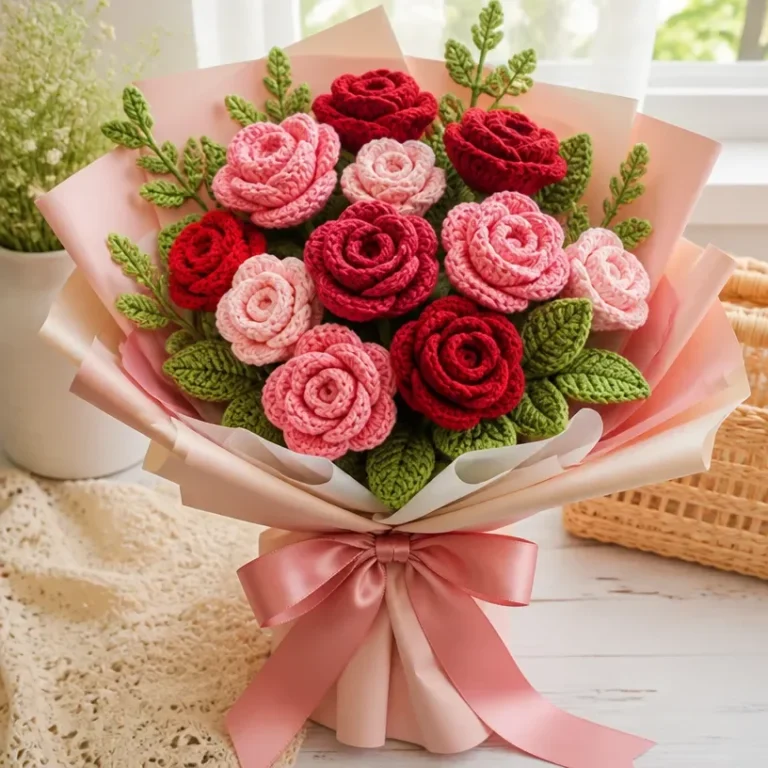
- A hand-held presentation can emphasize gifting.
- A simple tabletop arrangement can suit a desk, shelf, or bedside surface.
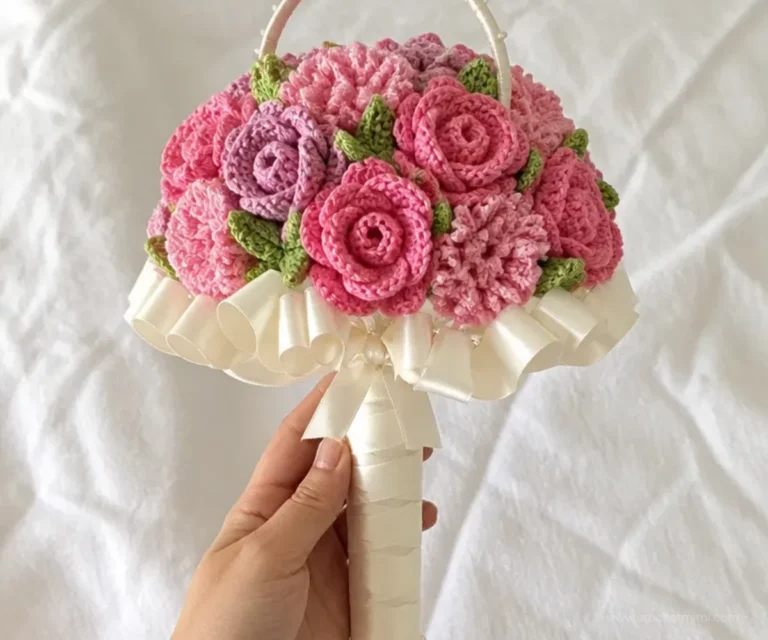
- A carefully styled bouquet can provide inspiration for wedding or bridal florals.
The project information does not specify the container, wrapping, stems, or hidden assembly. Those details should therefore be treated as open design choices rather than confirmed features.
Ways to Use the Idea
A crochet tulip bouquet can inspire several non-technical floral projects and presentation themes:
- Handmade gift inspiration: A bouquet of repeated tulip blooms has a clear, thoughtful identity.
- Spring decor: Use the tulip theme to bring a seasonal floral accent to a room.
- Desk or shelf display: A compact arrangement can add color without relying on fresh flowers.
- Mother’s Day inspiration: A coordinated bouquet can communicate appreciation through handmade design.
- Birthday presentation: Bright, varied colors can make the arrangement feel celebratory.
- Wedding or bridal inspiration: Soft tonal tulips offer a visual direction for romantic floral styling.
- Keepsake decor: Handmade flowers can be considered for displays where the visual memory of a bouquet matters more than using fresh blooms.
These are design and gifting possibilities, not claims about durability, care, or suitability for a particular environment.
Visual Variations to Explore
The tulip bouquet concept can be changed substantially through styling while keeping its central floral identity.
Change the Color Balance
Make one shade dominant for a more unified appearance, or distribute several colors evenly for a lively bouquet. A mostly neutral arrangement with a few brighter accents can create a more refined focal point.
Create a Tonal Bouquet
A tonal palette uses different shades within one color family. Pink, coral, or purple tulips can be arranged from pale to deep, creating visual depth without introducing strong contrast.
Use a High-Contrast Direction
Pairing clearly different colors can make the bouquet feel bold and contemporary. This is particularly effective when the flowers are repeated consistently, because the shared form keeps the arrangement from feeling disconnected.
Shift the Presentation Mood
The same crochet flower bouquet can appear romantic, modern, rustic, or cheerful depending on the surrounding display. Consider the relationship between flower colors, container style, wrapping appearance, and the setting where the bouquet will be shown.
From Inspiration to an Original Floral Project
When planning an original crochet flower project inspired by this idea, begin with the visual question rather than the technical one: what should the bouquet communicate?
Choose whether the arrangement should feel soft, bright, elegant, relaxed, or playful. Then decide whether one tulip color should lead the design or whether several colors should share attention. A single flower type creates a strong and recognizable bouquet identity, while color variation provides enough change to keep the arrangement visually interesting.
Next, consider composition. Do you want the flowers to read as a full cluster, a loose garden-style grouping, or a compact decorative display? Think about how much space each bloom should appear to have and whether the bouquet should feel symmetrical or more naturally varied.
Finally, match the presentation to the occasion. A soft palette may suit a romantic gift, while vivid colors may be better for a birthday or seasonal display. The strongest bouquet ideas usually connect flower form, color, arrangement, and presentation instead of treating each choice separately.
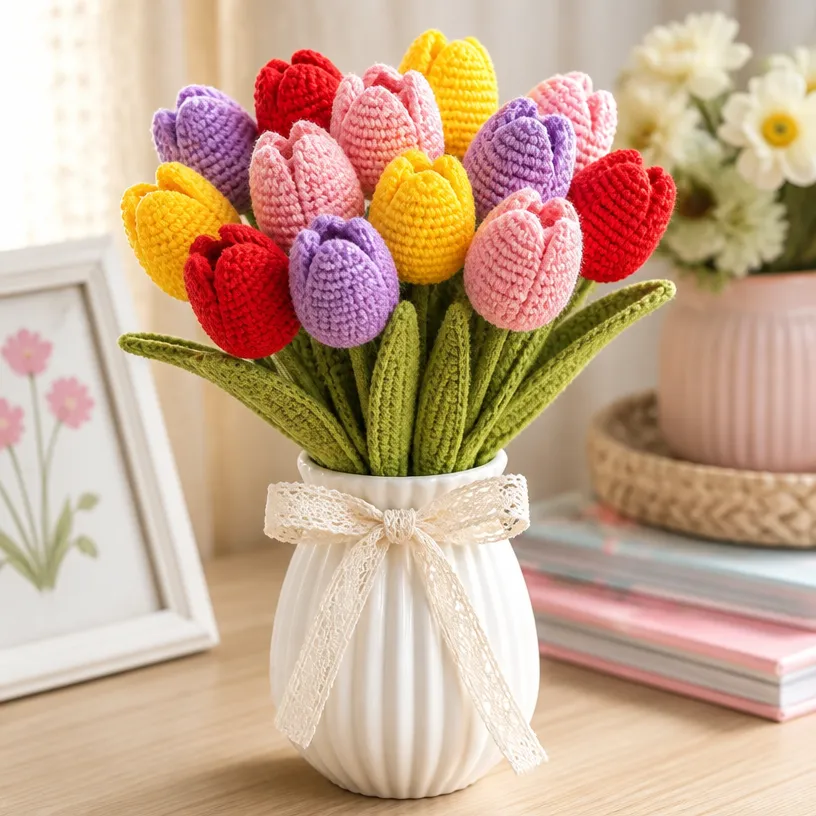
Frequently Asked Questions
What is the main floral idea behind this project?
The main idea is a bouquet centered on repeated tulip-inspired crochet flowers. Its visual identity comes from using one recognizable flower concept across the arrangement.
Is the exact flower construction identified?
No. The available project information supports discussion of the bouquet’s visual tulip theme, but it does not provide technical construction details, stitch information, measurements, or assembly instructions.
Can the bouquet use one color or several colors?
Both are viable visual directions. A single color or tonal palette can create a cohesive, refined look, while several related or contrasting colors can make the bouquet more cheerful and expressive.
What occasions could this bouquet inspire?
The design could inspire spring decor, handmade gifts, Mother’s Day presentations, birthday arrangements, wedding or bridal styling, and keepsake floral displays. These are presentation ideas rather than confirmed uses of a specific finished project.
Are complete instructions included in the supplied information?
No. The supplied information classifies this project as inspiration and does not include a complete crochet pattern or step-by-step tutorial.
Conclusion
The strongest lesson from these crochet tulip bouquet ideas is the visual power of repetition. A consistent tulip form gives the bouquet a clear identity, while color balance, density, and presentation determine whether it feels romantic, bright, modern, or garden-inspired. For readers seeking additional tulip-focused inspiration, the crochet tulip flower reference offers a separate pattern resource, while crochet tulip bouquet examples can broaden ideas for floral presentation.