
How to Plan a Crochet Flower Bouquet
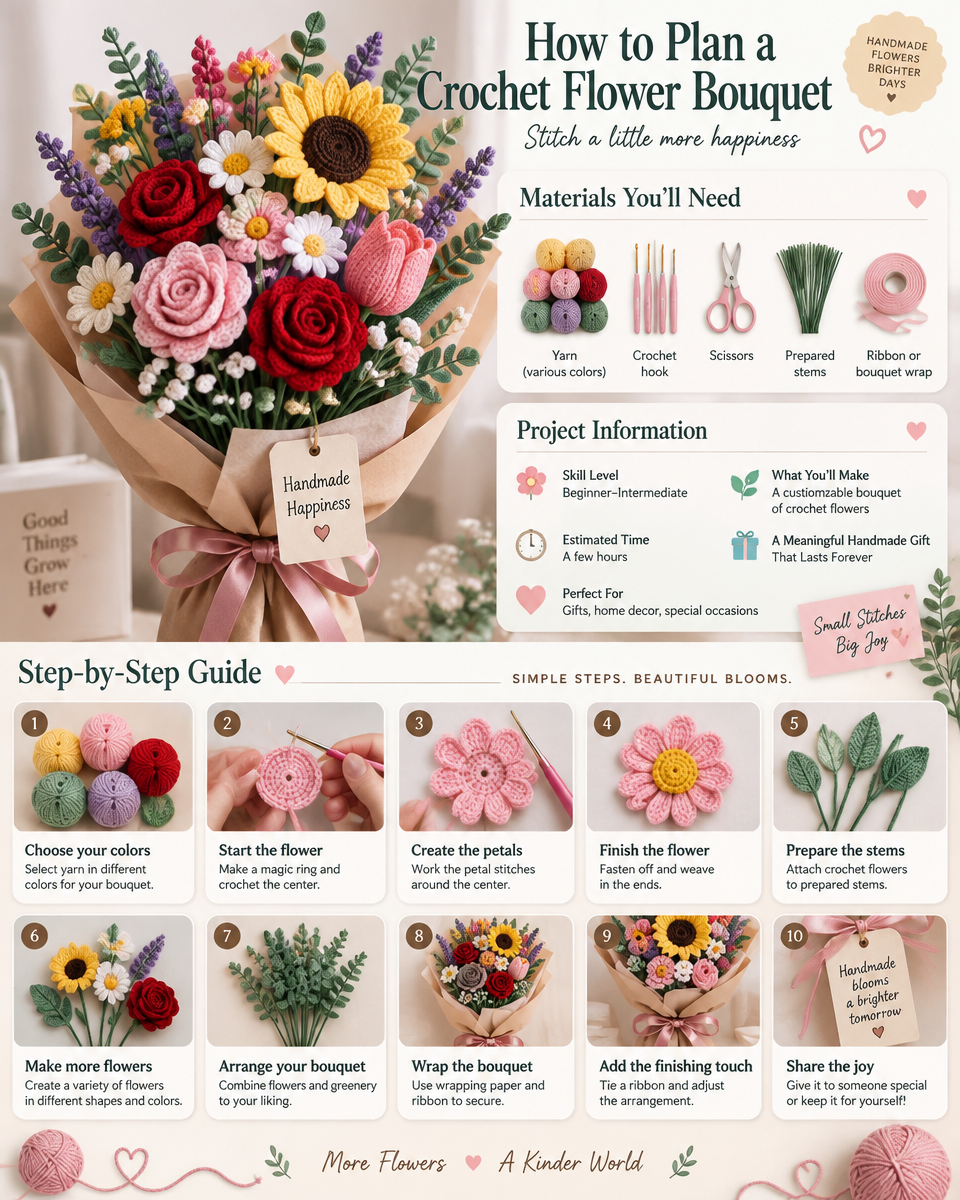
A crochet flower bouquet is a study in color, shape, and presentation. Rather than functioning as a single isolated bloom, this project brings handmade flowers together with complementary leaves or greenery, prepared stems, and a finished ribbon or bouquet wrap. The result is a floral arrangement with a soft, crafted character that can be adapted for decor, gifting, or occasion styling.
The strongest inspiration comes from treating the bouquet as a complete visual composition. Flower colors establish the mood, greenery adds balance, and the wrapping gives the arrangement a deliberate finishing point. Because the project information focuses on design elements rather than a full crochet pattern, it is best approached as a source of floral ideas: a way to consider how crochet flowers might work together as a bouquet rather than as separate pieces.
What Makes This Crochet Bouquet Stand Out
The defining feature of this project is its bouquet-centered design. Individual crochet flowers are considered alongside leaves or greenery, prepared stems, and a presentation finish. That combination gives the arrangement the visual language of a traditional bouquet while keeping the texture and personality of handmade flowers.
Several design choices are especially useful to consider:
- Flowers provide the main visual interest. Their colors and shapes establish the character of the bouquet.
- Leaves or greenery create contrast. Green elements can separate blooms and prevent the arrangement from appearing visually crowded.
- Prepared stems support the bouquet format. They allow the flowers and leaves to be viewed as an arrangement rather than a collection of loose motifs.
- Ribbon or bouquet wrap completes the presentation. The finish can help define the bouquet’s style, whether the overall look is soft, romantic, colorful, or understated.
This structure makes the project a useful reference for planning crochet flower bouquets with a clear focal point and a finished presentation.
Understanding the Floral Composition
A successful bouquet usually depends on relationships between its components rather than on one flower alone. In this project, the flowers form the primary group, while leaves or greenery act as supporting visual elements. That creates an opportunity to think about balance without relying on technical construction details.
Flowers as the focal group
The flowers should be considered the bouquet’s main color and texture story. A mixed-color arrangement can feel lively and expressive, while a more limited palette can make the bouquet appear coordinated and intentional. Even when several flowers share a similar shape, changes in color can create variation across the arrangement.
A bouquet based around one dominant flower color may feel calm and unified. A bouquet using several colors can feel more celebratory and decorative. The important design decision is not simply which colors are attractive individually, but how they look when gathered together.
Greenery as visual spacing
Leaves or greenery can do more than add a natural reference. They introduce visual pauses between flowers, helping each bloom remain distinguishable. Greenery may also soften the edge of the bouquet and make the arrangement feel more garden-inspired.
When planning the overall look, consider whether the greenery should be a noticeable part of the composition or a quieter supporting detail. A fuller green presence can create a leafy, botanical mood, while restrained greenery keeps attention on the flowers.
Bouquet silhouette
The arrangement can be imagined as a compact cluster, a looser group, or a rounded bouquet shape. These are visual directions rather than construction instructions. A dense silhouette emphasizes abundance and color, while a more open arrangement allows individual flowers and leaves to stand out.
The bouquet wrap also influences how the silhouette is read. A neat finish can make the arrangement feel polished, while a softer or more relaxed presentation can support a rustic or cottage-inspired mood.
Exploring the Color Palette
The materials identify yarn in various colors, which leaves the palette open to interpretation. This flexibility is one of the project’s strengths because the same flower bouquet concept can be adapted for different seasons, rooms, recipients, or occasions.
Soft and romantic
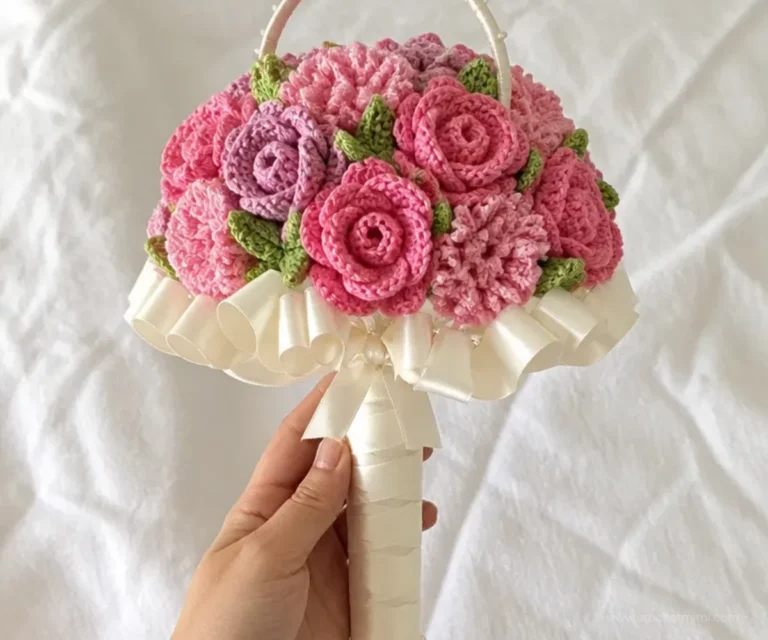
A palette built around gentle pinks, creams, and other light tones can create a delicate floral impression. This direction suits romantic gifting, bridal inspiration, and quiet home decor. The greenery can provide enough contrast to keep pale flowers from blending together.
Bright and celebratory
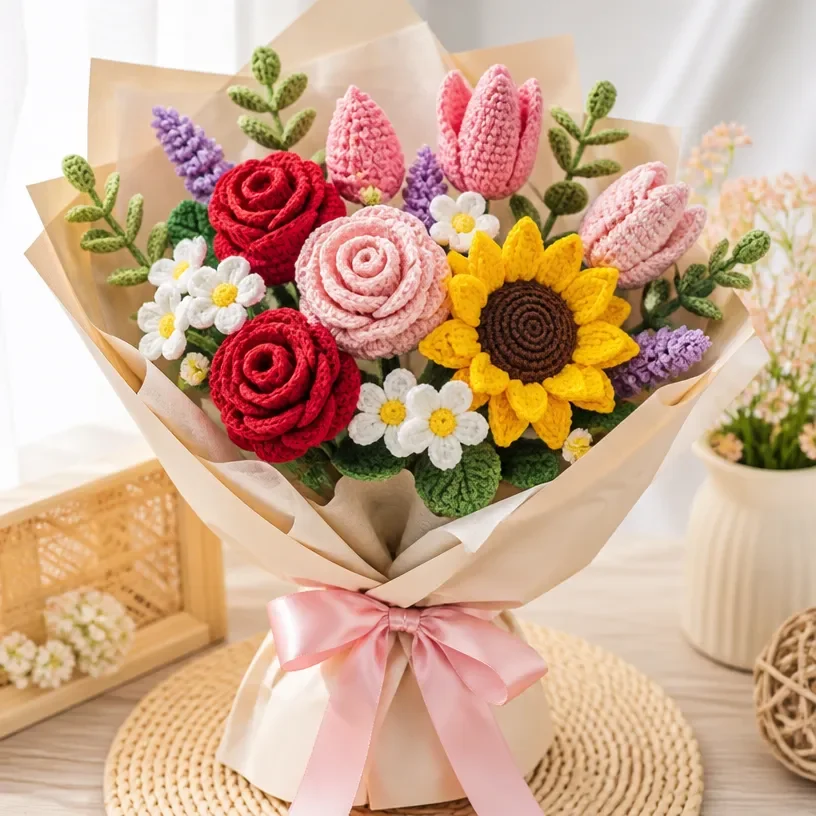
Stronger, clearly contrasting colors can make the bouquet feel cheerful and expressive. This approach is suitable for a birthday presentation, a festive display, or a colorful shelf arrangement. In a vibrant palette, the bouquet wrap can either echo one of the flower colors or provide a neutral visual boundary.
Tonal and coordinated
A bouquet using several related shades can feel especially cohesive. For example, flowers in variations of one color family can create depth without a highly contrasting appearance. This is a useful direction when the desired result is modern, calm, or refined.
Seasonal inspiration
The palette can also suggest a season without requiring a literal theme. Soft, fresh colors can evoke spring, richer shades can suggest autumn, and bright combinations can support a summer mood. These are styling possibilities rather than fixed requirements, allowing the bouquet concept to remain adaptable.
Styling Directions for the Bouquet
The project’s combination of handmade flowers, greenery, prepared stems, and wrapping can support several visual styles.
Cottage-inspired
A varied flower palette, visible greenery, and a relaxed wrap can create a garden-like feeling. This style works well when the arrangement is meant to look collected rather than strictly symmetrical.
Romantic
Soft colors and a carefully coordinated ribbon or bouquet wrap can give the arrangement a tender, gift-ready character. The emphasis is on gentle color relationships and a polished finish.
Modern
A limited palette, restrained greenery, and a simple presentation can make the bouquet feel contemporary. A monochromatic or two-color direction is particularly effective for a cleaner visual effect.
Colorful and expressive
Using several distinct flower colors makes the bouquet a stronger decorative statement. This style is well suited to cheerful gifting or a display that needs a noticeable burst of handmade color.
Bouquet Composition and Visual Balance
Planning a crochet flower bouquet involves deciding how the components should relate visually. The controlled project information supports flowers, leaves or greenery, prepared stems, and a finishing wrap, but it does not specify a particular arrangement shape or flower hierarchy. That means the most useful planning questions are conceptual.
Consider the following:
- Which flower color should attract attention first?
- Should the flowers appear evenly mixed or grouped by color?
- Should greenery be clearly visible around the flowers?
- Would a compact bouquet feel more appropriate than a loose one?
- Should the wrapping blend into the palette or provide contrast?
- Is the bouquet intended to feel formal, relaxed, seasonal, or playful?
A bouquet with one clear focal color may feel more organized. A bouquet with evenly distributed colors may feel more energetic. Grouping similar colors can create visual blocks, while mixing them throughout the arrangement produces a more varied impression.
Greenery can also affect the perceived density. More visible leaves may make the bouquet feel fuller and more botanical. Less greenery keeps the flowers visually dominant and can result in a cleaner, more graphic presentation.
Presentation and Wrapping Ideas
Ribbon or bouquet wrap is not merely a finishing detail; it helps communicate the bouquet’s purpose. A coordinated wrap can make the arrangement feel gift-ready, while a contrasting finish can emphasize the flowers and create a stronger visual frame.
For a romantic presentation, consider a soft or light-colored wrap direction. For a modern bouquet, a simple, restrained finish may be most effective. A colorful arrangement can be paired with a neutral wrap when the flowers should remain the focus, or with a complementary color when the entire bouquet is intended as a bold statement.
The presentation can also be adapted to the setting. A bouquet intended for a shelf or desk may benefit from a visually balanced, compact appearance. A gift bouquet may place more emphasis on the wrap and overall first impression. For wedding or event inspiration, coordinated colors can help the flowers relate to a broader decorative theme.
Ways to Use the Idea
This crochet flower bouquet concept can inspire several non-technical applications:
- Handmade gift presentation: A finished bouquet can serve as a thoughtful alternative to fresh flowers.
- Shelf or desk decor: The arrangement can bring color and floral texture to a small display area.
- Seasonal decorating: Adjusting the color palette can align the bouquet with spring, summer, autumn, or a holiday setting.
- Wedding inspiration: Coordinated handmade flowers can inform a bridal bouquet or event color direction.
- Mother’s Day gifting: A lasting floral concept can be shaped around the recipient’s preferred colors.
- Birthday displays: Bright flowers and a celebratory wrap can create a cheerful presentation.
- Keepsake decor: The bouquet format can inspire a meaningful arrangement connected to a special occasion.
These uses are design possibilities, not claims about the project’s durability or specific suitability for any environment.
Visual Variations to Explore
The project can be personalized through appearance rather than technical changes. A few strong directions include:
Monochromatic bouquet
Choose one color family for the flowers and allow subtle shade differences to create interest. Greenery can remain a contrasting natural accent.
High-contrast bouquet
Pair clearly different flower colors to create a lively, graphic arrangement. A simple wrap can keep the overall appearance from becoming visually busy.
Soft pastel bouquet
Use a gentle palette for a delicate, romantic mood. This direction can suit spring decor, bridal inspiration, or a quiet handmade gift.
Bold statement bouquet
Choose saturated or strongly contrasting colors and let the flowers dominate the composition. A coordinating wrap can reinforce the confident presentation.
Minimal greenery
Keep leaves or greenery visually restrained so the bouquet reads primarily as a collection of handmade flowers. This can support a modern or color-focused design.
Garden-inspired presentation
Give greenery a more prominent visual role and favor a relaxed arrangement character. This can make the bouquet feel informal, abundant, and botanical.
Planning Your Own Floral Crochet Project
When using this project as inspiration, begin with the visual goal rather than with technical details. Decide what you want the bouquet to communicate: softness, celebration, romance, seasonality, or a strong decorative presence.
Next, choose the palette. Ask whether the flowers should be coordinated, contrasting, tonal, or multicolored. Then consider the role of greenery. It can frame the flowers, separate color groups, or simply add a natural accent.
It is also helpful to select a focal direction. You might emphasize one flower color, create an even mixture, or allow the bouquet wrap to become an important part of the presentation. Thinking through these choices before assembling the visual concept can help the finished arrangement feel intentional.
Finally, consider the recipient or setting. A birthday bouquet may benefit from brighter color, while a wedding-inspired arrangement may call for a softer and more coordinated palette. A desk display may suit a compact silhouette, while a decorative statement may call for greater visual fullness.
Materials Identified
The supplied project information identifies the following materials:
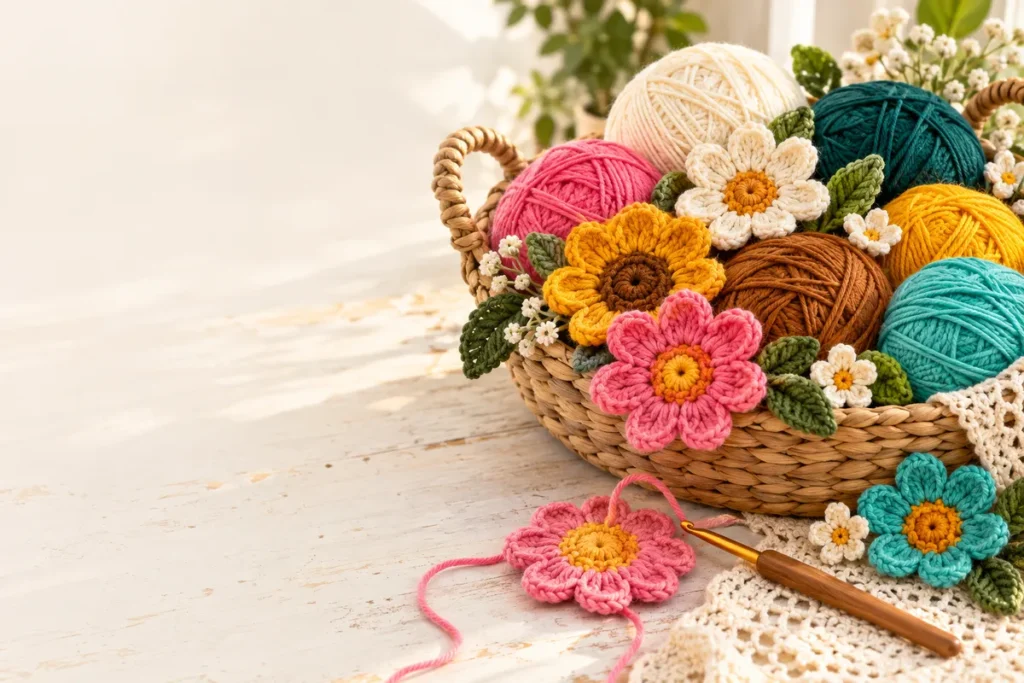
- Yarn (various colors)
- Crochet hook
- Scissors
- Prepared stems
- Ribbon or bouquet wrap
No yarn fibre, yarn weight, hook size, additional fastening supplies, or other construction materials are specified in the available information. The list should therefore be treated as the materials identified for this design, not as a complete technical supply list.
Floral Inspiration for Gifting and Decor
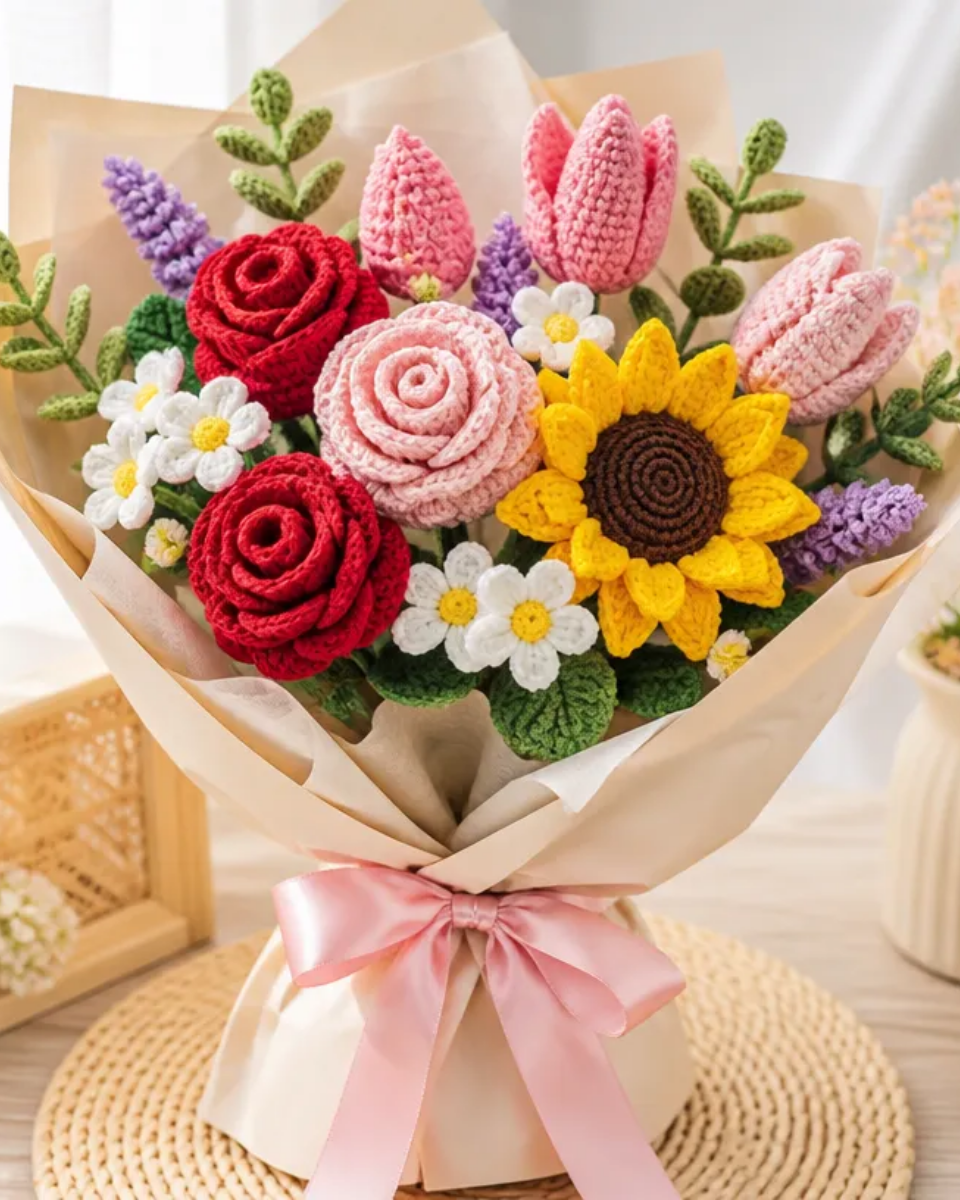
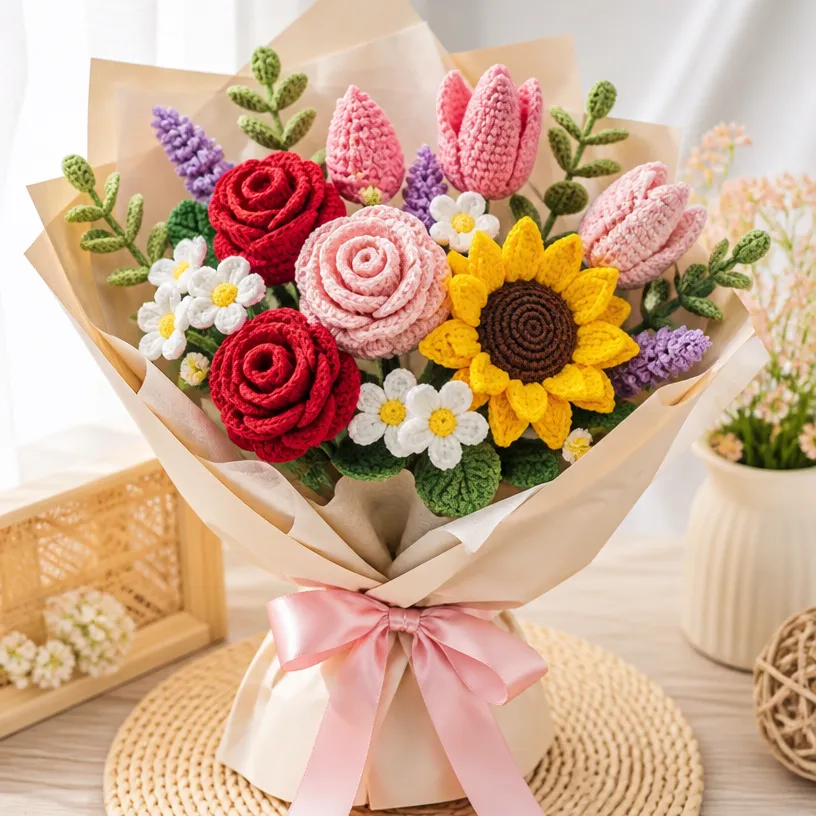
The bouquet format makes this project especially useful for thinking about handmade flowers as a presentation piece. Instead of treating each bloom as an independent crochet object, the arrangement gives the flowers a shared purpose and visual setting.
For gifting, color is an immediate way to personalize the idea. A recipient’s favorite shades can guide the bouquet, while the wrap can provide a final coordinated detail. For decor, the arrangement can be planned around the colors already present in a room or used as a seasonal accent.
The concept also lends itself to occasion styling. A soft palette can inform bridal or romantic decor, while brighter colors can support birthdays and celebrations. For a more neutral display, a limited color direction can keep the bouquet visually calm without losing the texture of handmade flowers.
What the Project Information Supports
The supplied information supports a broad design sequence: crochet the flowers using a chosen pattern, crochet leaves or greenery to complement the flowers, attach the completed flowers and leaves to prepared stems, and finish the arrangement with ribbon or bouquet wrap as desired.
This establishes the bouquet’s main components and presentation flow, but it does not provide a complete crochet pattern or detailed construction tutorial. Flower identity, stitch information, measurements, yarn specifications, hook size, and assembly methods are not given. The most responsible way to use this project is therefore as visual and creative inspiration for planning a floral arrangement.
Frequently Asked Questions
What is the main design idea behind this crochet flower bouquet?
The main idea is to combine crochet flowers with complementary leaves or greenery, prepared stems, and a finished ribbon or bouquet wrap. The focus is on creating a complete floral arrangement rather than displaying individual flowers separately.
Can the bouquet use different flower colors?
Yes. The materials specify yarn in various colors, so the palette can be interpreted in many ways. A coordinated, tonal, pastel, contrasting, or multicolored direction can all support the same bouquet concept.
Are specific flower species identified?
No specific flower species are identified in the supplied project information. The flowers should therefore be discussed as crochet flowers rather than assigned a particular botanical name.
Is a complete crochet pattern included?
No. The available information describes the project’s components and general design sequence, but it does not provide stitch instructions, counts, measurements, yarn details, or hook size. It should be treated as inspiration rather than a complete pattern.
How can the bouquet be styled for gifting?
The color palette and ribbon or bouquet wrap offer the clearest opportunities for personalization. Soft coordinated colors can create a romantic presentation, while brighter contrasts can make the bouquet feel festive and expressive.
Where could this floral arrangement be displayed?
The idea can inspire shelf decor, desk displays, seasonal arrangements, handmade gifts, and wedding or occasion styling. The final presentation can be shaped around the colors and atmosphere of the intended setting.
Conclusion
The strongest lesson from this crochet flower bouquet is that floral design depends on relationships: flowers need a considered color story, greenery can provide balance, prepared stems support the bouquet format, and ribbon or bouquet wrap gives the arrangement a finished identity. For additional visual inspiration, explore these crochet flower bouquet ideas and this crochet flower bouquet business planning resource. The project is best approached as a flexible source of handmade floral inspiration, allowing the bouquet’s palette, density, and presentation to reflect its intended gift, display, or occasion.