
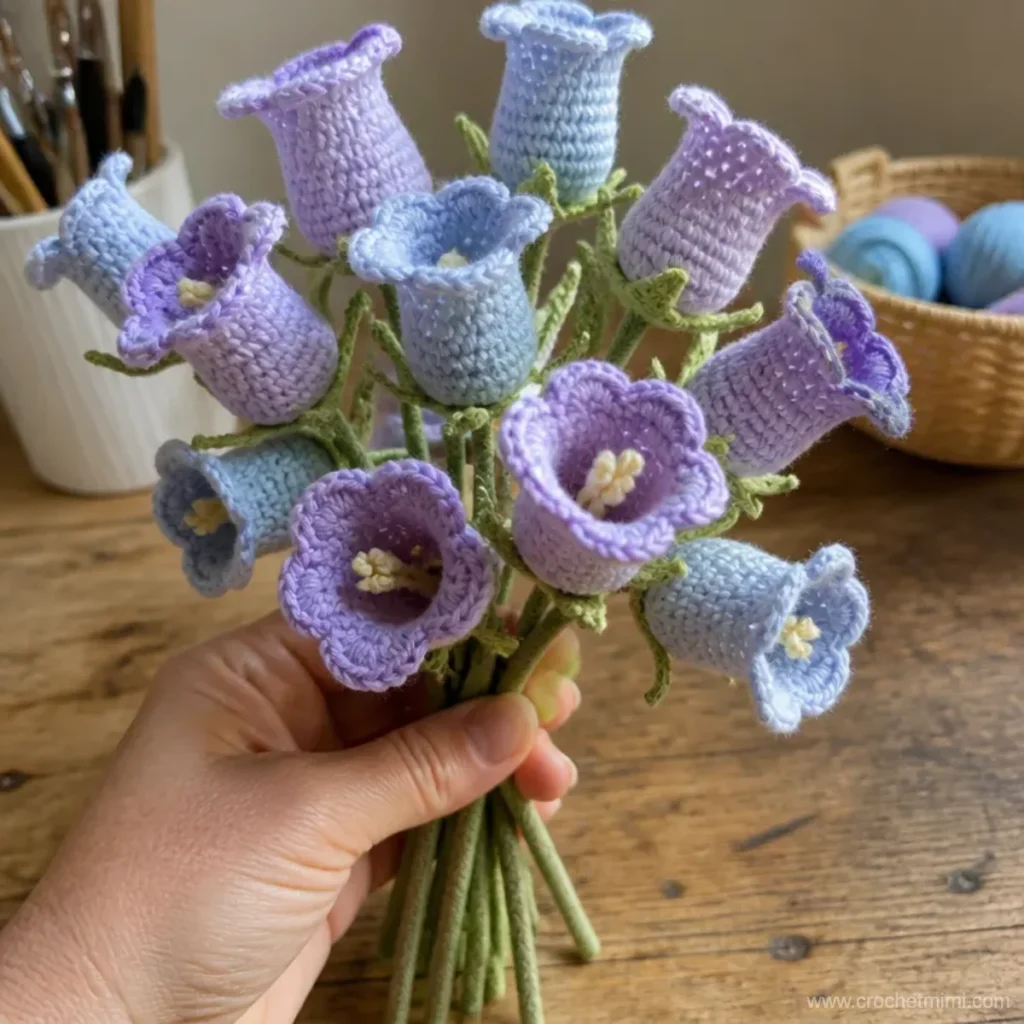
Canterbury Bells bring a graceful bell shape to handmade floral arrangements, making them an appealing choice for crochet flower lovers who enjoy botanical décor. Happy Patty Crochet’s design presents these Campanula-inspired flowers as bouquet components, with an open flower measuring approximately 2 inches / 5 cm according to the public listing. For ideas on combining bell-shaped blooms with other handmade flowers, explore this guide to planning a crochet flower bouquet. The paid pattern is the source to follow for construction details.
Why You’ll Love This Crochet Project
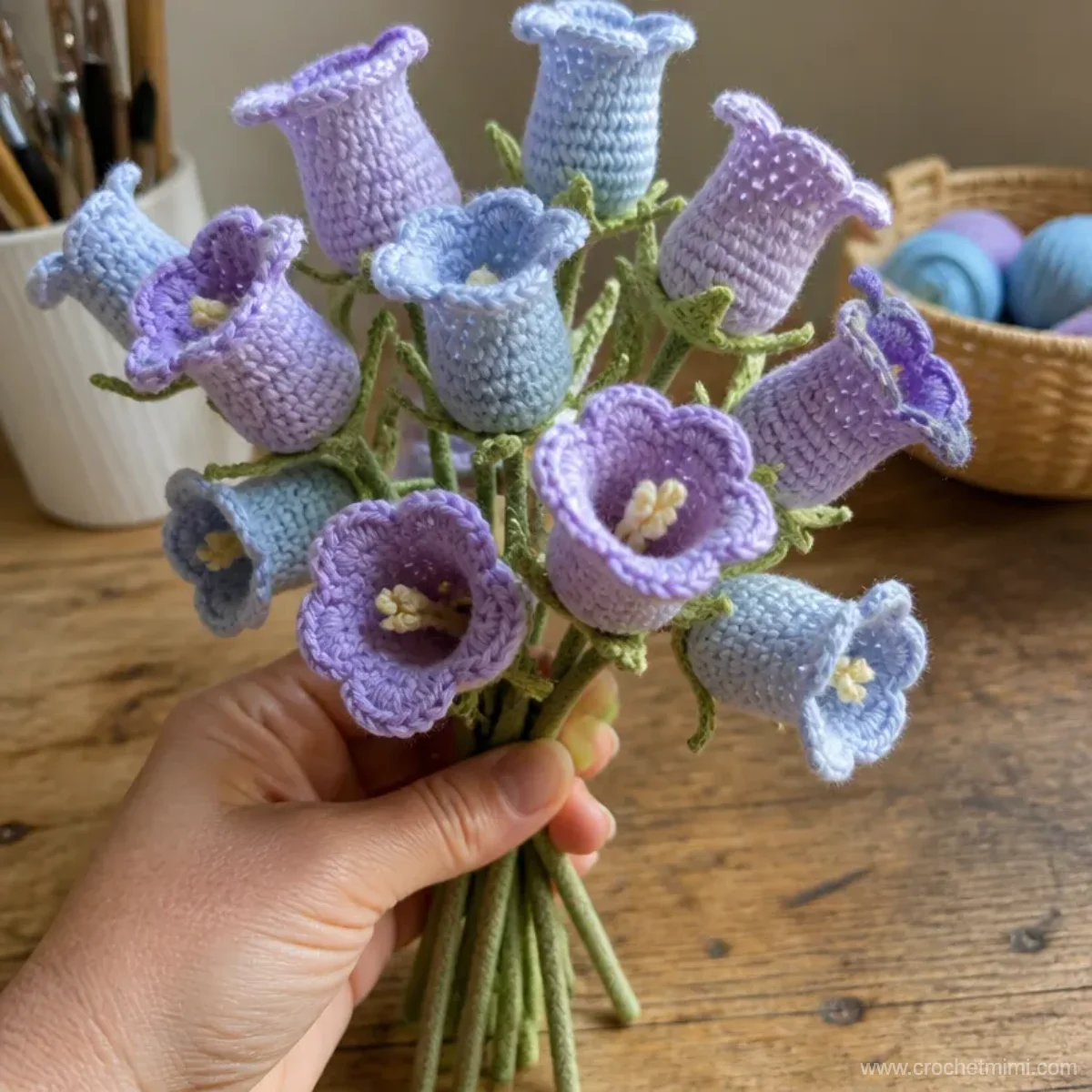
- The silhouette is distinctive. A bell-shaped flower adds vertical movement and visual variety to an arrangement instead of repeating a flat, round bloom.
- It works as a bouquet component. The Canterbury Bells design is intended for floral arrangements and bouquets, so individual flowers can contribute to a larger handmade display.
- It offers styling flexibility. Bell flowers can serve as a focal detail, a supporting bloom, or a transitional shape between larger flowers and greenery.
- It suits botanical décor. A crocheted Campanula-inspired form can be displayed in a vase or incorporated into a gift arrangement without relying on fresh flowers.
- It encourages thoughtful composition. The open bell shape gives you an opportunity to consider height, spacing, direction, and balance as you plan a finished display.
Crochet Mimi Tip: Before beginning, decide whether your flowers will be viewed from the front, from above, or from several angles. That choice can influence how you eventually position the blooms in an arrangement.
What to Know Before You Begin
Happy Patty Crochet’s Canterbury Bells are ornamental crochet flowers described as Campanula and intended for floral arrangements and bouquets. The public listing identifies a 0.6 mm crochet hook and gives an approximate open-flower size of 2 inches / 5 cm for its reference design.
The complete paid pattern has not been inspected here, so the full materials list, shaping sequence, assembly method, and component details must be taken from the original pattern. This article therefore provides design context and responsible project guidance rather than reproducing unverified construction instructions.
The Canterbury Bells pattern should be treated as the authoritative source for:
- The complete stitch sequence
- Any shaping, increases, or decreases
- The number of components
- Joining and assembly
- Materials beyond the listed hook
- Finishing instructions
- Any additional sizing information
The public listing uses US crochet terminology. If the paid pattern includes abbreviations, follow its glossary and instructions exactly. Do not substitute details from another flower pattern or infer construction from photographs.
Materials You’ll Need
The inspected public listing specifies:
- 0.6 mm crochet hook
The available reference does not establish the yarn or thread fibre, weight, colors, quantities, wire, stems, adhesives, or other construction supplies. Use the paid Canterbury Bells pattern for the complete shopping list rather than selecting replacements based on appearance alone.
A very small hook generally signals delicate crochet work, so keep the specified hook available when working from the original instructions. If you decide to experiment with a different hook or thread after completing the pattern, regard that as a separate design variation: the flower’s proportions, firmness, texture, and finished size may change.
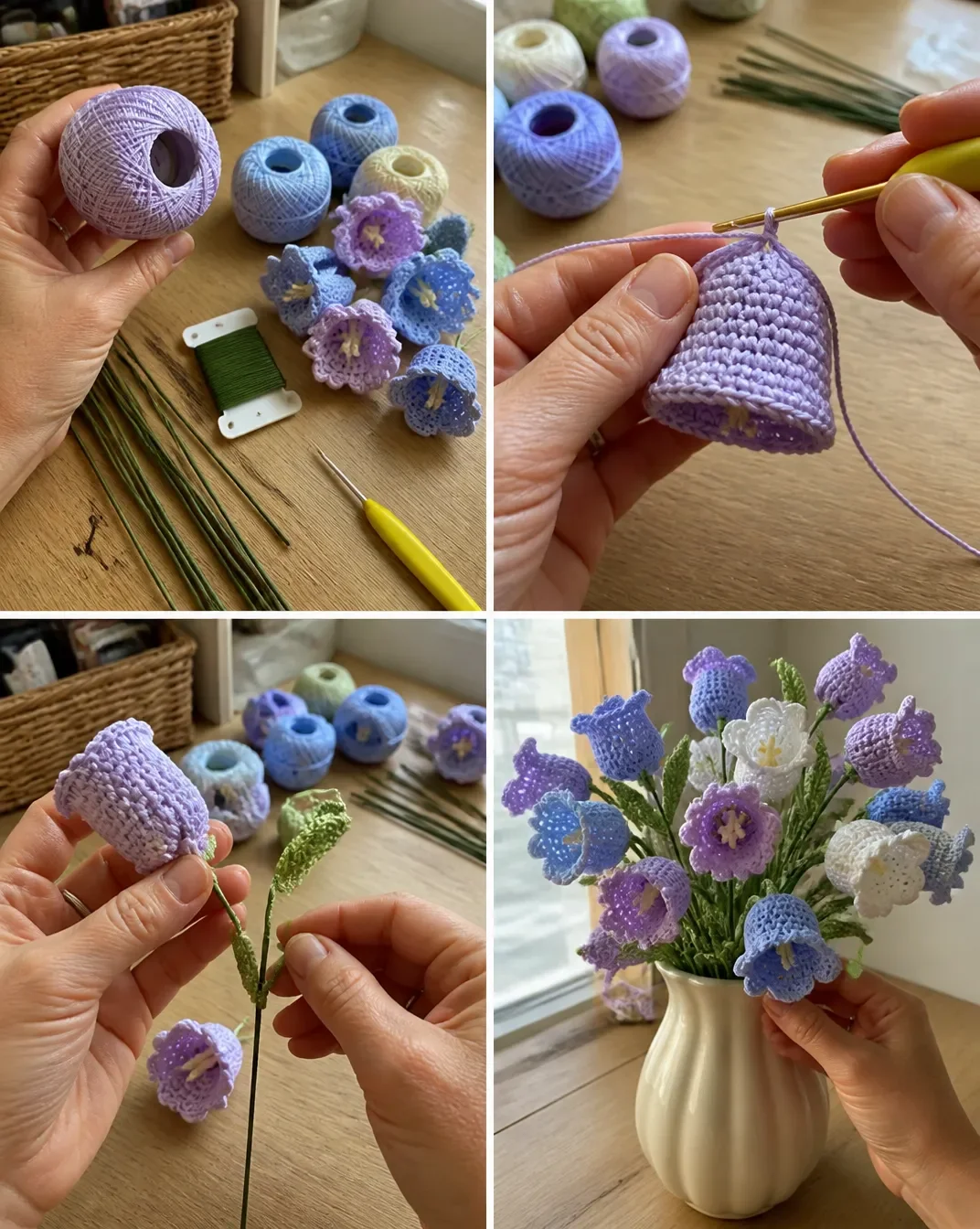
Step-by-Step Crochet Instructions
The supplied reference describes the project and its styling purpose but does not include the paid pattern’s full crochet directions. To protect the original designer’s work and avoid inventing technical information, no stitch counts, rounds, shaping instructions, component quantities, or assembly steps are supplied here.
For the complete construction sequence, purchase and follow Happy Patty Crochet’s Canterbury Bells pattern. Work directly from that source for every technical detail, including the beginning chain or ring, stitch placement, shaping, joining, finishing, and any floral assembly.
The public listing identifies the design as:
- An ornamental bell-shaped crochet flower
- A Campanula-inspired floral form
- A component for floral arrangements and bouquets
- Approximately 2 inches / 5 cm when open, according to its public reference
- Designed around a 0.6 mm crochet hook
Working From the Original Pattern
Keep the paid pattern beside you while crocheting and mark each completed section in the order given. Avoid combining instructions with those from a different Canterbury Bells version or another Happy Patty Crochet design, because similar floral shapes can use entirely different shaping and assembly methods.
When the pattern reaches the finishing stage, follow its directions for securing ends and forming the finished flower. If it includes structural materials or stems, use only the specifications stated there. The public listing alone does not establish wire gauge, stem dimensions, adhesives, or other assembly requirements.
Ways to Display Your Finished Crochet
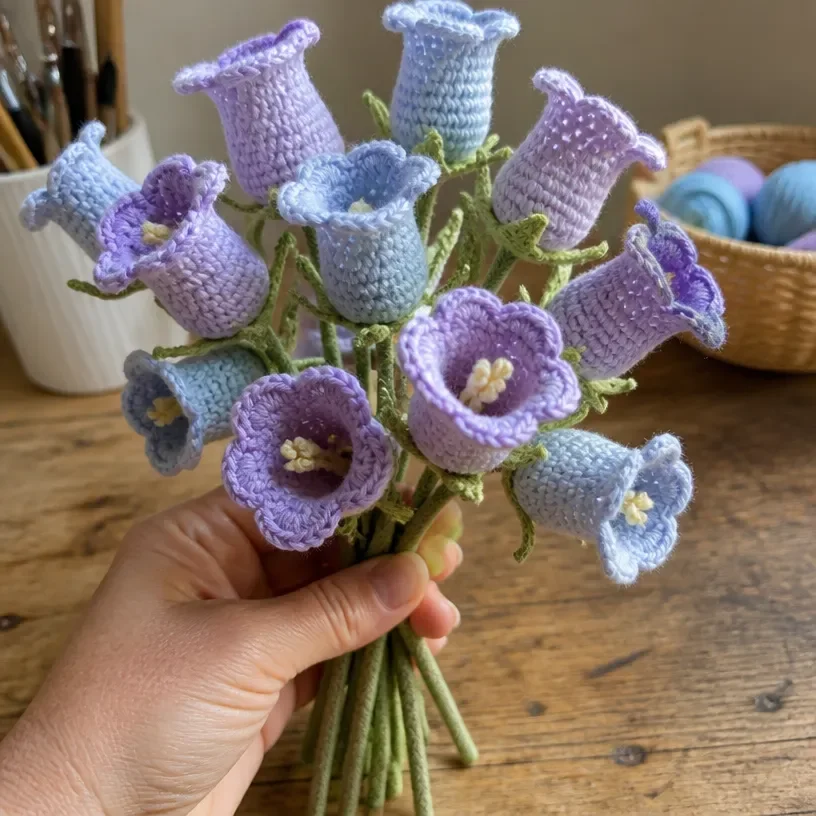
- Small vase arrangement: Group the bell flowers loosely so their open shapes remain visible from the side and front.
- Mixed crochet bouquet: Pair the bell silhouette with contrasting floral forms, such as rounded blooms or flat five-petal flowers. A crochet five-petal flower can provide a different outline within the same display.
- Gift arrangement: Present the flowers as a lasting botanical gift, especially when the recipient enjoys handmade décor.
- Table display: Use a compact container as a centerpiece, arranging the bells at varied visual heights if the completed stems allow it.
- Seasonal styling: Change the surrounding décor, container, or companion flowers to coordinate with spring, wedding-inspired, or nature-themed displays.
- Single-flower accent: Display one finished bloom in a narrow vessel when you want its bell shape to receive all the attention.
These are editorial styling ideas, not instructions for an arrangement supplied by the original designer. The final placement will depend on the completed components and the assembly method in the paid pattern.
Caring for Your Crochet Project
Because the complete fibre and structural materials are not established in the inspected listing, use the care instructions supplied with the yarn or thread and the paid pattern.
For general display care:
- Dust the flowers gently with a soft, dry brush or use careful bursts of cool air from a distance.
- Avoid soaking, machine washing, or aggressive rubbing, particularly if the finished flowers include wire, adhesive, or other supports.
- Keep the arrangement away from excessive heat and prolonged direct sunlight.
- Store individual flowers in a clean, dry container where they will not be crushed.
- If a bloom becomes slightly displaced, reshape it gently without pulling the stitches or forcing any structural element.
- Protect delicate petals from snagging against rough décor, jewelry, or textured storage materials.
Before cleaning a completed arrangement, confirm the care guidance for every material used.
Helpful Crochet Tips
- Use the specified hook for the pattern. The listing identifies a 0.6 mm hook, and changing hook size can affect the proportions and firmness of a small flower.
- Work with consistent tension. Bell-shaped forms depend on controlled shaping, so uneven tension can make one flower look noticeably different from another.
- Read each shaping instruction completely. Do not begin a decrease, increase, join, or repeat until you know where the instruction ends.
- Mark your place. A removable stitch marker or written checklist can help you track the beginning of a round or a repeated section.
- Compare flowers as you work. If making more than one bloom, check their overall appearance periodically so your tension remains reasonably consistent.
- Keep assembly separate from improvisation. Follow the paid pattern for joining and structural support rather than copying the appearance of a photograph.
- Handle delicate crochet carefully. Fine work can catch on rough surfaces, so keep the hook, thread, and finished components organized.
- Secure finishing details neatly. Use the original instructions for ends and assembly, especially if the flowers will be moved, gifted, or displayed in a bouquet.
Creative Ways to Customize Your Project
The following ideas are optional styling choices and should not replace any instruction in the approved pattern:
- Try a different flower color. A single-color display can emphasize the repeated bell silhouette, while several related shades can create gentle variation.
- Build a mixed-flower bouquet. Combine Canterbury Bells with daisy-style or five-petal flowers to contrast open bells with broader floral outlines. For another complementary shape, consider a crochet daisy flower.
- Add compatible greenery. Leaves or stems from a separate, suitable pattern can frame the bells, provided their construction and materials are handled independently.
- Change the container. A narrow vase can emphasize the flowers’ vertical character, while a wider vessel can support a fuller arrangement.
- Use seasonal color planning. Soft, fresh shades may suggest spring, while deeper or warmer colors can shift the mood toward an autumn-inspired display.
- Test substitutions cautiously. A different fibre, thread size, or hook may alter stitch definition, texture, dimensions, and material requirements. Treat any substitution as an experiment rather than an unchanged version of the original design.
Frequently Asked Questions
What is a crochet Canterbury Bell?
It is an ornamental bell-shaped crochet flower described by Happy Patty Crochet as Campanula and intended for floral arrangements and bouquets.
What hook size does the public listing specify?
The listing specifies a 0.6 mm crochet hook. Follow the paid pattern for the remaining material requirements.
How large is the open flower?
The public reference gives an approximate open-flower size of 2 inches / 5 cm. This measurement belongs to the listing’s reference design.
Does this article include the full crochet pattern?
No. The inspected reference provides project details and design information, but not the paid pattern’s complete shaping, stitch sequence, assembly, or finishing instructions. Use the original paid design for those details.
Can I change the flower colors?
Color changes are an optional styling choice, provided they do not alter the pattern’s construction. Choose colors that suit your intended bouquet, container, or surrounding décor.
Can I use a different hook?
You can experiment, but changing the hook may affect the flower’s size, firmness, texture, and proportions. The listed design specifies a 0.6 mm hook, so use that when following the original pattern.
Can I combine these flowers with other crochet flowers?
Yes. Their bell shape can contrast nicely with rounded blooms, daisies, five-petal flowers, and greenery. Plan the arrangement around the forms and materials of the completed pieces.
How should I care for the finished flowers?
Use gentle dusting and careful dry storage unless the yarn or thread manufacturer and the paid pattern provide different care instructions. Avoid soaking or machine washing when structural materials or adhesives may be present.
May I reproduce the pattern instructions or photographs?
The original listing restricts redistribution of the pattern and photographs. Refer to the designer’s terms for permitted use, and do not republish the instructions or images.
Conclusion
Crochet Canterbury Bells offer a distinctive way to add bell-shaped blooms to a handmade bouquet, vase display, or botanical gift. Follow Happy Patty Crochet’s paid pattern for the complete construction details, then enjoy personalizing the surrounding arrangement. For broader floral inspiration, compare the Delft crochet blanket design and these silk thread crochet bell flower earrings as examples of how floral forms can influence handmade projects.