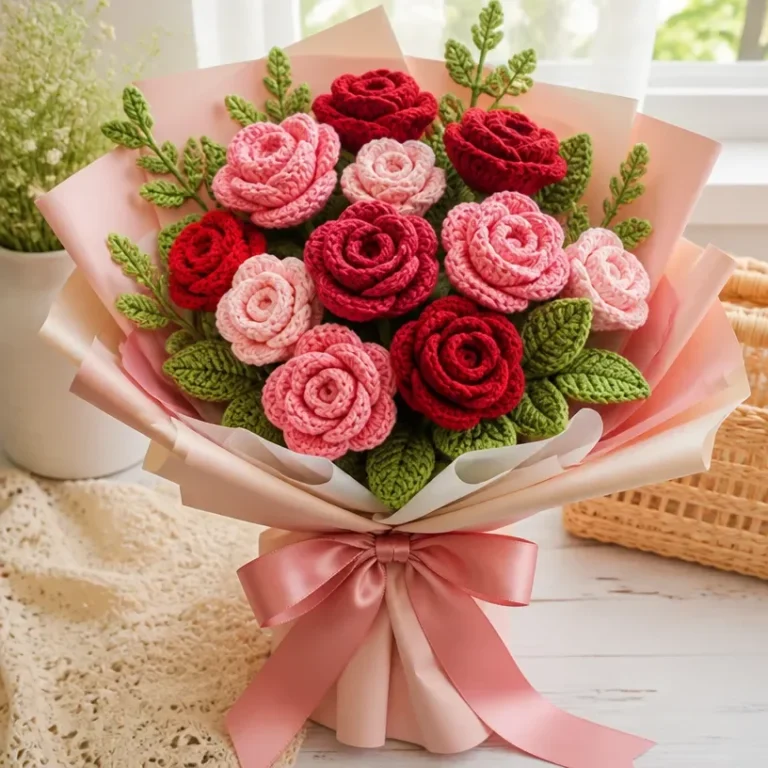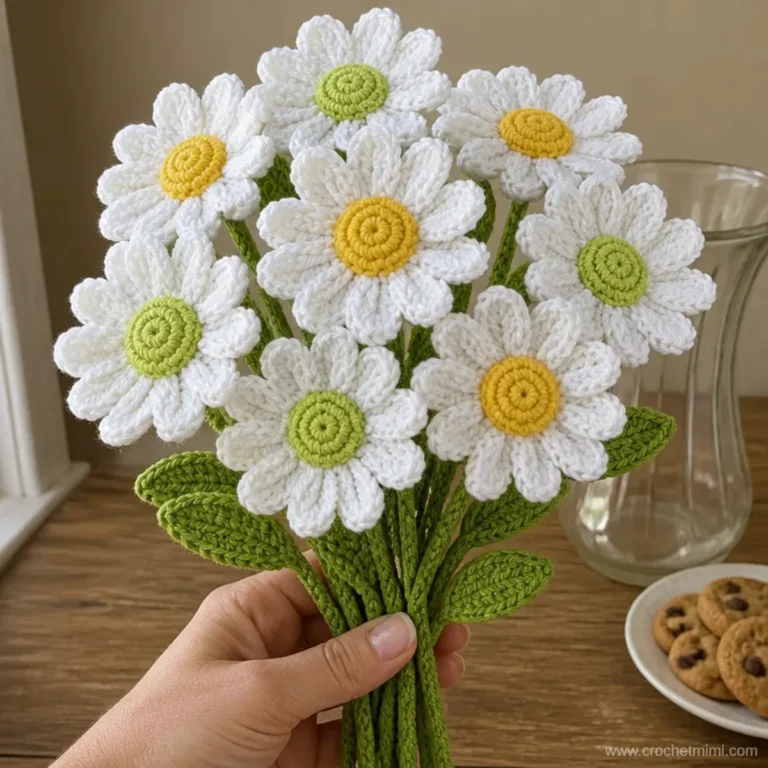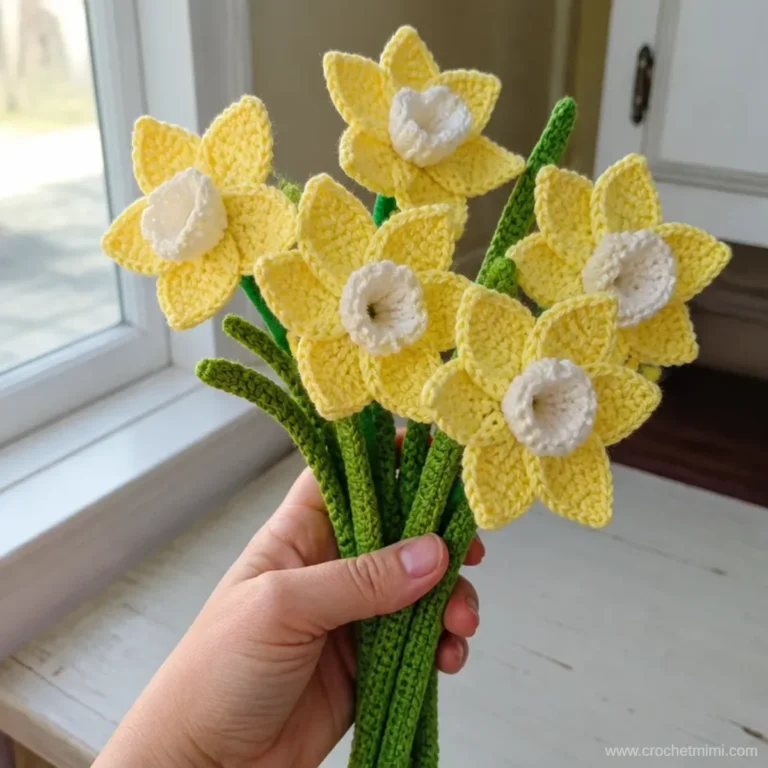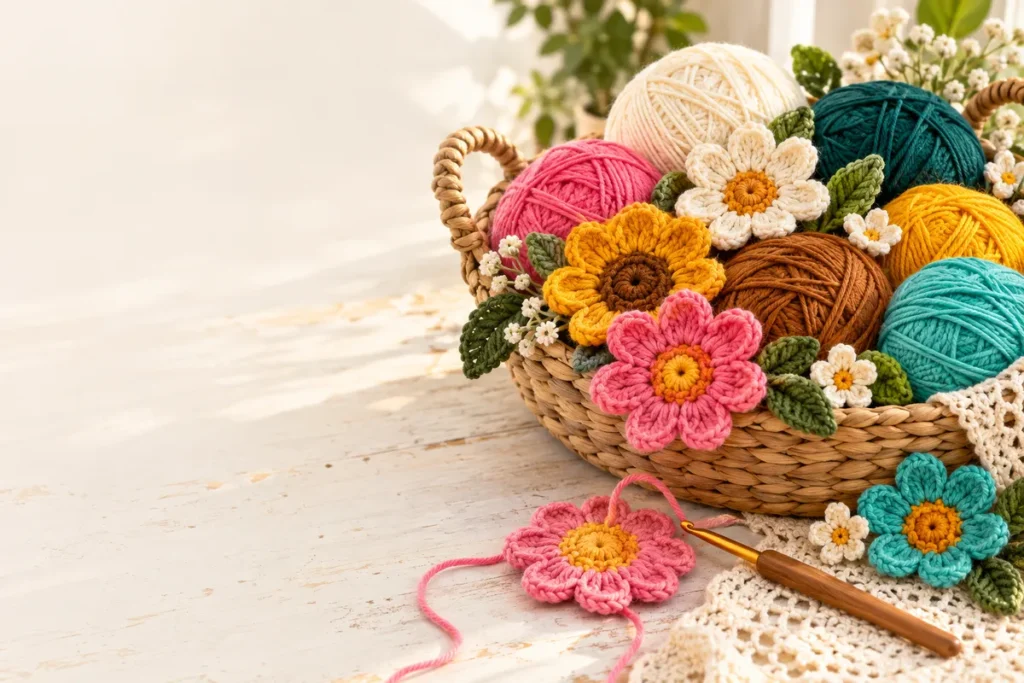

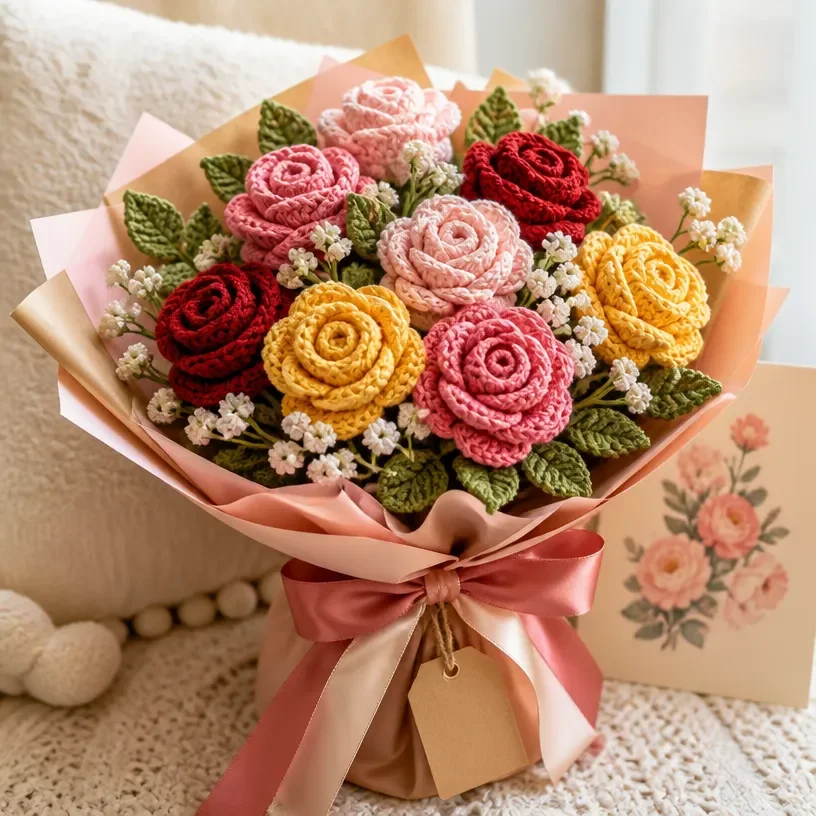
This crochet rose bouquet is defined by a romantic floral identity and a thoughtfully arranged presentation. Rather than reading as a single handmade bloom, the concept brings together rose-inspired crochet flowers in a bouquet format, creating a display with the character of a lasting floral arrangement. The strongest visual feature is the repeated rose form: each bloom contributes to a cohesive look while the bouquet as a whole becomes more decorative and gift-ready.
As inspiration, this project is especially useful for exploring how crochet flowers can move beyond individual motifs. The same flower can feel intimate as a single stem, abundant when grouped together, or celebratory when styled as a bouquet. Its rose-centered direction also lends itself to romantic gifts, floral decor, keepsake arrangements, and occasion-based styling.
The Design Behind This Crochet Flower Idea
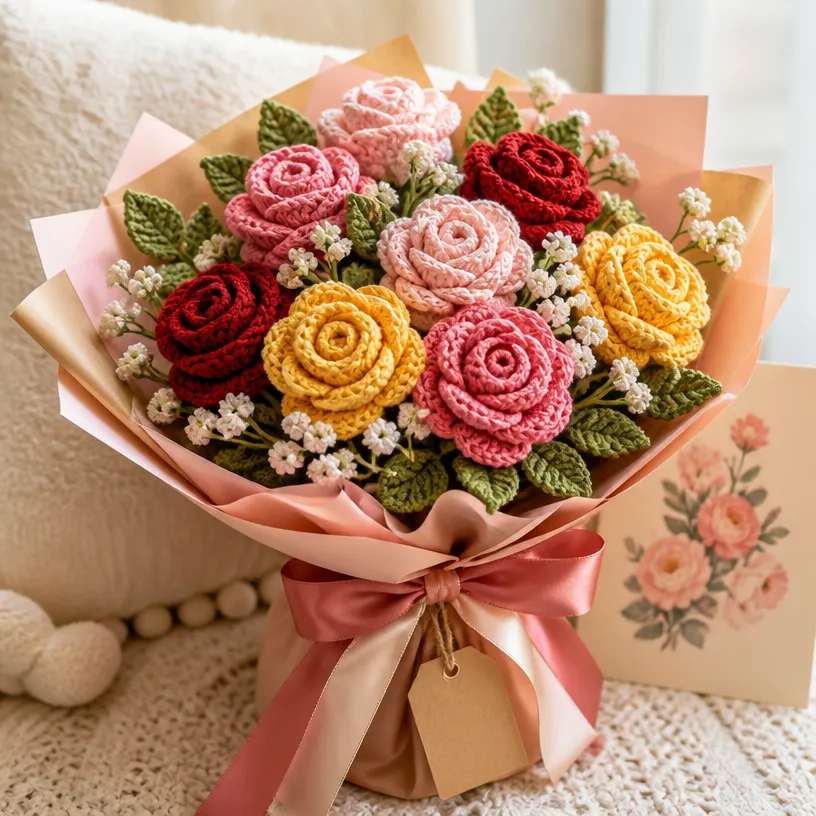
The central design language is clear: roses are the visual focus, and the bouquet format gives them greater presence. A rose bouquet naturally suggests fullness, softness, and sentiment, making it distinct from an arrangement based on wildflowers, simple blossoms, or mixed botanical shapes.
The repetition of similar blooms creates unity. Instead of asking several flower types to compete for attention, the bouquet allows one recognizable floral idea to lead the composition. This makes the arrangement feel intentional and gives the eye a strong focal theme.
A rose-centered crochet flower bouquet can also balance two qualities:
- Individual detail: Each flower has its own layered, sculptural presence.
- Collective impact: Grouped together, the blooms create a fuller floral statement.
That balance is what makes the idea effective for decor and gifting. The arrangement is visually expressive without needing a complicated mixture of flower shapes.
Understanding the Bouquet Composition
The bouquet’s composition can be considered as a collection of focal blooms rather than a loose assortment of unrelated flowers. Roses naturally function as the dominant flowers, so the overall silhouette is likely to be read through the rounded, layered shapes of the blooms.
When planning an original arrangement inspired by this idea, consider how the flowers relate to one another visually:
- A closely grouped bouquet creates a lush and abundant impression.
- More visible space between blooms gives the arrangement a lighter, airier character.
- Similar flower sizes create a uniform, classic presentation.
- Varied visual heights can make the bouquet feel more natural and dimensional.
- A concentrated central area creates a strong focal point.
- A wider spread gives the bouquet a more generous decorative silhouette.
These are design decisions rather than construction instructions. The supplied project information does not specify how the flowers are made, attached, or supported, so the most useful way to approach the concept is through shape, spacing, and presentation.
The arrangement can also be styled symmetrically or with a more relaxed balance. A symmetrical bouquet may feel formal and polished, while a slightly uneven distribution can suggest a garden-inspired or hand-gathered look. Either direction can work with crochet roses because the flower itself already carries a strong romantic identity.
Exploring the Rose-Centered Floral Mood
Roses bring an unmistakable emotional tone to floral design. In crochet form, they can suggest romance, affection, celebration, remembrance, or simply an appreciation for handmade decor. A bouquet of crochet roses therefore has more expressive potential than a purely ornamental arrangement.
The mood can shift according to presentation:
- A compact rose grouping feels classic and gift-like.
- A fuller bouquet feels celebratory and decorative.
- A restrained arrangement feels modern and refined.
- A softer, less structured grouping feels cottage-inspired.
- A carefully coordinated color scheme feels suitable for an occasion or themed display.
The bouquet does not need to be interpreted only as a romantic gift. Its floral character can also suit a shelf, bedside table, entryway, desk, or seasonal display. The design works because it combines recognizable flower imagery with the permanence and personal quality associated with handmade flowers.
Color Palette Directions
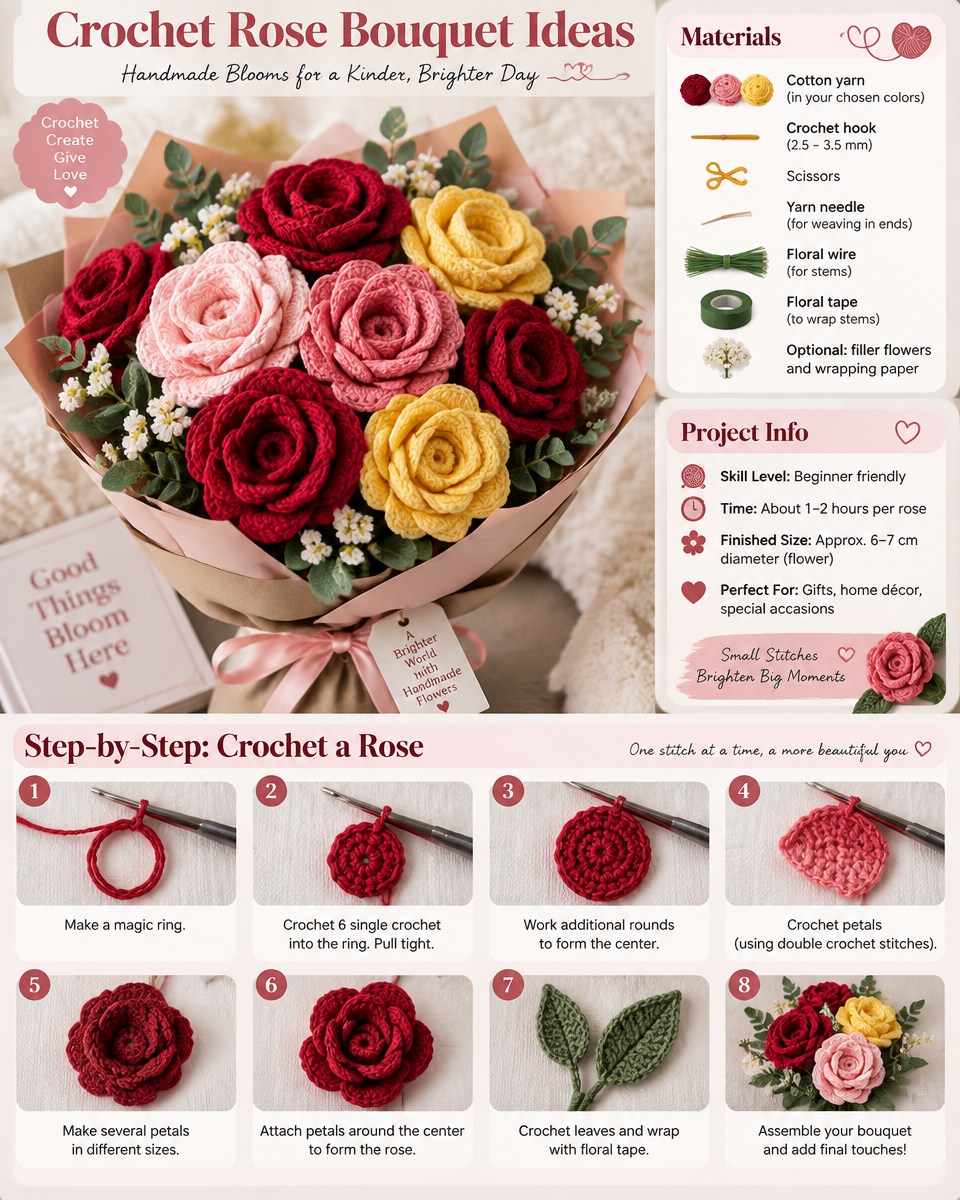
The controlled project information does not provide a confirmed color palette, so specific colors should not be assigned to the pictured design. However, the rose bouquet concept supports several visual directions that can guide an original interpretation.
Monochromatic Roses
Using one rose color throughout would emphasize repetition and silhouette. A monochromatic bouquet can feel polished, especially when the flowers are arranged with consistent spacing and a clearly defined shape.
Soft Romantic Tones
Blush, cream, dusty rose, and other gentle tones could create a delicate presentation. This direction would suit romantic decor, bridal inspiration, or a soft handmade gift aesthetic.
Strong Rose Contrast
Deeper and lighter versions of a rose color could add visual depth without moving away from the central flower theme. The arrangement would remain cohesive while gaining a more layered appearance.
Mixed Floral Color
Several coordinated rose colors could make the bouquet feel cheerful and expressive. A carefully limited palette is usually more visually unified than an unrelated mixture of every available shade.
Seasonal Color Stories
The same bouquet concept could be adapted to different moods through color alone:
- Soft pinks and creams for spring-inspired styling
- Rich reds and burgundy for romantic occasions
- Warm coral and peach for a bright summer direction
- Muted mauve and deep rose for an autumnal feeling
- White, ivory, and a restrained accent color for a formal presentation
These are visual styling possibilities, not claims about the colors used in the supplied project.
Floral Styling Possibilities
A crochet rose bouquet has a naturally romantic foundation, but its styling can move in several directions.
Romantic Presentation
A rose-focused arrangement is an obvious fit for romantic gifting. The bouquet could inspire a Valentine’s Day display, anniversary presentation, or thoughtful handmade gesture. The rose form communicates sentiment even when the arrangement is kept simple.
Cottage-Inspired Decor
A looser grouping with soft colors could support a cottage-inspired interior. The handmade texture of crochet adds warmth, while the repeated roses maintain a recognizable floral theme.
Modern Floral Decor
For a more contemporary look, focus on a controlled palette and a clean bouquet silhouette. The arrangement can feel modern when the flowers are treated as sculptural objects rather than as a highly varied garden collection.
Bridal Inspiration
White, ivory, blush, or softly coordinated rose colors could inspire a bridal bouquet direction. The key visual idea is consistency: repeating one flower type can create a refined and unified floral identity.
Keepsake Styling
Because crochet flowers are designed as decorative handmade objects, a rose bouquet can be considered for a lasting floral display. It may serve as inspiration for a keepsake arrangement, a meaningful gift, or a decorative reminder of a special occasion.
Presentation and Display Ideas
The way a bouquet is presented can change its perceived character as much as the flowers themselves. A rose arrangement can be shown as a complete bouquet, displayed as individual stems, or treated as part of a broader floral vignette.
Consider these presentation directions:
- A simple vessel can keep attention on the flowers.
- A carefully chosen wrap can reinforce the bouquet’s gift-like character.
- A small arrangement can suit a desk, shelf, or bedside display.
- A larger grouping can become a more prominent decorative feature.
- A coordinated background can make the rose shapes easier to see.
- A restrained presentation can highlight the texture and repetition of the crochet blooms.
The available information does not identify a specific wrapping style, vessel, stem method, or assembly process. Those details should therefore remain open to interpretation. The strongest supported idea is the bouquet itself: a rose-centered floral display with clear decorative and gifting potential.
Ways to Use the Idea
This crochet rose bouquet can inspire several non-technical floral projects and styling concepts.
Handmade Gift Inspiration
A rose bouquet has an immediately recognizable gift language. It can represent affection, gratitude, congratulations, or a commemorative gesture. The bouquet format makes the flowers feel more substantial than a single decorative motif.
Home Floral Decor
The design can inspire a permanent floral accent for a shelf, console, desk, or side table. Its visual identity is strong enough to stand alone, while a restrained presentation can help it complement surrounding decor.
Wedding and Occasion Styling
A rose-centered crochet bouquet could provide visual inspiration for bridal flowers, reception decor, or a keepsake display. Color selection would be especially important for matching an occasion’s atmosphere.
Seasonal Displays
The bouquet concept can be recolored or restyled to reflect a season without changing its central floral identity. Soft tones can suggest spring, vivid colors can create a summer mood, and deeper shades can support autumn or winter decor.
Sentimental Keepsakes
A handmade flower arrangement can carry emotional meaning beyond a temporary fresh bouquet. The rose theme makes it particularly suitable for gifts connected with relationships, milestones, or remembrance.
Visual Variations to Explore
The most natural variations involve changing the arrangement’s visual emphasis rather than altering its technical construction.
One Dominant Rose Color
A single-color bouquet would make the collection feel cohesive and graphic. This approach places greater emphasis on the repeated shape of each bloom.
A Layered Rose Palette
Using several closely related colors could create a gentle tonal effect. The bouquet would still read as one unified arrangement, but the flowers would have more visual variation.
A Bold Accent Arrangement
A mostly restrained palette with one stronger accent color could draw attention to selected blooms. This can create focal areas without introducing many different flower types.
Compact Versus Open Styling
A compact arrangement emphasizes fullness and abundance. An open arrangement gives each flower more visual space and may feel lighter or more contemporary.
Formal Versus Relaxed Silhouette
A rounded, balanced silhouette can create a classic presentation. A more relaxed outline can feel informal, handmade, and garden-inspired.
From Inspiration to Your Own Floral Project
When using this project as inspiration, begin with the visual question rather than the technical one: what should the finished floral arrangement communicate?
First, decide whether roses should remain the only flower type. A single-flower bouquet creates a clear identity, while adding supporting flowers would introduce more variety and a different visual rhythm. If the rose is the main subject, keep any additional elements visually subordinate.
Next, choose the emotional direction. A soft palette may suggest tenderness, while richer shades can create drama and celebration. A bright mixture can feel cheerful, whereas a restrained palette can appear more formal.
Then consider the bouquet silhouette. Do you want a rounded, abundant shape, or a looser arrangement with visible separation between flowers? The answer will affect how the bouquet is perceived even before color is considered.
Finally, plan the presentation. A rose bouquet can be styled as a gift, a decorative centerpiece, a shelf arrangement, or a keepsake display. The surrounding setting should support the flowers rather than compete with them.
This conceptual approach keeps the focus on floral design while avoiding unsupported assumptions about yarn, hooks, stitches, measurements, or assembly.
Frequently Asked Questions
What is the main floral idea behind this project?
The main idea is a bouquet centered on crochet roses. The repeated rose form gives the arrangement a unified, romantic, and decorative identity.
Is a complete crochet pattern included in the supplied information?
No. The supplied information supports visual and styling analysis only. It does not provide a complete crochet pattern or step-by-step construction instructions.
What colors are used in the bouquet?
A confirmed color palette is not specified in the supplied project information. Color suggestions in this article are inspiration for possible interpretations, not a description of documented materials.
How could this bouquet be styled?
It could inspire romantic, cottage-inspired, modern, bridal, seasonal, or keepsake styling, depending on the palette, bouquet density, silhouette, and presentation choices.
Could this idea work as a handmade gift?
Yes, the rose bouquet format has clear gifting potential. It could inspire a decorative floral gift for a romantic occasion, celebration, milestone, or sentimental presentation.
What materials are identified for this design?
The available project information does not specify materials. No yarn fibre, yarn weight, hook size, stem material, wrapping material, adhesive, or other supply should be assumed from appearance alone.
Materials
Materials are not specified in the available project information. No complete supply list can be confirmed for this design.
Conclusion
The strongest lesson from these crochet rose bouquet ideas is the impact of a clear floral identity. Repeating one expressive flower can create a bouquet that feels cohesive, romantic, and ready for meaningful display, while color, spacing, silhouette, and presentation shape the final mood. For further visual inspiration, explore this collection of crochet rose ideas and these crochet flower styling examples. The project is best approached as a source of floral design inspiration rather than as a complete crochet pattern.