
Crochet Rose Bouquet Assembly Guide
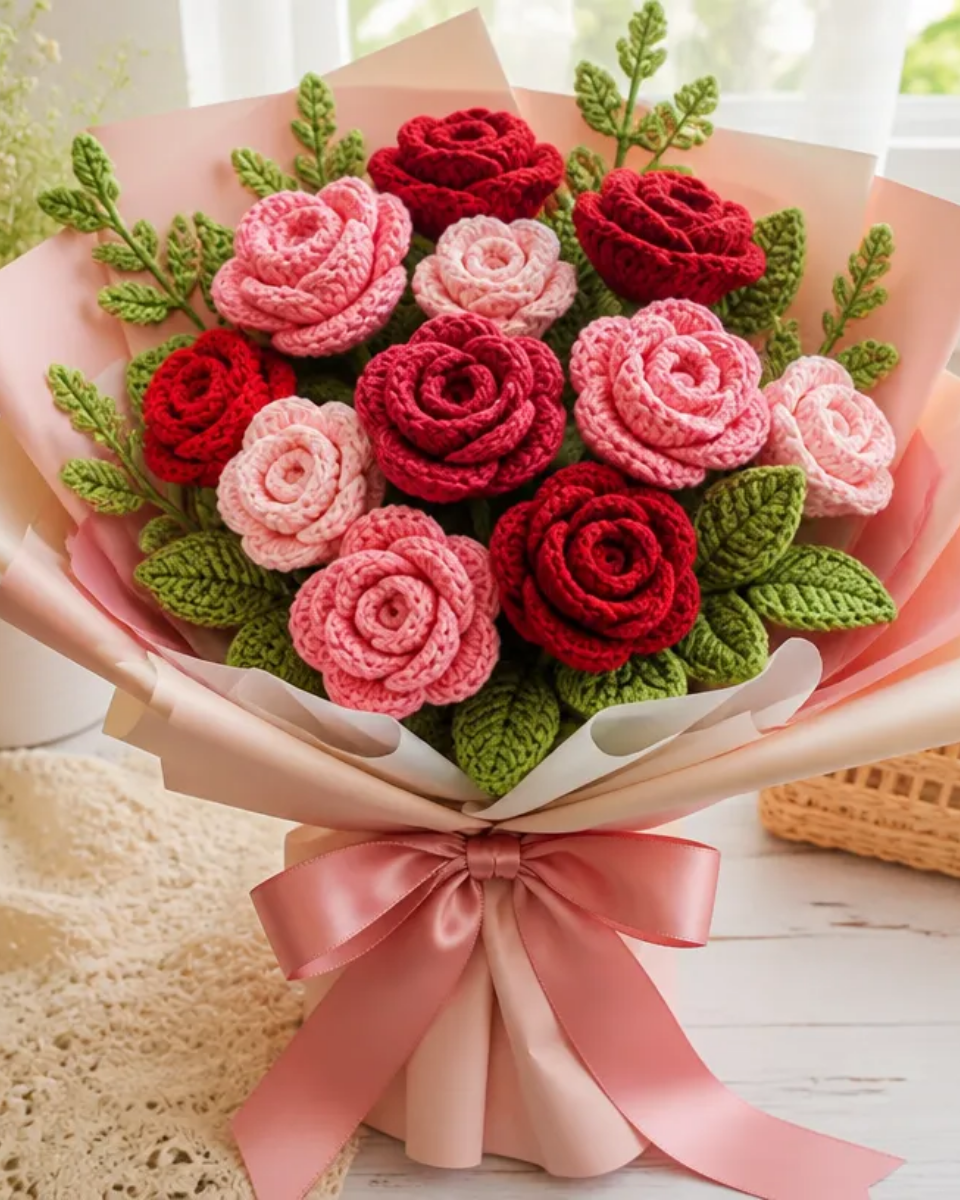
A crochet rose bouquet brings individual handmade flowers together as a complete floral display. This project is structured around crocheted roses, additional leaves or greenery, prepared rose stems, and a final ribbon or bouquet wrap. Its defining characteristic is the combination of soft textile flowers with a stemmed arrangement, giving the finished piece the recognizable form of a traditional bouquet while keeping the floral elements handmade. You may also find Crochet Daisy Bouquet useful.
This guide explains how the supplied components relate, what the assembly sequence confirms, and where styling choices can shape the final presentation. Readers comparing arrangements may also find this crochet rose bouquet project useful for broader floral inspiration. The information here focuses on project structure and assembly rather than a complete stitch-by-stitch crochet pattern.
Understanding the Rose Bouquet Design
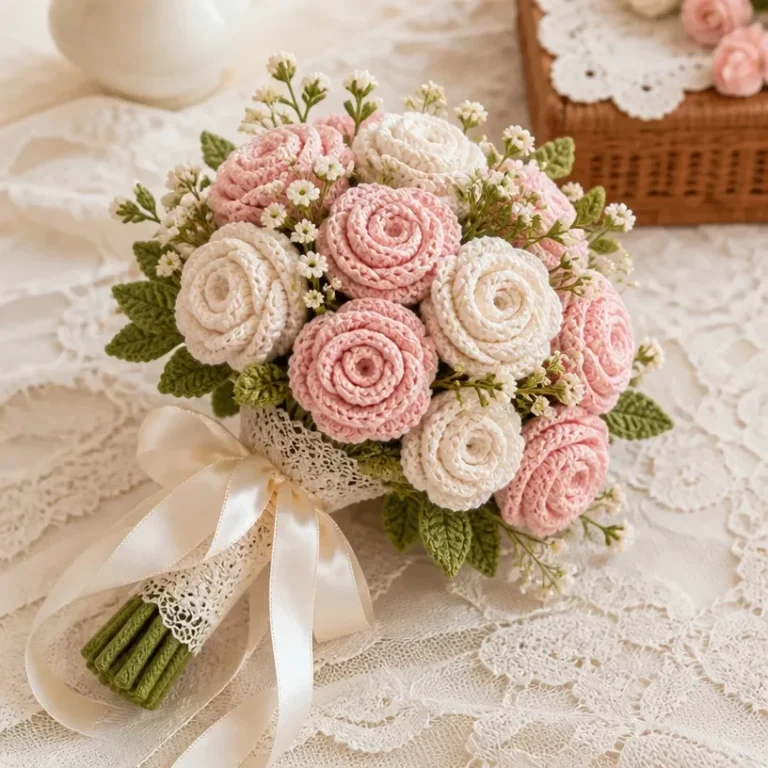
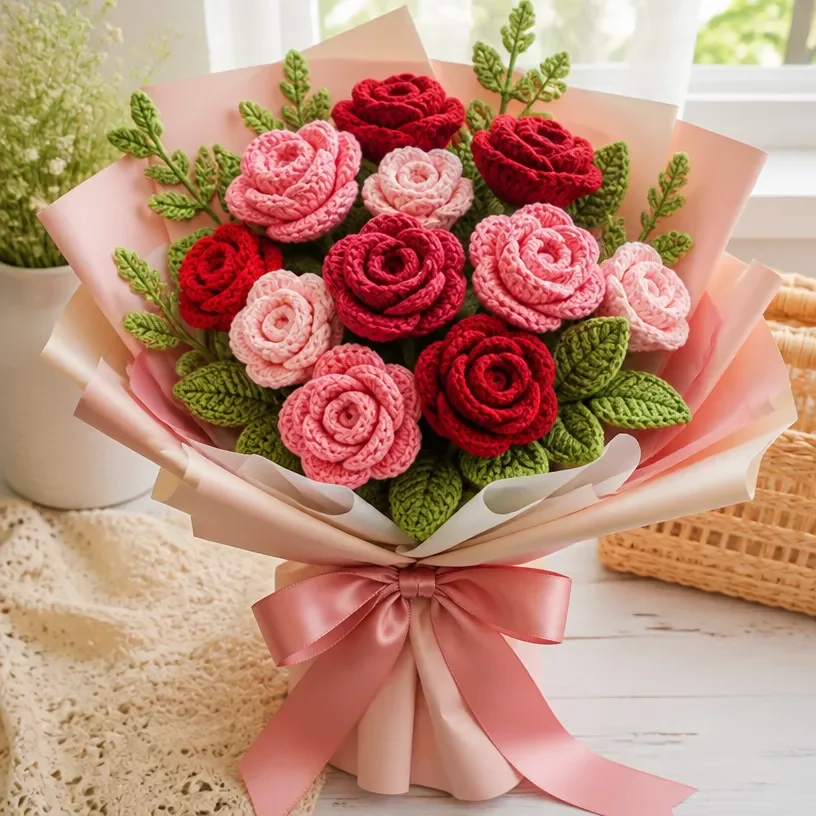
The project centers on roses rather than a mixed flower collection. Each rose is crocheted separately using the desired pattern, then attached to a prepared rose stem. Leaves or other greenery are also created with crochet techniques and contribute to the bouquet’s floral structure.
This gives the project several distinct visual layers:
- Crocheted roses: The main floral feature and the bouquet’s dominant identity.
- Leaves or greenery: Supporting components that add a botanical element around the roses.
- Prepared rose stems: The structural parts that allow the individual flowers to function as a bouquet.
- Ribbon or bouquet wrap: The finishing material that gathers and presents the arrangement.
The design is interesting because it moves from individual textile components to a recognizable floral form. The roses are not presented as isolated motifs; they become part of a larger arrangement through the stems, greenery, and wrapping.
Materials Shown for This Project
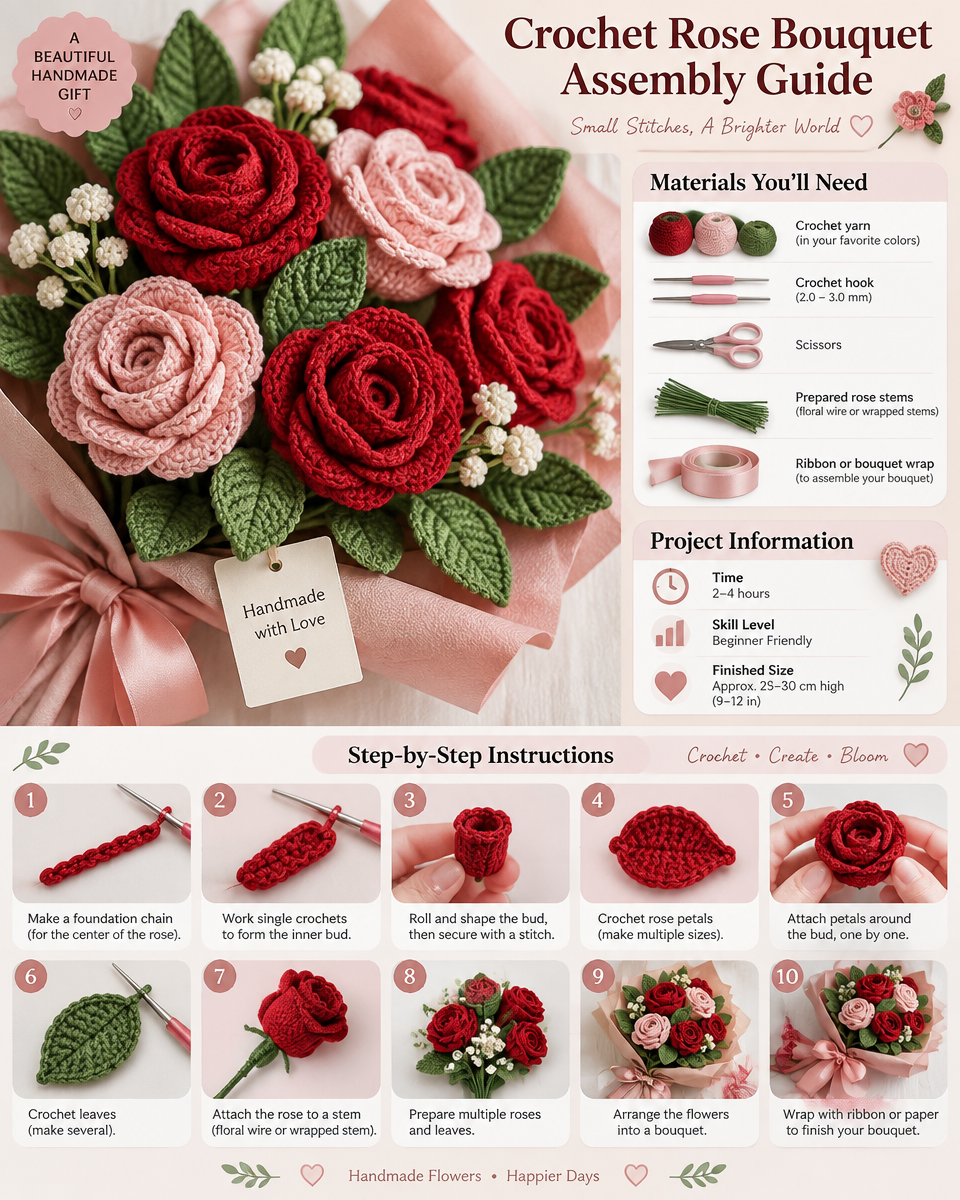
The supplied materials are:
- Crochet yarn
- Crochet hook
- Scissors
- Prepared rose stems
- Ribbon or bouquet wrap
Exact yarn fibre, yarn weight, brand, and colour are not specified. The crochet hook size is also not provided, so this guide does not assign one. Likewise, the prepared stems are identified as part of the project, but no stem length or other specifications are given.
How the Bouquet Comes Together
The confirmed construction sequence is straightforward at the project level. It describes the order in which the floral components are prepared and assembled without providing stitch counts, rounds, measurements, or joining details.
- Crochet the roses using the desired pattern.
- Create leaves or greenery using crochet techniques.
- Attach the crocheted roses to the prepared stems.
- Wrap the bouquet using ribbon or bouquet wrap for a finished look.
The first stage establishes the bouquet’s primary flowers. Because the instructions refer to the “desired pattern,” the supplied information does not identify a specific rose pattern or reproduce one. The roses are therefore best understood as individual crocheted floral components that are completed before the bouquet assembly begins.
The second stage adds leaves or greenery. These pieces support the rose theme and help the finished arrangement read as a bouquet rather than a collection of flowers alone. The information confirms that the greenery is crocheted, but it does not specify its shape, quantity, placement, or method of attachment.
The third stage connects the flowers to the prepared rose stems. This is the point at which the individual roses become stemmed bouquet components. The source confirms attachment to prepared stems but does not state whether any particular joining material or hidden assembly method is used. No glue, wire gauge, sewing method, or additional fastening supply should be assumed.
The final stage is presentation. Ribbon or bouquet wrap gathers the arrangement and gives the stems a finished appearance. Wrapping is not described in technical detail, so the supplied information supports the presence of a finished wrap rather than a particular fold, knot, length, or binding method.
From Individual Flowers to Bouquet
The bouquet’s structure depends on the relationship between its parts. The roses provide the focal flowers, the greenery provides supporting botanical detail, and the stems create a unified arrangement. The wrap then visually gathers those components into one presentation.
This sequence also clarifies the project’s workflow. The roses and greenery are made before the final bouquet is assembled. That separation allows the floral elements to exist as individual components before they are brought together, although the supplied information does not describe the number of roses or leaves required.
For arrangement planning, the project’s rose-only identity is an important design choice. A reader looking for a broader mixed-flower concept may compare it with this crochet flower bouquet overview, while this guide remains focused specifically on roses.
The prepared stems are equally important to the finished form. They give the roses a vertical, bouquet-like presentation instead of leaving them as flat or unmounted crochet motifs. Since stem dimensions are not supplied, the guide cannot establish a particular height or proportion. The arrangement’s final silhouette will depend on the components selected and how they are gathered.
Visual Balance and Presentation
A rose bouquet naturally directs attention toward its flower heads. The greenery can frame those roses and create visual separation between them, while the stems extend the arrangement downward into the wrapped handle area. This creates a clear transition from floral detail to presentation finish.
Colour planning can be treated as an aesthetic decision rather than a technical construction requirement. A coordinated rose colour can create a unified bouquet, while contrasting greenery can make the leaves more visually distinct. Readers considering colour relationships may use this crochet bouquet colour planning guide as related inspiration.
The wrap also influences the bouquet’s overall character. Ribbon or bouquet wrap may be selected to complement the roses, contrast with them, or create a neutral finish that keeps attention on the flowers. Because the supplied information does not specify a colour, width, style, or wrapping method, these remain presentation choices rather than fixed project requirements.
Styling Ideas for the Finished Bouquet
The confirmed construction supports several non-technical styling directions:
Coordinated Rose Display
A bouquet built around one rose type can create a consistent floral identity. Coordinating the rose and wrap colours may produce a polished presentation, while a contrasting wrap can make the bouquet feel more graphic.
Greenery-Focused Framing
Leaves or greenery can be used as a visible supporting layer around the roses. The exact placement is not specified, so the styling decision is to consider how much greenery should remain visible in the finished arrangement without claiming a prescribed layout.
Gift Presentation
The wrapped form is naturally suited to gifting. The bouquet can be presented as a complete handmade floral arrangement, with the ribbon or wrap serving as the visual finish around the stems.
Decorative Display
A stemmed crochet bouquet can also be arranged as handmade decor. The roses, greenery, stems, and wrapping create a complete object intended to be viewed as a floral grouping rather than as separate crochet pieces.
Colour-Led Variations
The supported variation is primarily aesthetic: the visual direction can change through colour choices and presentation. A rose bouquet may be styled with coordinated tones, a restrained palette, or a stronger contrast between flowers, greenery, and wrap. These ideas do not require changing the crochet construction.
For additional arrangement context, this crochet flower bouquet planning resource can help frame decisions about overall bouquet presentation without changing the confirmed rose assembly sequence.
What the Project Information Leaves Open
This is a project guide focused on the construction, arrangement, and design details that can be confirmed; it is not a complete stitch-by-stitch pattern. Several technical details remain unspecified:
- The exact rose crochet pattern is not identified.
- Yarn fibre, weight, brand, and quantity are not supplied.
- Crochet hook size is not supplied.
- Stitch names, stitch counts, rows, and rounds are not supplied.
- The number of roses and leaves is not stated.
- Leaf or greenery shapes are not described.
- Stem length and other stem specifications are not provided.
- The attachment method for roses to stems is not explained.
- The wrapping method and dimensions are not specified.
- Finished bouquet measurements are not supplied.
These omissions define the appropriate scope of the guide. The available information supports understanding the components and their order of assembly, but it does not support reconstructing a reproducible pattern or adding technical directions that were not provided.
Assembly Details We Can Confirm
The most reliable way to understand this project is as a four-part progression:
- Flower preparation: Roses are crocheted individually using the desired pattern.
- Greenery preparation: Leaves or greenery are created with crochet techniques.
- Stem assembly: The roses are attached to prepared rose stems.
- Bouquet finishing: The gathered arrangement is wrapped with ribbon or bouquet wrap.
This order matters because each stage prepares a different layer of the final design. The flowers establish the focal point, the greenery supports the floral appearance, the stems provide structure, and the wrap completes the presentation.
No additional construction stage should be inserted into that sequence. In particular, the supplied information does not confirm a particular method for shaping petals, forming leaves, securing stems, or fastening the wrap. Keeping those boundaries clear prevents a project overview from being mistaken for a complete tutorial.
Frequently Asked Questions
What is the main flower in this bouquet?
The main flower is the rose. The project is organized around crocheted roses that are later attached to prepared rose stems.
Does the bouquet include greenery?
Yes. The instructions specify creating leaves or greenery using crochet techniques. Their exact shape, number, and placement are not provided.
What gives the roses a bouquet form?
The prepared rose stems allow the crocheted roses to become stemmed floral components. The flowers are then gathered and finished with ribbon or bouquet wrap.
Is a specific crochet hook size provided?
No. The supplied project information names a crochet hook as a material but does not specify its size.
Is this a complete crochet pattern?
No. The available information provides a project-level construction sequence rather than stitch counts, rounds, measurements, or a complete rose and leaf pattern.
What styling choices are supported?
Colour coordination, greenery presentation, and ribbon or bouquet-wrap selection are supported as aesthetic choices. The technical construction should not be changed based on unsupported assumptions.
Conclusion
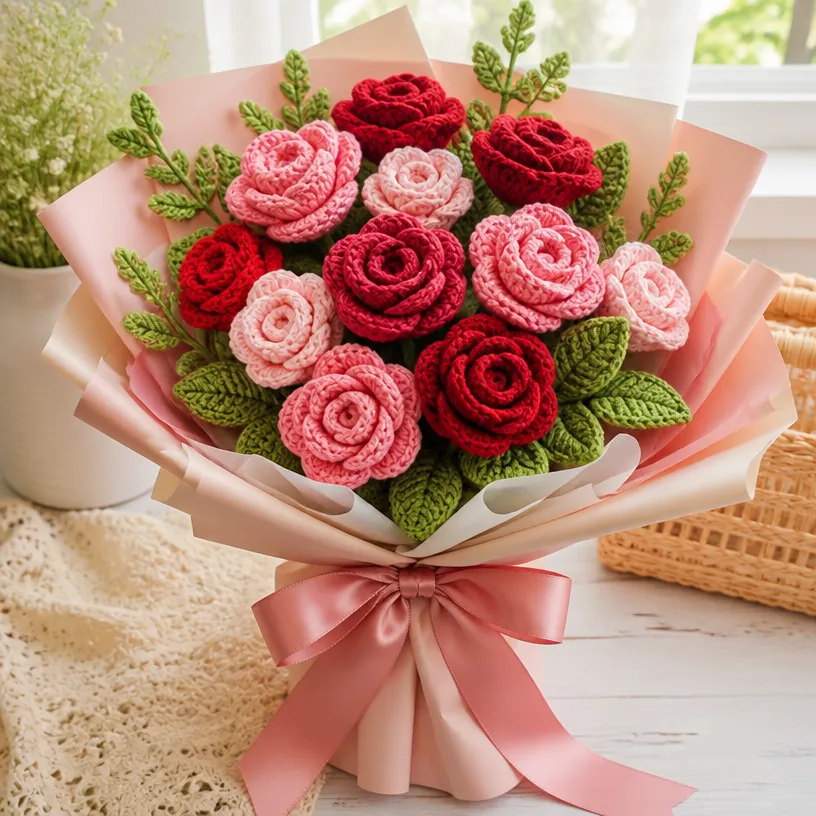
The Crochet Rose Bouquet Assembly Guide describes a clear floral progression: crochet the roses, create the greenery, attach the roses to prepared stems, and finish the gathered arrangement with ribbon or bouquet wrap. Its strongest appeal is the transformation of separate crochet flowers into a recognizable gift or decor piece with a distinctly rose-centered identity.
Readers seeking additional project context can explore an Iuuidu crochet flower bouquet kit or browse these crochet flower bouquet pattern ideas. The supplied project remains best understood as an assembly guide: it explains the bouquet’s components and sequence while leaving pattern-specific technical details to the selected rose design.