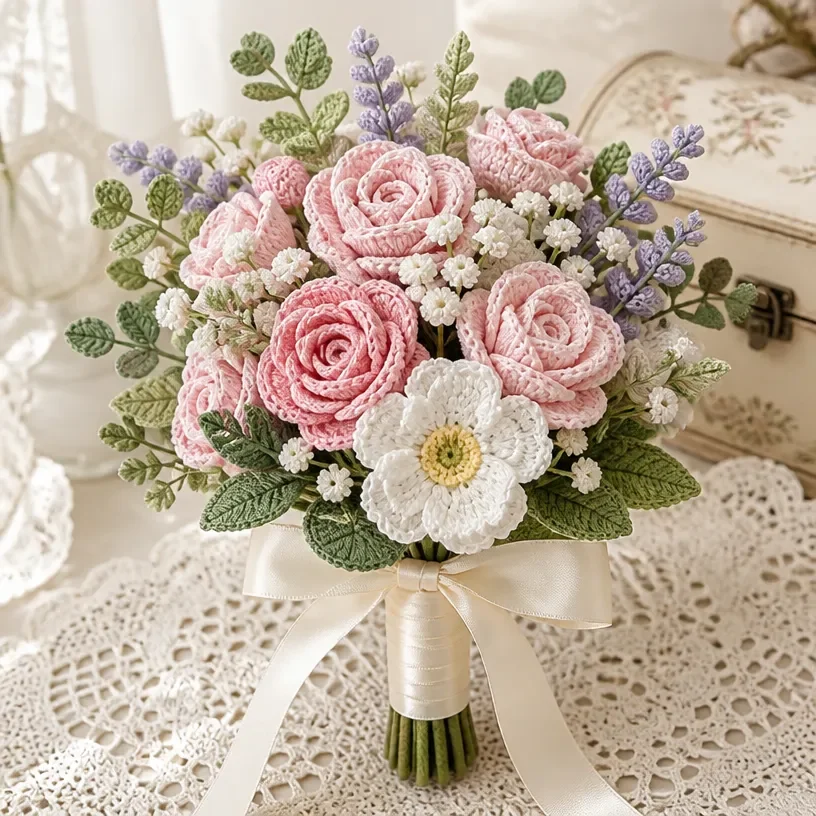
Crochet Wedding Bouquet Planning Guide
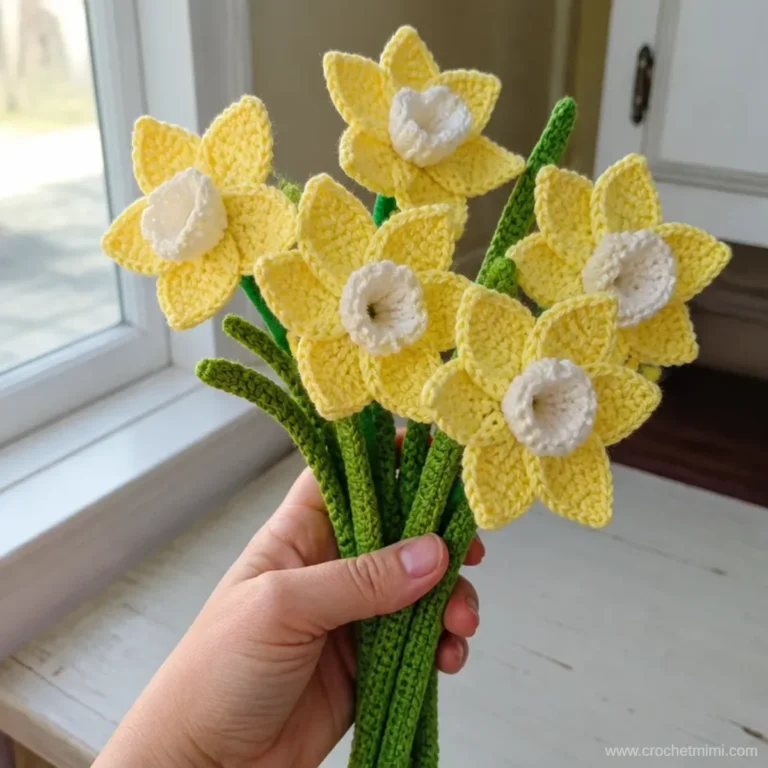
A crochet wedding bouquet brings together handmade flowers, prepared stems, foliage or filler flowers, and a coordinated wrap into one lasting floral display. The central idea is not a tightly defined flower species or a reconstructed pattern, but a thoughtful bouquet composition: crochet petals provide the focal handmade detail, while greenery and supporting flowers help create fullness and visual balance. The ribbon or bouquet wrap completes the presentation by connecting the flowers to the wedding palette.
This project is especially useful as floral design inspiration because it encourages decisions about color, density, contrast, and presentation before any technical crochet details are considered. A single dominant flower color can create a soft romantic effect, while a mixed palette can make the arrangement feel more expressive. The finished bouquet concept can also inform wedding decor, keepsake gifts, or other handmade floral displays.
The Design Behind This Crochet Flower Idea
The strongest visual feature of this bouquet concept is the relationship between handmade flowers and traditional bouquet structure. Crochet flowers act as the main decorative element, while prepared stems give the arrangement a recognizable floral presentation. Foliage and filler flowers add supporting texture rather than competing with the focal blooms.
This creates a layered design:
- Focal flowers: Crochet flowers provide the main visual interest.
- Supporting elements: Foliage or filler flowers help soften gaps and add variation.
- Stems: Prepared stems extend the flowers into a bouquet form.
- Presentation: Ribbon or bouquet wrap gives the lower portion a finished, coordinated appearance.
The arrangement can be interpreted as either a compact bouquet or a looser gathered design, depending on how the flowers, foliage, and filler elements are visually distributed. The important planning question is not how to reproduce a specific silhouette, but how much emphasis should be given to the crochet blooms compared with the supporting greenery.
Materials Identified
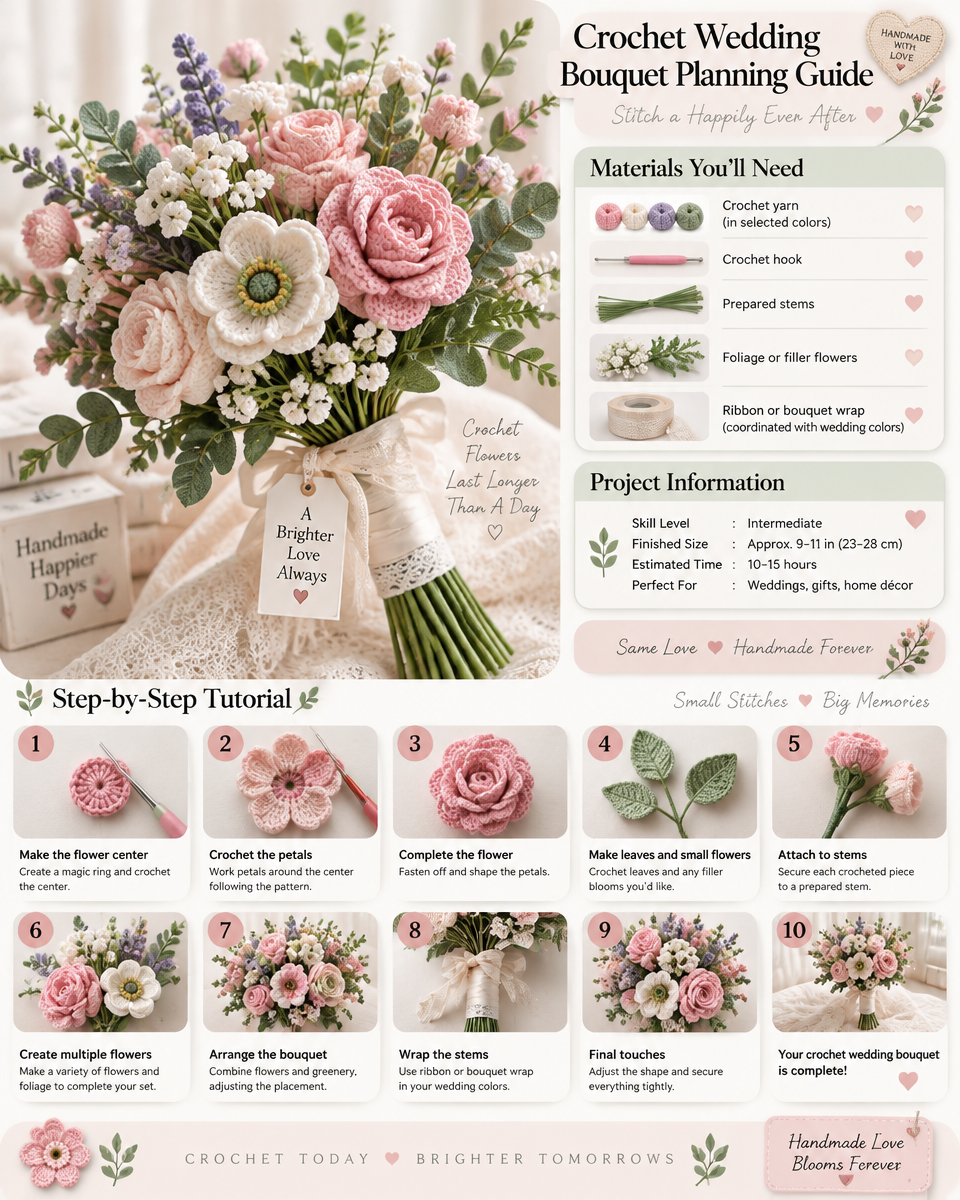
The available project information specifies:
- Crochet yarn in selected colors
- Crochet hook
- Prepared stems
- Foliage or filler flowers
- Ribbon or bouquet wrap coordinated with the wedding colors
The information does not specify yarn fibre, yarn weight, hook size, flower measurements, or other construction supplies. Those details should be selected separately according to the original floral design being planned.
A Closer Look at the Bouquet Composition
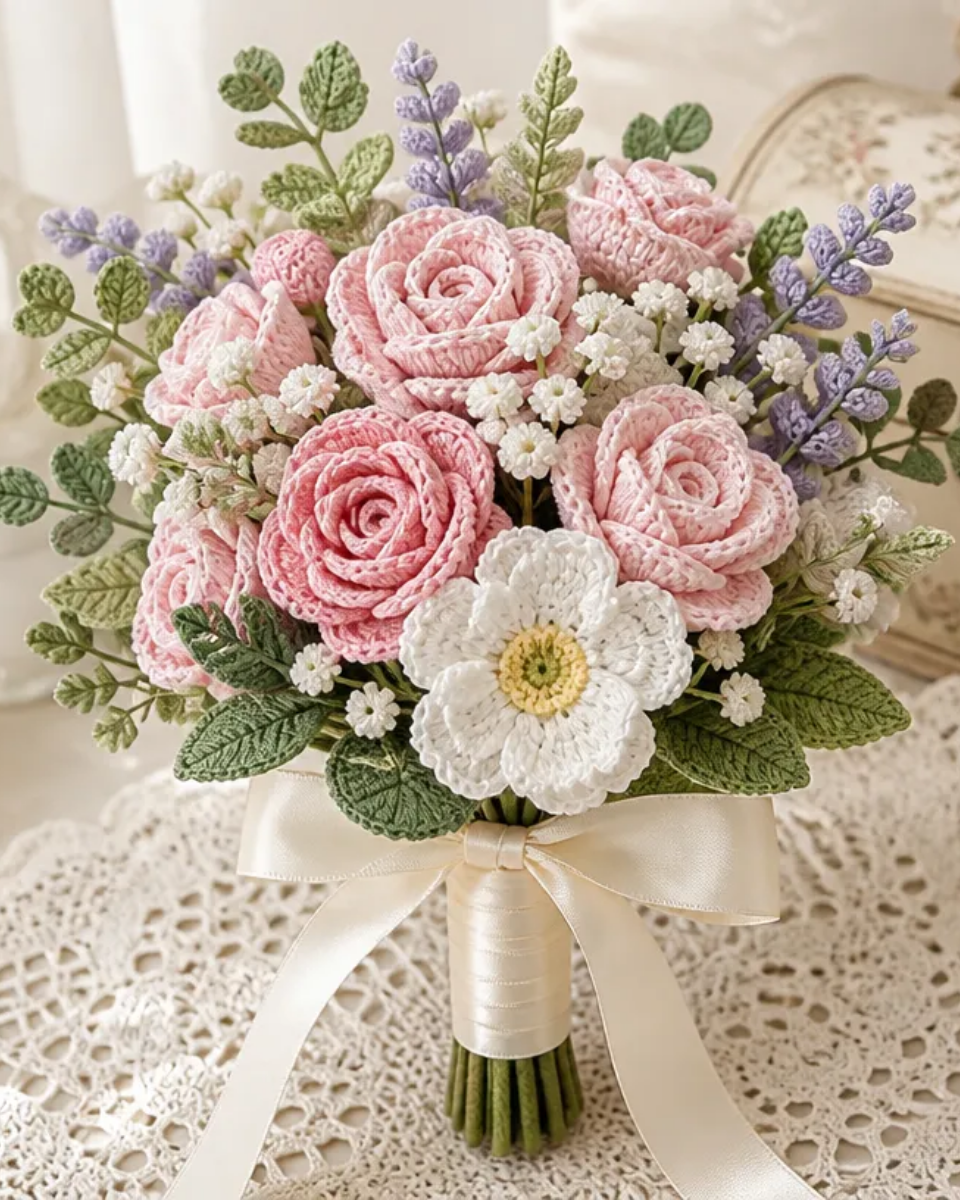
A successful crochet flower bouquet depends on visual relationships more than on the number of flowers alone. The crochet blooms should read as the bouquet’s main subject, while foliage and filler flowers provide rhythm around them. Repetition helps the arrangement feel intentional, but small differences in placement can keep it from looking rigid.
Focal flowers and supporting details
The crochet flowers are the natural focal point because they carry the handmade character of the project. Their color, size, and spacing will influence the entire mood of the bouquet. If the flowers share one main color, the arrangement may appear unified and calm. If several selected yarn colors are used, the bouquet can have more movement and contrast.
Foliage and filler flowers can work as visual bridges between the main blooms. They may help separate similarly colored flowers, soften the edge of the bouquet, or add a lighter layer around denser groups. Their role is supportive: they should enhance the crochet flowers rather than make the bouquet feel visually crowded.
Density and spacing
A densely arranged bouquet emphasizes abundance and celebration. Closely grouped flowers create a fuller impression and make the color palette feel more concentrated. A more open arrangement allows individual crochet flowers to remain distinct and gives the bouquet a lighter, airier character.
Spacing also affects the way the handmade details are seen. When flowers overlap heavily, the viewer notices the bouquet as a mass of color. When there is more separation, each flower becomes easier to appreciate as an individual crafted element. Both directions can be effective; the choice depends on whether the desired presentation is lush or relaxed.
Shape and balance
A rounded bouquet shape suggests a traditional floral arrangement, while a looser distribution can feel more garden-inspired. The relationship between the central flowers and the outer foliage is particularly important. Even when the arrangement is asymmetrical, it benefits from a clear visual center.
Prepared stems help establish the bouquet’s vertical structure, but the visible floral design remains the main consideration. Think about whether the flowers should sit at a similar height or whether some should create gentle variation. Height differences can make the bouquet feel more natural, while a more even arrangement can appear polished and formal.
Exploring the Color Palette
The selected yarn colors and coordinated bouquet wrap should be considered together. Because the wrap appears at the base of the arrangement, it can either quietly support the flowers or become a deliberate accent.
Soft wedding palettes
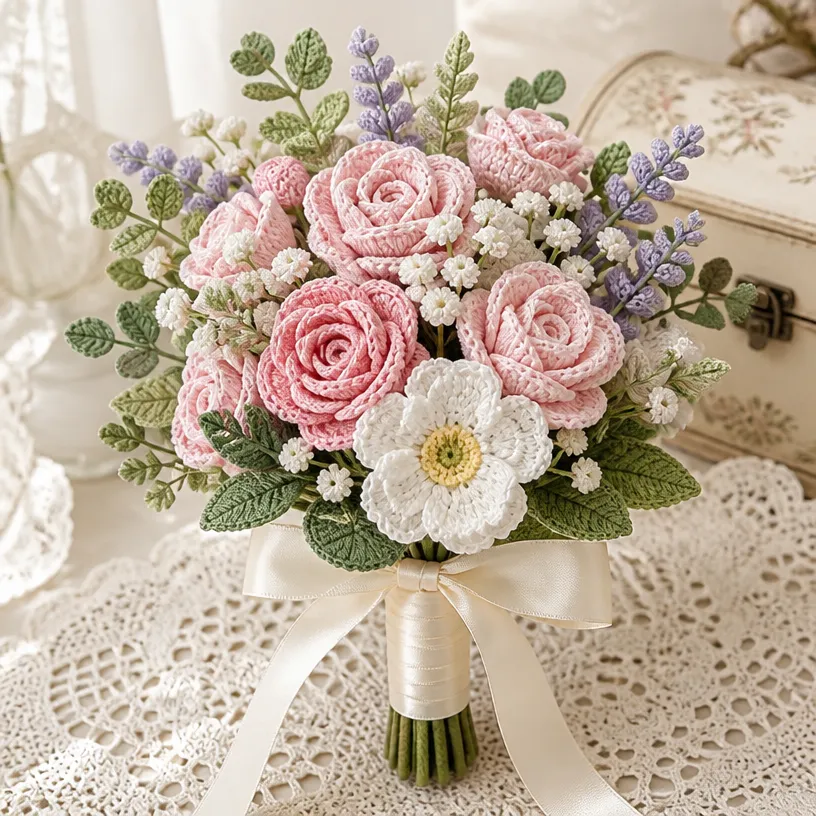
A restrained palette can create a romantic and refined presentation. Soft blush, cream, muted pink, or other gentle tones may give the bouquet a delicate appearance when paired with understated greenery. A similar bouquet concept could also work beautifully with one dominant pastel and a slightly deeper accent color for definition.
Mixed-color bouquets
Using several selected yarn colors can make the bouquet more expressive. Repeated colors placed throughout the arrangement help maintain cohesion, while a contrasting flower color can draw attention toward the center or create a stronger focal area.
A mixed palette does not need to be evenly divided. One color can dominate, with other shades appearing as smaller accents among the foliage and filler flowers. This creates hierarchy and prevents every flower from competing equally for attention.
Coordinating the wrap
The ribbon or bouquet wrap can match the wedding palette directly, echo one of the flower colors, or provide a neutral transition between the flowers and the stems. A matching wrap creates a unified look. A contrasting wrap gives the bouquet a more graphic finish. A quieter wrap allows the crochet flowers to remain the primary focus.
Floral Styling Directions
This bouquet idea naturally supports several visual styles.
Romantic bridal styling
A romantic version can emphasize soft flower colors, gentle contrast, and a balanced arrangement. Foliage or filler flowers can remain subtle so that the crochet blooms retain their importance. A coordinated wrap in a complementary wedding color completes the presentation without overwhelming the flowers.
Cottage-inspired styling
A cottage-inspired direction can use a more varied arrangement, with flowers and foliage distributed in a relaxed way. Slight variation in flower placement can make the bouquet feel gathered rather than formally arranged. Mixed colors can support this look, particularly when they remain within a related tonal family.
Modern styling
For a modern bouquet, visual restraint becomes the defining feature. A limited palette, repeated flower colors, and a clean wrap can create a more edited appearance. The bouquet may rely on contrast between the crochet flowers and the surrounding greenery rather than on many different flower colors.
Colorful celebration styling
A brighter interpretation can place several selected yarn colors together for a cheerful occasion bouquet. In this version, repeating each color in more than one area helps the arrangement feel designed rather than random. The wrap can either echo the strongest shade or remain neutral to keep the flower colors in focus.
Planning the Visual Arrangement
Before considering technical crochet details, decide what the bouquet should communicate. The following design questions can clarify the direction:
- Should one flower color dominate?
- Will the bouquet feel compact or loosely gathered?
- Are foliage and filler flowers subtle accents or prominent supporting elements?
- Should the arrangement look formal, romantic, or garden-inspired?
- Will the wrap blend into the palette or create contrast?
- Should the flowers appear evenly distributed or grouped into focal areas?
These choices shape the bouquet’s identity. For example, a dominant flower color with evenly distributed accents can feel composed and formal. Several color groups with visible filler flowers may feel more relaxed and expressive. Neither approach is inherently better; each produces a different kind of floral presentation.
Ways to Use the Bouquet Idea
A crochet wedding bouquet can inspire more than a bridal arrangement. Its combination of handmade flowers and coordinated presentation makes it relevant to several decorative and gifting occasions.
Wedding inspiration
The bouquet can inform a wider wedding palette, including table arrangements, ceremony decor, or keepsake floral displays. Repeating the same flower colors in smaller floral groupings can create visual continuity across an event.
Handmade gift presentation
A crochet flower bouquet can serve as inspiration for a thoughtful handmade gift. The chosen colors may reflect the recipient’s preferences, a milestone, or a particular celebration. The wrap adds a presentation detail that makes the arrangement feel intentionally prepared.
Floral decor
The same design language can be adapted for a shelf, desk, or other display area. A compact arrangement with a clear focal color may work well as decorative inspiration without requiring a wedding setting.
Keepsake arrangements
Because the project is based around handmade flowers rather than a temporary floral display, it can suggest a keepsake-oriented gift concept. The emphasis should remain on the visual arrangement and presentation rather than on making unsupported claims about longevity or care.
Visual Variations to Consider
The bouquet can be personalized through design choices rather than technical pattern changes.
Monochromatic direction
Use one main flower color throughout the arrangement, with foliage and filler flowers providing tonal or textural contrast. This creates a calm, cohesive look and places greater emphasis on bouquet shape.
Tonal variation
Choose several related shades within one color family. A range of light, medium, and deeper tones can add depth while preserving a unified appearance.
Strong contrast
Pair a dominant flower color with a noticeably different accent. The accent can be repeated in selected areas so that it feels integrated rather than isolated.
Changing the wrap aesthetic
The ribbon or bouquet wrap can be visually quiet, closely matched to the wedding colors, or used as a stronger finishing accent. This single decision can shift the bouquet from soft and understated to crisp and contemporary.
Adjusting the composition
A compact arrangement can appear formal and abundant, while more open spacing can highlight individual crochet flowers. More visible foliage can create a garden-inspired direction; less foliage keeps attention on the handmade blooms.
From Inspiration to Your Own Project
Planning an original crochet floral project begins with visual decisions. Start by selecting the occasion and the mood you want the bouquet to express. A wedding palette may suggest softness and coordination, while a birthday or seasonal display may invite stronger contrast.
Next, choose the focal flower direction. A bouquet centered on one repeated flower type will feel more unified, while a mixed selection can create greater variety. Since the available information does not identify a specific flower species, the safest approach is to think in terms of flower roles: main blooms, supporting flowers, foliage, and filler elements.
Consider the balance between flowers and greenery. Too little supporting detail may leave the bouquet feeling sparse, while too much can reduce the visual prominence of the crochet flowers. The right balance depends on whether the desired result is a flower-first arrangement or a more foliage-led display.
Finally, plan the presentation. The ribbon or bouquet wrap should relate to the wedding colors and the selected flowers. It is part of the design, not merely a finishing detail. A coordinated wrap can make a varied bouquet feel unified, while a contrasting wrap can emphasize the arrangement’s shape and create a more deliberate visual ending.
Frequently Asked Questions
What type of flowers does this bouquet feature?
The supplied project information describes crochet flowers but does not identify a specific flower species. The design can therefore be understood through its flower roles and composition rather than a confirmed botanical identity.
What colors should be used?
The project calls for crochet yarn in selected colors and a ribbon or bouquet wrap coordinated with the wedding colors. The palette can be soft, tonal, mixed, or more contrasting, depending on the desired wedding styling.
What makes the bouquet feel cohesive?
Repeated flower colors, a clear focal area, supportive foliage or filler flowers, and a coordinated wrap can help the arrangement feel unified. The strongest visual decisions should work together rather than compete.
Can this idea be used beyond a wedding?
Yes. The bouquet concept can inspire handmade floral decor, a thoughtful gift presentation, a keepsake arrangement, or an occasion-specific display. The color palette and wrap can be adapted visually to suit the setting.
Is a complete crochet pattern included in the available information?
No. The supplied information supports design inspiration and identifies broad project materials and stages, but it does not provide a complete crochet pattern, stitch instructions, measurements, or hook specifications.
Conclusion
The strongest lesson from this crochet wedding bouquet is that floral impact comes from coordination: focal crochet flowers, supporting foliage or filler flowers, selected colors, prepared stems, and a wedding-colored wrap all contribute to the final impression. Readers looking for additional bouquet-focused inspiration can explore crochet flower bouquet ideas or consider sophisticated wedding crochet styling. The project is best approached as a visual planning exercise, where color, balance, and presentation guide the handmade floral design.