Crochet Wildflower Bouquet Ideas
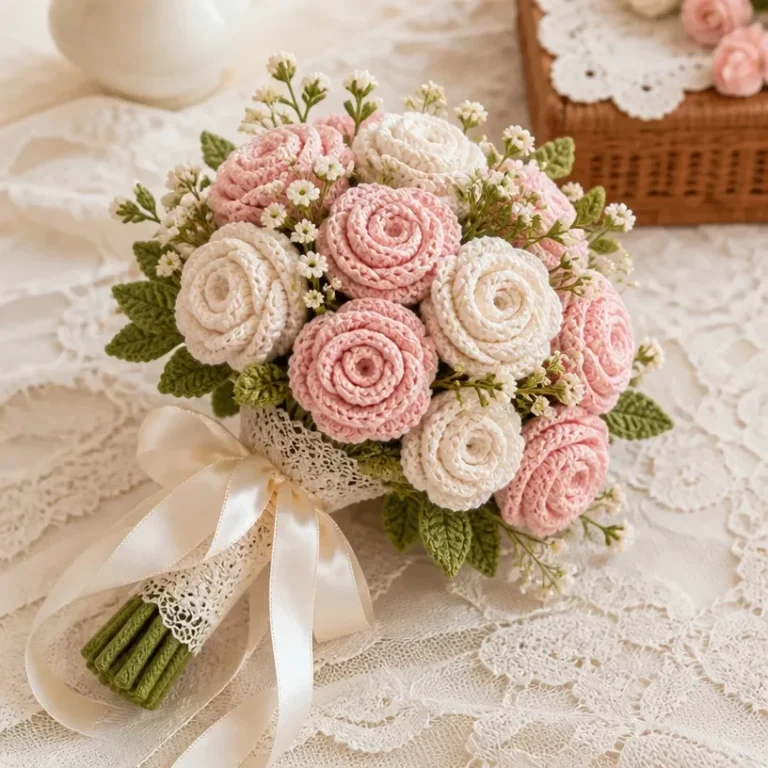
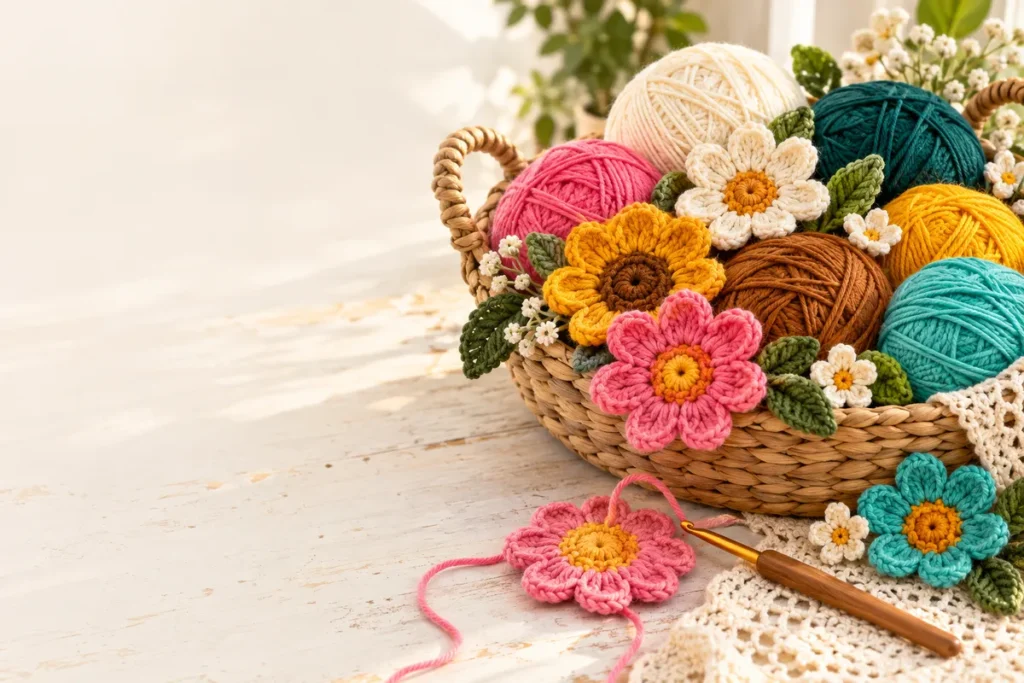
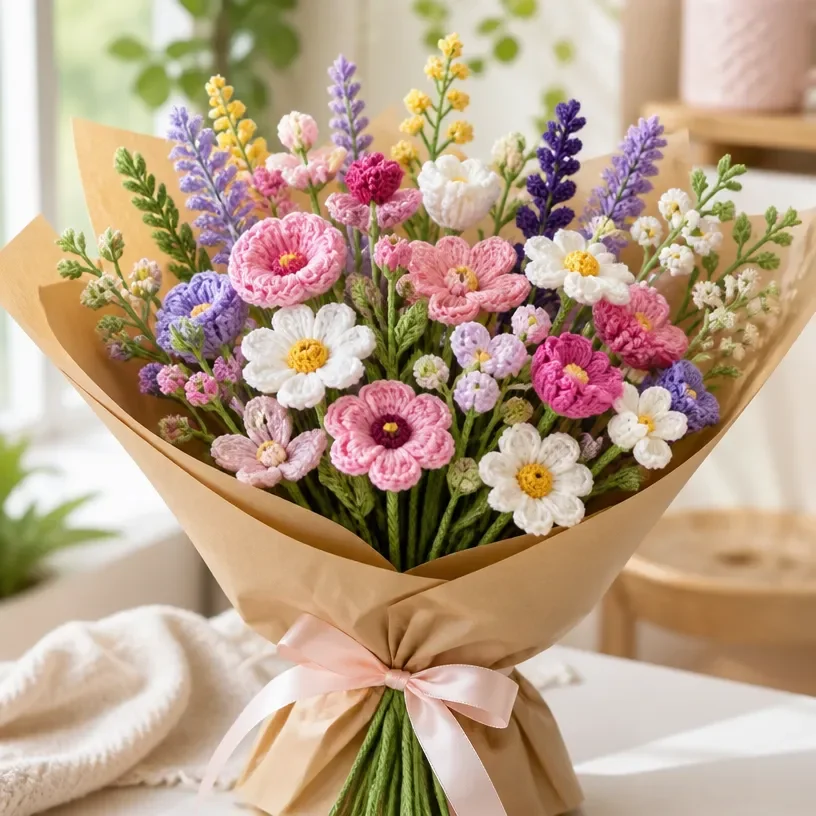
This crochet wildflower bouquet is centered on variety: assorted yarn colors become mixed flower shapes, while green yarn creates visible stems and foliage that give the arrangement a garden-inspired character. Rather than presenting one uniform bloom, the concept relies on repetition with variation different colors suggest different flower types, and the gathered stems create a recognizable bouquet silhouette.
The strongest visual feature is the contrast between colorful flower heads and the simple green framework beneath them. Bouquet wrap or ribbon completes the presentation, turning individual handmade flowers into a giftable floral display. As inspiration, this project is useful because it shows how color selection, flower grouping, greenery, and wrapping can shape the personality of crochet flower bouquets without depending on a single named flower species.
What Makes This Bouquet Stand Out
The design is visually distinctive because it treats the bouquet as a collection of handmade flowers rather than one repeated motif. Assorted colors help separate the blooms from one another, creating the impression of a mixed wildflower gathering. The arrangement can therefore feel more natural and expressive than a tightly coordinated bouquet made from only one flower color.
Green yarn provides an important visual transition between the flower heads and the bouquet wrap. The visible stems and foliage give the colorful upper portion a grounded appearance, while the wrap or ribbon creates a finished presentation at the base.
Several design qualities define the idea:
- Mixed flower character: Different yarn colors represent different flower types without requiring the bouquet to be identified as a specific botanical arrangement.
- Visible greenery: Green stems and foliage add contrast and help organize the flowers visually.
- Gathered silhouette: The flowers are brought together into one display rather than treated as separate ornaments.
- Handmade texture: Twisted and shaped yarn petals create an informal, crafted appearance.
- Gift-ready presentation: Bouquet wrap or ribbon gives the arrangement a deliberate finishing detail.
The overall effect is colorful, relaxed, and floral without being overly formal.
Materials Identified
The project information specifies:
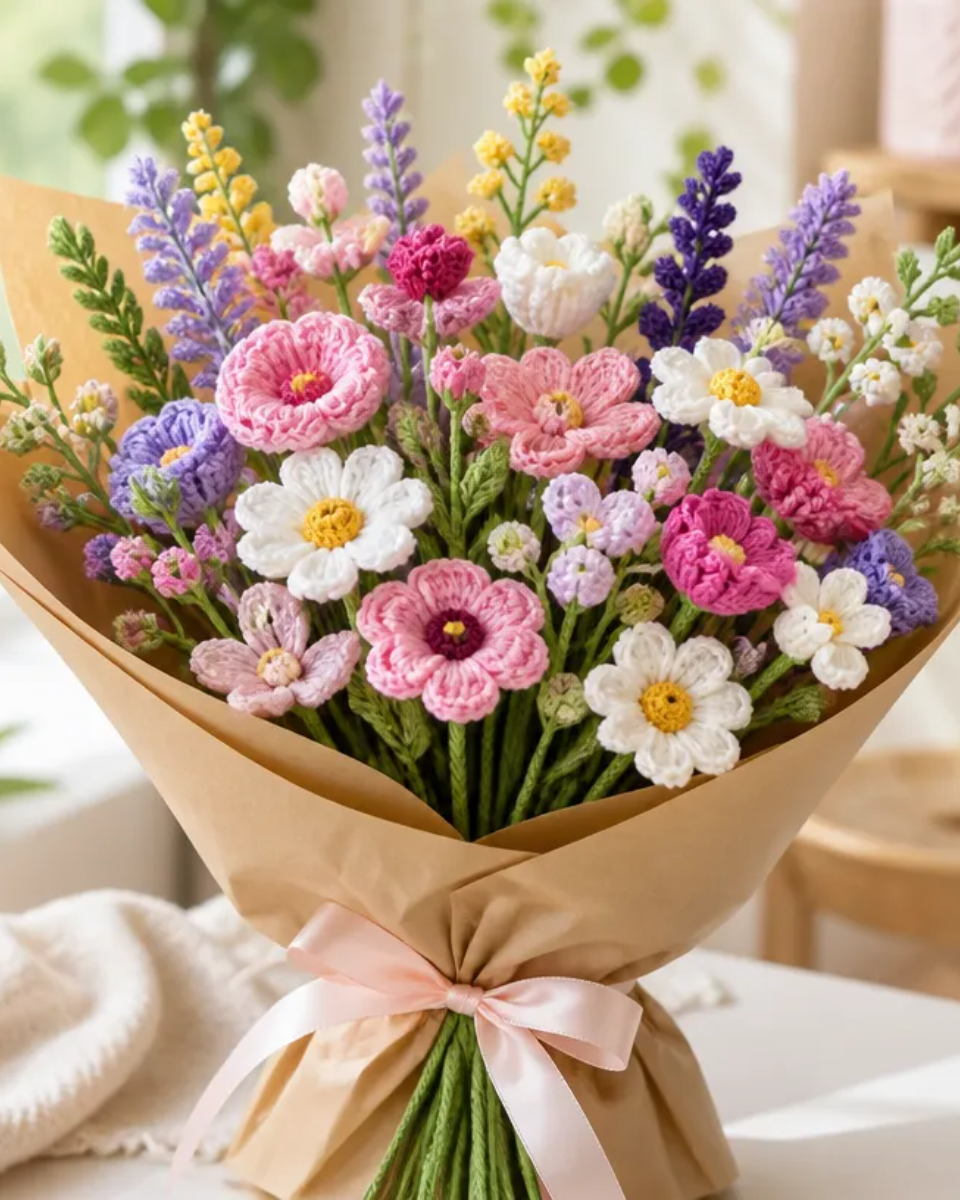
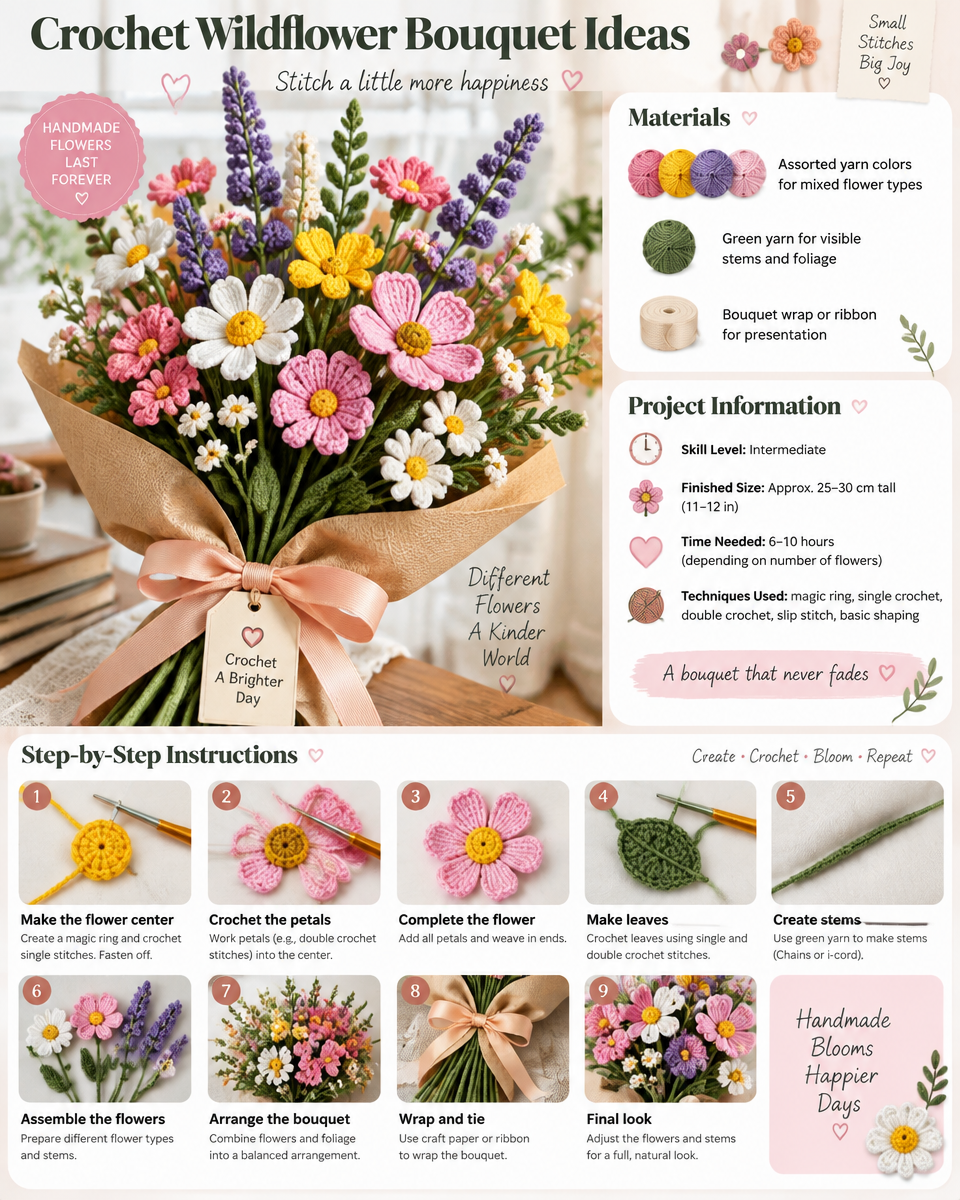
- Assorted yarn colors for mixed flower types
- Green yarn for visible stems and foliage
- Bouquet wrap or ribbon for presentation
No yarn fibre, yarn weight, hook size, stitch details, measurements, or additional construction supplies are specified in the available information.
Exploring the Flower Composition
The bouquet’s composition depends on the relationship between individual flower shapes and the larger gathered arrangement. Each flower is formed from shaped yarn petals, but the visual interest comes from seeing several flowers together. Repetition creates unity, while the use of assorted colors prevents the bouquet from appearing flat or overly uniform.
A useful way to understand the composition is to divide it into three visual layers:
- Flower heads: These provide the main color and attract attention.
- Green stems and foliage: These create separation, contrast, and a sense of structure.
- Bouquet wrap or ribbon: This consolidates the stems and completes the presentation.
This layered structure makes the bouquet readable from a distance. The flowers establish the first impression, the green elements connect them, and the wrapping signals that the arrangement is intended to be displayed or given as a gift.
The project information does not identify specific flower species, so the bouquet is best understood as a mixed wildflower-inspired arrangement. Its appeal lies in the variety of handmade blooms rather than in accurately reproducing one botanical family.
Color Palette and Floral Mood
Assorted yarn colors are central to the design. Color is used to represent different flower types, allowing the bouquet to suggest a small collection of blooms gathered together. This approach supports a lively, garden-inspired mood.
A mixed-color bouquet can be styled in several visual directions:
- Bright and playful: Strongly contrasting flower colors create an energetic display.
- Soft and romantic: Blush, cream, pale yellow, and muted green can create a gentler floral impression.
- Garden-inspired: Several natural-looking flower colors can emphasize the wildflower concept.
- Modern and graphic: A limited combination of two or three contrasting colors can make the arrangement feel more curated.
- Monochromatic: Several shades of one color can keep the mixed-flower idea while producing a calmer overall appearance.
The green yarn has more than a practical visual role. It acts as a consistent color through the arrangement, helping unrelated flower colors feel connected. Even when the flower heads vary considerably, the repeated green stems and foliage create continuity.
The wrap or ribbon can either blend into the bouquet or provide a contrasting accent. A restrained wrap keeps attention on the flowers, while a more noticeable ribbon can make the presentation feel especially gift-focused.
Bouquet Styling and Silhouette
The gathered arrangement is the main styling feature. Individual flowers become more impactful when viewed as a group, and the bouquet format gives the project a clear decorative purpose.
A rounded, full-looking arrangement would emphasize abundance and mixed color. A looser visual grouping would highlight the handmade character of each flower and allow more of the green stems to remain visible. Neither direction requires a specific technical construction; they are simply different ways to think about the final display.
The bouquet can also be considered through its visual density:
- A dense grouping creates a bold floral statement and places most attention on the flower heads.
- A more open grouping allows the stems and foliage to contribute more strongly to the design.
- A balanced grouping gives the flowers equal importance while retaining a clear green framework.
Because the flowers are gathered and wrapped, the arrangement has a natural focal point at the upper section and a visually contained base. The wrap or ribbon prevents the stems from reading as disconnected pieces and gives the display a finished outline.
Floral Design Details to Notice
The project’s strongest design lesson is that simple repeated elements can become a distinct bouquet through variation and presentation. The flowers do not need to be identical to belong together. Assorted colors create differentiation, while the repeated use of green yarn and a shared bouquet format creates cohesion.
The shaped petals also contribute to the bouquet’s texture. Twisted yarn has a more tactile, informal quality than a perfectly smooth floral surface. This supports the wildflower-inspired character, where variation is part of the visual appeal.
The arrangement can be read as a study in contrast:
- Colorful flower heads against green stems
- Individual blooms against one unified bouquet
- Soft, shaped petals against the structured wrap
- Varied flower colors against a consistent presentation
These contrasts give the project visual interest without requiring elaborate decoration.
Style Directions for the Bouquet
The concept naturally supports several styling themes.
Cottage-Inspired Floral Decor
A varied selection of flower colors and visible green stems can create a relaxed, cottage-inspired mood. This direction suits informal shelf displays, tabletop arrangements, and handmade gift presentation.
Romantic Bouquet Styling
Softer flower colors paired with a coordinating ribbon can give the bouquet a romantic character. The finished arrangement could serve as visual inspiration for a sentimental gift or an occasion where gentle color is preferred.
Colorful Statement Display
A stronger mix of contrasting yarn colors makes the flowers the clear focal point. This version can add color to a desk, shelf, or small decorative area without relying on additional embellishment.
Minimal Floral Arrangement
A restrained palette with fewer dominant colors can make the same bouquet concept feel more modern. Green stems and foliage remain important because they provide the structure that keeps the arrangement from becoming visually plain.
Seasonal Presentation
The color direction can be adapted to a season through styling alone. Soft spring colors, warm autumnal tones, or bright summer-inspired shades can change the mood while preserving the mixed-flower bouquet concept.
Ways to Use the Idea
This crochet flower bouquet works naturally as inspiration for handmade floral decor and thoughtful presentation. The gathered format gives it more presence than a single crochet flower, while the visible handmade details keep it personal.
Possible uses include:
- A colorful shelf or desk display
- A handmade birthday gift
- A floral arrangement for Mother’s Day inspiration
- A romantic presentation for Valentine’s Day
- A wedding or bridal bouquet color study
- A seasonal decorative arrangement
- A keepsake-style alternative to a conventional flower display
- A centerpiece concept for a craft-focused celebration
For wedding or occasion styling, the most useful takeaway is the relationship between flower colors and presentation. A bouquet can feel coordinated through its palette and wrapping even when the individual flowers vary.
The arrangement also offers a way to create floral decor that is not dependent on one exact flower identity. This makes the idea adaptable to different visual themes while retaining the recognizable elements of flowers, greenery, and a wrapped bouquet.
Visual Variations to Explore
The most suitable variations are visual rather than technical. The flower arrangement can take on a new personality simply by changing its palette, balance, or presentation.
Consider these directions:
- Use one dominant flower color with a few contrasting accents.
- Create a soft palette with pale, closely related tones.
- Emphasize contrast with bright flower colors and clearly visible green stems.
- Let the wrap or ribbon coordinate with one flower color.
- Choose a neutral presentation detail so the flowers remain the focus.
- Create a more formal look with a carefully limited palette.
- Highlight the wildflower character through a broader mix of colors.
- Use seasonal colors to connect the arrangement with a particular celebration.
These choices affect the visual message without changing the central concept. The bouquet remains a collection of shaped yarn flowers gathered with green stems and finished for presentation.
Planning Your Own Floral Direction
When using this project as inspiration for an original crochet flower arrangement, begin with the mood you want the finished bouquet to express. A colorful mixed palette suggests playfulness and abundance, while a narrower palette creates a quieter and more coordinated impression.
Next, consider whether one flower color should act as the focal point. A dominant shade can give the arrangement visual leadership, while smaller color accents keep it from looking repetitive. Alternatively, distributing colors more evenly can reinforce the informal wildflower feeling.
Greenery should also be considered as part of the composition rather than as an afterthought. Visible green stems and foliage connect the flowers and provide contrast, especially when the flower colors are varied.
Finally, think about presentation. Bouquet wrap or ribbon changes how the arrangement is perceived: a subtle finish emphasizes the flowers, while a contrasting finish makes the entire bouquet feel more styled. The choice of presentation can also connect the bouquet to a gift, season, room, or occasion.
This planning process focuses on visual decisions only. The supplied project information does not provide a complete crochet pattern or technical tutorial, so the design should be treated as floral inspiration rather than a set of reconstructed making instructions.
Frequently Asked Questions
What type of flowers does this bouquet represent?
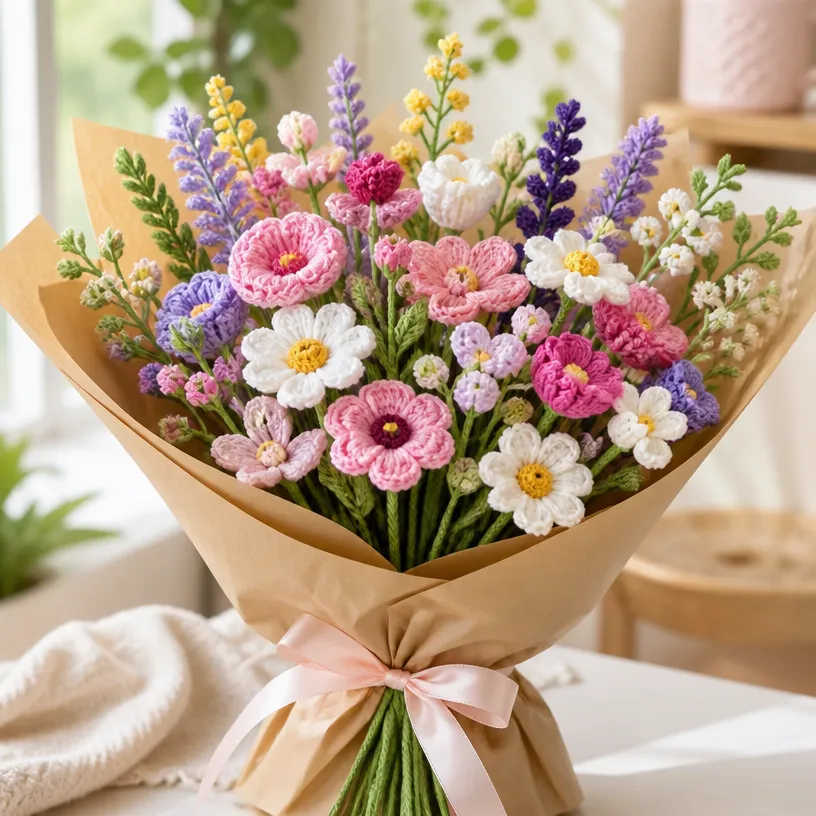
The project is best described as a mixed wildflower-inspired bouquet. Specific flower species are not identified in the available information, so the assorted colors and shaped petals should be viewed as a general floral composition.
What colors are used?
The project calls for assorted yarn colors for mixed flower types and green yarn for visible stems and foliage. The exact flower colors are not specified, which leaves room for bright, soft, seasonal, or coordinated palette choices.
What gives the bouquet its finished appearance?
The flowers are gathered together, and the stems are wrapped using bouquet wrap or ribbon. This presentation detail helps turn individual handmade flowers into one unified display.
Can this idea be styled for a gift?
Yes. The bouquet format and wrapped presentation naturally support handmade gift styling. Color choices and ribbon selection can be adapted to suit a birthday, seasonal occasion, romantic gesture, or floral decor theme.
Is a complete crochet pattern included in the supplied information?
No. The available information supports visual and design analysis, including flower colors, green stems and foliage, gathering, wrapping, and arrangement. It does not provide a complete crochet pattern, stitch instructions, measurements, or technical tutorial.
Conclusion
The central strength of these Crochet Wildflower Bouquet Ideas is the balance between variety and unity. Assorted flower colors create a lively mixed-bloom effect, while green stems, foliage, and bouquet wrapping bring the arrangement together. For further floral inspiration, explore crochet flower bouquet ideas from Hookok and the Crochet Wildflower Bouquet design by Sarah-Jane Hicks. The most useful design lesson is simple: varied handmade flowers become a cohesive floral display when color, greenery, grouping, and presentation are considered as one composition.