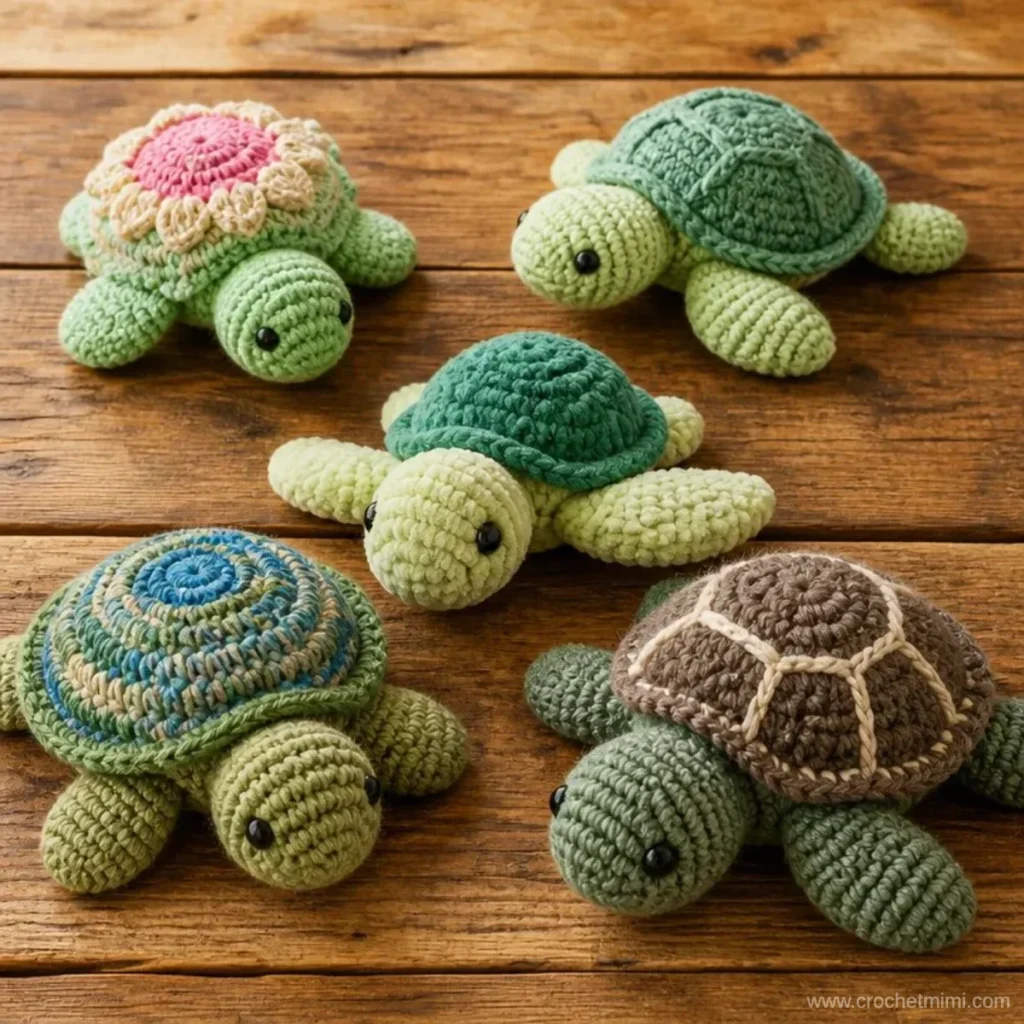
Crochet turtles can look remarkably different depending on how the body, limbs, and carapace are built. This guide compares five documented crochet turtle projects rather than providing a new Crochet Mimi pattern. You’ll see removable shells, sewn carapace sections, and designs worked in continuity with the body, along with project-specific yarn and hook information. Makers who enjoy coordinating handmade creatures with floral décor may also like exploring a crochet five-petal flower for a playful display.
Why You’ll Love This Crochet Project
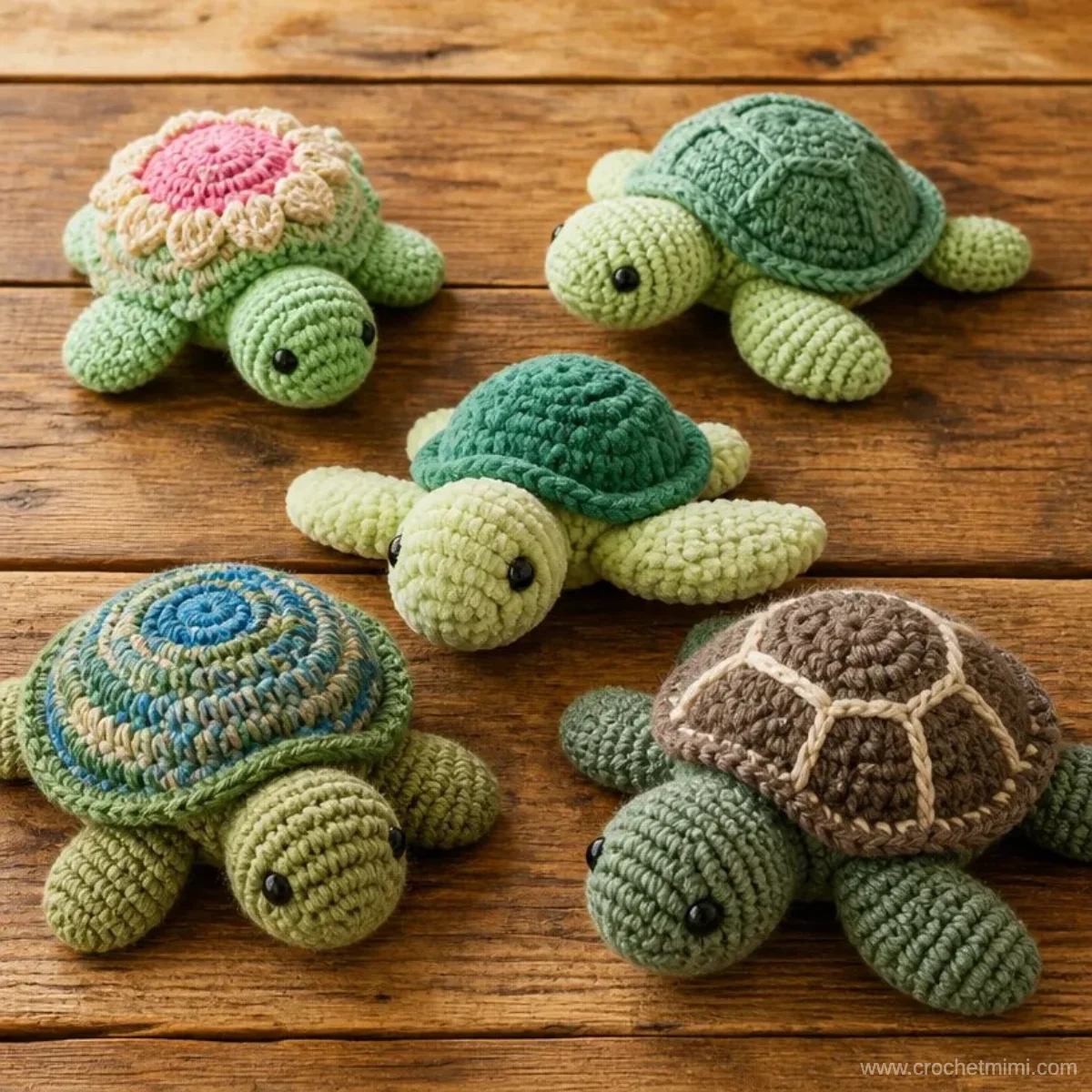
Comparing these crochet turtles is useful because construction changes the way each project is assembled and finished.
- You can compare construction styles. Some projects separate the carapace from the body, while others build it into the main form.
- You can choose a project based on joining preferences. The documented designs include sewing, joining components during crocheting, and attaching parts beneath a shell.
- You can study different component arrangements. Heads, legs or flippers, tails, bodies, and carapace sections are organized differently in each project.
- You can plan a themed handmade gift. A turtle may be displayed on a shelf, included in a nature-inspired arrangement, or given as a decorative handmade item.
- You can compare yarn effects. The listed projects use materials ranging from worsted yarn to chunky and chenille or velour yarns.
Crochet Mimi Tip: Keep each project’s yarn and hook combination separate while comparing. The specifications belong to individual designs and should not be combined into one substitute pattern.
Before You Start Crocheting
This is a factual comparison of five attributed crochet turtle projects, not a complete tutorial. The original creators retain the detailed pattern instructions, stitch counts, photographs, diagrams, and execution guidance.
The five construction approaches
Nala the No-Sew Turtle by Nicole Chase uses a separately made head, four legs, and tail that are joined into a body round. Its floral carapace is crocheted separately and remains removable. Nicole Chase also presents a simpler removable-carapace variation, but that is a variation from the same creator rather than a sixth project.
Crochet Turtle with Removable Shell by Amanda of love. life. yarn. makes the head and body in one piece. Four legs and a tail are sewn on. Its removable carapace consists of two upper pieces and a lower piece with passages for the projecting parts.
No-Sew Sea Turtle by Jade of Sweet Softies joins the head and four flippers to the belly during the belly’s eighth round. The carapace continues from the belly, followed by a border and tail.
Tammy the Turtle by Pine Tree Crochet is documented as an eight-piece construction. The head, legs, and tail attach beneath the lower carapace, after which the upper and lower carapace pieces are sewn together with stuffing.
Sea Turtle M23265 WETQ by Lion Brand Yarn Company includes a head, body, four legs, and tail. Its body includes upper, lower, and edge sections of the carapace, with sewing positions and embroidered details specified in the original pattern.
The projects reviewed therefore show at least three broad approaches: removable carapaces, carapaces sewn around separately made components, and carapaces formed in continuity with the body.
Materials and Tools
These are project-specific material examples, not one combined shopping list.
- Nala the No-Sew Turtle Nicole Chase: Brava Worsted with a 4 mm crochet hook or Parfait Chunky with a 5 mm crochet hook. The two documented combinations produce different finished sizes.
- Crochet Turtle with Removable Shell Amanda / love. life. yarn.: Premier Parfait Chunky with a 6 mm crochet hook.
- No-Sew Sea Turtle Jade / Sweet Softies: Hobbii Toucan chenille/velour, category 6, with a 5 mm crochet hook.
- Tammy the Turtle Pine Tree Crochet: Patons Canadiana Variegated and Caron Kindness Forest with a 4.5 mm crochet hook.
- Sea Turtle M23265 WETQ Lion Brand Yarn Company: Wool-Ease Thick & Quick with a 7 mm crochet hook.
The inspected information does not establish yarn fibre or weight for the Tammy the Turtle materials, so those details should not be inferred.
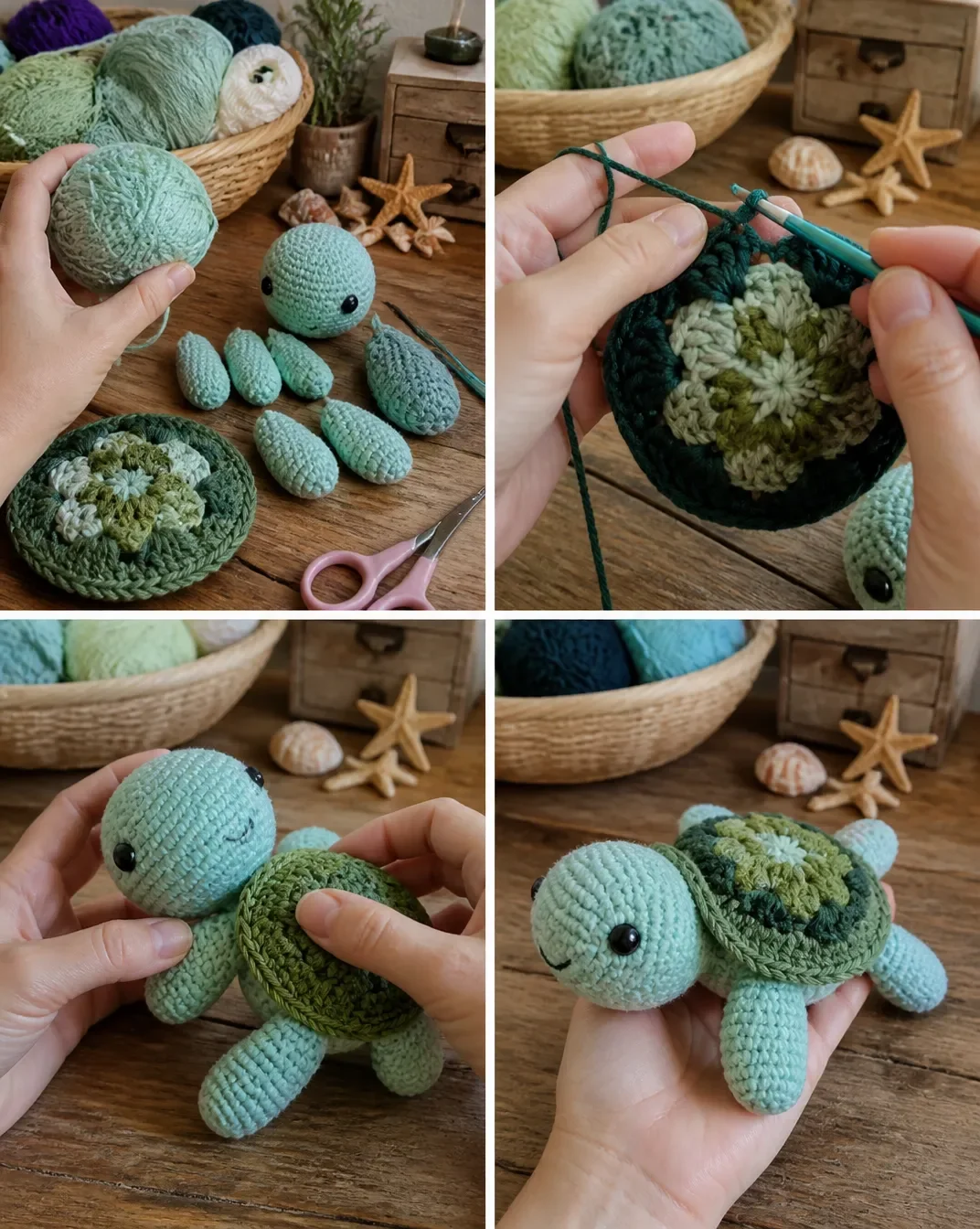
How to Crochet This Project
Because the five projects are third-party patterns, this section compares their documented construction sequences without reproducing rounds, stitch counts, protected instructions, photographs, or diagrams. Use each creator’s original pattern for exact execution details.
Nala the No-Sew Turtle
Nicole Chase documents the head, four legs, and tail as separately crocheted components. These components are joined into a body round. The floral carapace is made separately and is removable.
The project has two documented yarn-and-hook options: Brava Worsted with a 4 mm hook, or Parfait Chunky with a 5 mm hook. Nicole Chase notes that the combinations produce different finished sizes. Follow the original pattern for all shaping, joining locations, and carapace details.
Crochet Turtle with Removable Shell
Amanda’s project makes the head and body in one piece. The four legs and tail are sewn onto that main form.
The removable carapace is composed of two upper pieces and one lower piece. The lower piece includes passages that accommodate the projecting parts. Some seam placement depends on the creator’s visuals, so the original photographs and written instructions are important when assembling this design.
Premier Parfait Chunky with a 6 mm hook is specified. Consult the original source for the complete pattern and placement guidance.
No-Sew Sea Turtle
Jade’s design joins the head and four flippers to the belly during the belly’s eighth round. The carapace then continues from the belly, followed by a border and tail.
The documented material example is Hobbii Toucan chenille/velour, category 6, worked with a 5 mm hook. The source contains an unresolved conflict between its abbreviation list and border instruction concerning which loops to use. That wording should be checked directly in the original instructions rather than corrected or guessed here.
Reference photos are reserved for the creator’s PDF. Use Sweet Softies’ original source for the complete execution sequence.
Tammy the Turtle
Pine Tree Crochet documents Tammy as an eight-piece construction. The head, legs, and tail attach beneath the lower carapace. The upper and lower carapace pieces are then sewn together with stuffing between them.
The named materials are Patons Canadiana Variegated and Caron Kindness Forest, used with a 4.5 mm crochet hook. The inspected source does not establish the yarn fibre or weight, so those specifications should remain attached to the original source rather than inferred.
Pine Tree Crochet permits linking to the original project. Follow that source for the complete pattern, stitch information, and assembly directions.
Sea Turtle M23265 WETQ
The Lion Brand project includes a head, body, four legs, and tail. The body construction includes upper, lower, and edge sections of the carapace. The original pattern also specifies sewing positions and embroidered details.
Wool-Ease Thick & Quick and a 7 mm crochet hook are documented for this project. Lion Brand labels this specific project “easy” and states that the finished object is “not a toy.” Those statements apply only to this Lion Brand project and should not be generalized to the other designs.
Use the original Lion Brand source for all pattern instructions, diagrams, sewing details, and embroidery guidance.
Ways to Display Your Finished Crochet
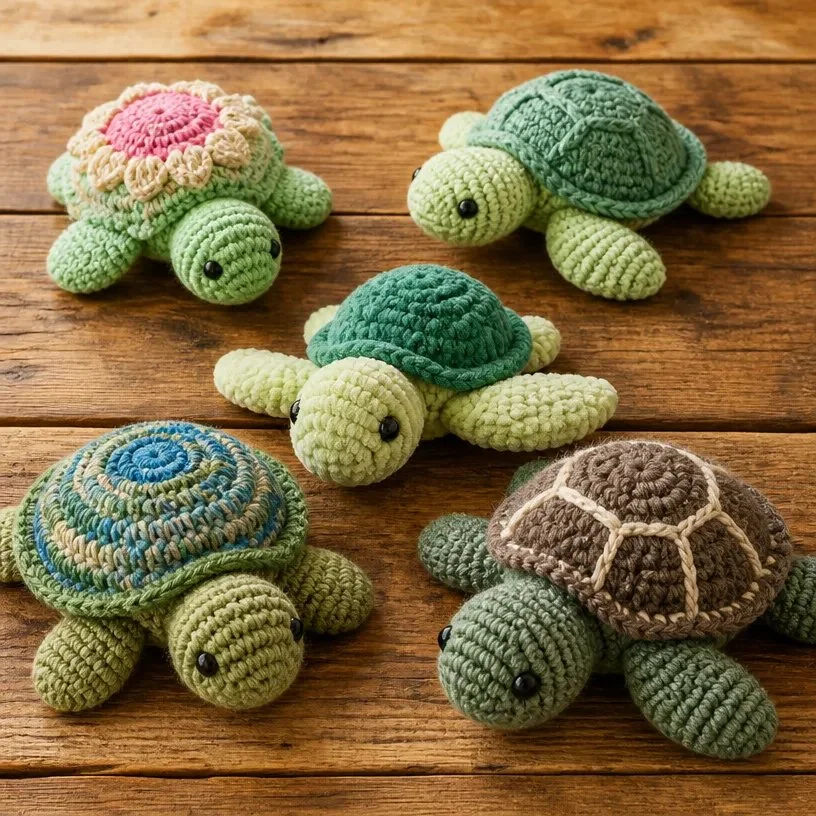
After completing one of these documented projects, consider how its shape and colors fit into your décor:
- Nature-inspired shelf display: Place a turtle beside books, plants, stones, or other woodland and ocean-themed decorations.
- Children’s-room accent: Use the finished piece as a decorative accent where its project-specific safety guidance and intended use are appropriate.
- Handmade gift presentation: Pair the turtle with a nature book, a card, or coordinating handmade accessories.
- Seasonal centerpiece: Arrange one or more crochet turtles around a table display using colors that suit summer, coastal, or garden themes.
- Floral décor pairing: A turtle can accompany crochet flowers or greenery in a whimsical botanical arrangement. For coordinated color planning, see this crochet bouquet color-planning guide.
- Removable-shell demonstration: For a design with a removable carapace, display the shell separately only when the original construction allows that use and the components remain protected.
Caring for Your Crochet Project
Care depends on the yarn, stuffing, embroidery, seams, and construction used in the specific project.
- Keep the finished turtle away from excessive heat, which can affect yarn texture and stuffing.
- Dust it gently with a soft brush or clean, dry cloth.
- For a small mark, use careful spot cleaning only after checking the yarn manufacturer’s care guidance.
- Avoid soaking a piece when its construction includes sewn sections, stuffing, embroidered details, or layered carapace components.
- Allow any cleaned area to dry completely before storing.
- Store the turtle in a dry place away from crushing pressure, sharp objects, and prolonged direct sunlight.
- Check sewn attachments and embroidered details periodically if the item is handled or displayed frequently.
- Follow the manufacturer’s care instructions for the particular yarn whenever they are available.
Lion Brand’s “not a toy” statement applies specifically to Sea Turtle M23265 WETQ. Do not treat that project-specific statement as a universal safety classification for the other projects.
Helpful Crochet Tips
- Keep project notes separate. Write the creator’s name, yarn, and hook size at the top of each set of notes so specifications do not get mixed.
- Check the original visuals. This is especially important for Amanda’s removable carapace, where precise seam placement relies partly on the creator’s images.
- Track component names. Label heads, legs or flippers, tails, upper carapaces, lower carapaces, and body sections as you finish them.
- Use the stated hook with the stated yarn first. Changing yarn or hook size can alter proportions, texture, and finished size.
- Do not guess loop placement. For the Sweet Softies design, consult the original wording because the supplied source contains an unresolved border-loop conflict.
- Secure attachments carefully. Designs involving sewn legs, tails, shells, or carapace sections depend on following the original placement instructions.
- Preserve embroidery details. For the Lion Brand project, follow the original pattern’s instructions for sewing positions and embroidered features rather than substituting an unverified layout.
- Respect the pattern’s scope. A comparison article can explain construction differences, but the original source is necessary for rounds, stitch counts, shaping, and finishing.
Creative Ways to Customize Your Project
Optional customization is possible, but it should remain separate from each approved pattern’s instructions.
- Choose a different color arrangement within the same project’s yarn category if the original pattern allows color changes.
- Use contrasting yarn for the carapace and body to make the shell structure easier to see.
- Select a variegated effect where the original project’s yarn choice supports a multicolored appearance.
- Display a turtle with coordinating crochet flowers for a garden or coastal theme; a crochet bridal rose bouquet can inspire a softer, gift-oriented palette.
- If changing yarn weight or hook size, treat the result as an alteration rather than an exact version. Texture, proportions, structure, and finished size may change.
- For a removable-carapace design, use contrasting shell colors while keeping the construction and attachment method from the original source unchanged.
Frequently Asked Questions
Are these instructions a complete crochet turtle pattern?
No. This article is an attributed comparison of five documented projects. Use the original creator’s pattern for rounds, stitch counts, placements, shaping, photographs, and finishing instructions.
Which projects have removable carapaces?
Nicole Chase’s Nala the No-Sew Turtle has a separately crocheted floral carapace that is removable. Amanda’s Crochet Turtle with Removable Shell also uses a removable carapace made from two upper pieces and a lower piece.
Which project forms the carapace in continuity with the body?
Jade’s No-Sew Sea Turtle continues the carapace from the belly after the head and four flippers join during the belly’s eighth round.
Which project is documented as an eight-piece construction?
Tammy the Turtle by Pine Tree Crochet is documented as an eight-piece construction, with the head, legs, and tail attaching beneath the lower carapace before the upper and lower carapace pieces are sewn together with stuffing.
What yarn and hook are used for Nala the No-Sew Turtle?
Nicole Chase documents either Brava Worsted with a 4 mm hook or Parfait Chunky with a 5 mm hook. The two combinations produce different finished sizes.
Can I use one yarn and hook combination for every project?
No. Each project has its own documented material example. The listed combinations should be treated as project-specific information rather than a universal recommendation.
Is the Lion Brand sea turtle intended to be a toy?
Lion Brand expressly states that Sea Turtle M23265 WETQ is “not a toy.” That statement applies to that specific project and should not be extended to the other designs.
What should I do if I need exact assembly placement?
Return to the original source for the project you are making. Exact seam placement, joining positions, rounds, stitch counts, and finishing details belong to the individual creator’s instructions.
Conclusion
These five crochet turtle projects demonstrate how much the construction can vary while keeping the same recognizable subject. Removable carapaces, sewn shell sections, and continuous body-and-shell designs each create a different making experience. Choose one project, keep its materials and instructions together, and enjoy displaying or gifting the finished piece. For broader crochet inspiration, browse the crafty journal of a crochet pattern designer and the design policy manual resource.