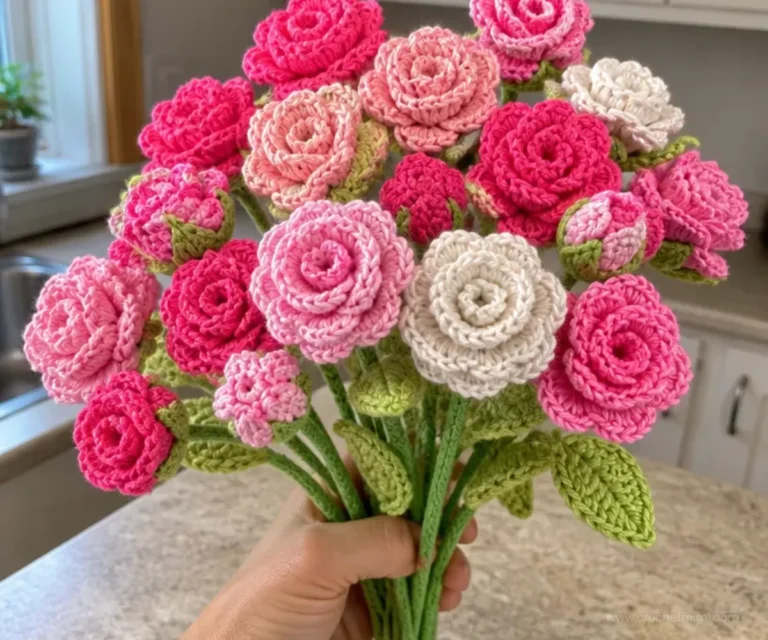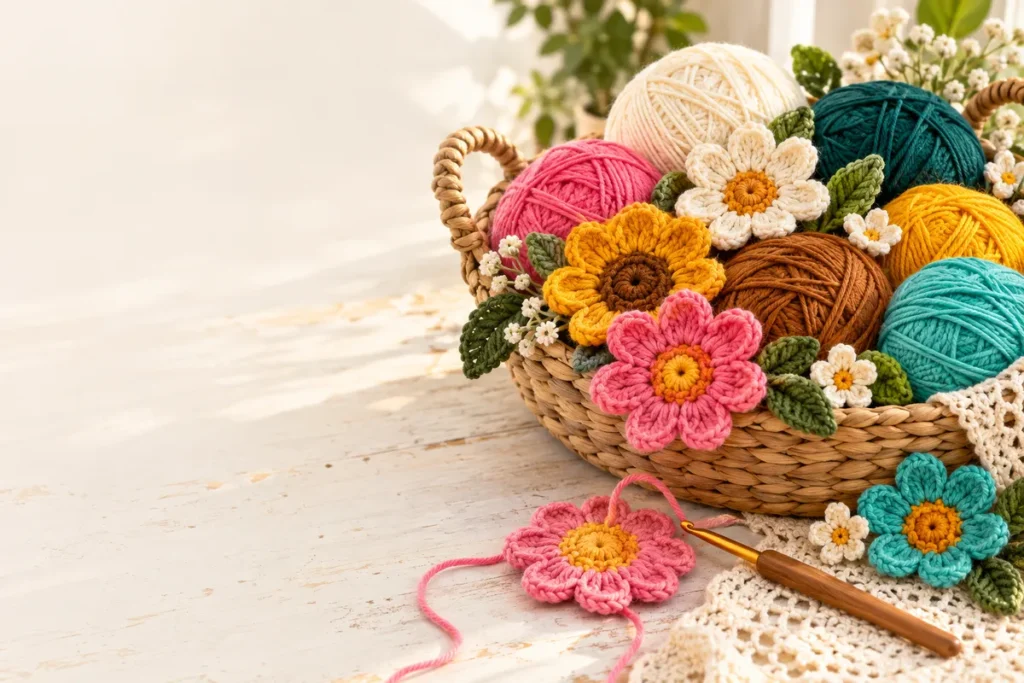

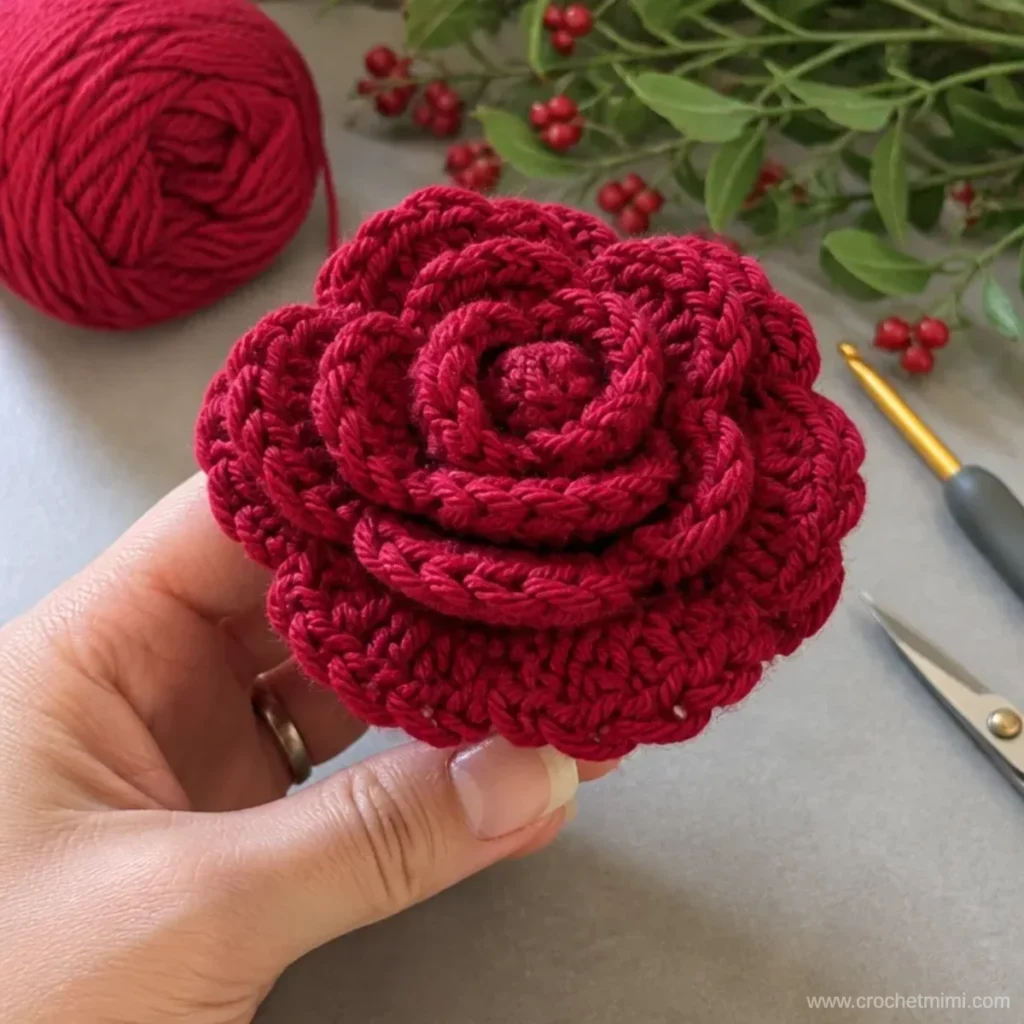
An Easy Red Roses Crochet Pattern creates a charming handmade flower with a rich red color and softly shaped petals. This small project is useful for gifts, vase arrangements, table decorations, and lasting seasonal displays. It is also a practical way to practice a magic ring, double crochet stitches, increases, joining, and simple flower shaping. For coordinating several flowers into one arrangement, use this crochet bouquet color planning guide to help choose a balanced palette.
Why You’ll Love This Crochet Project
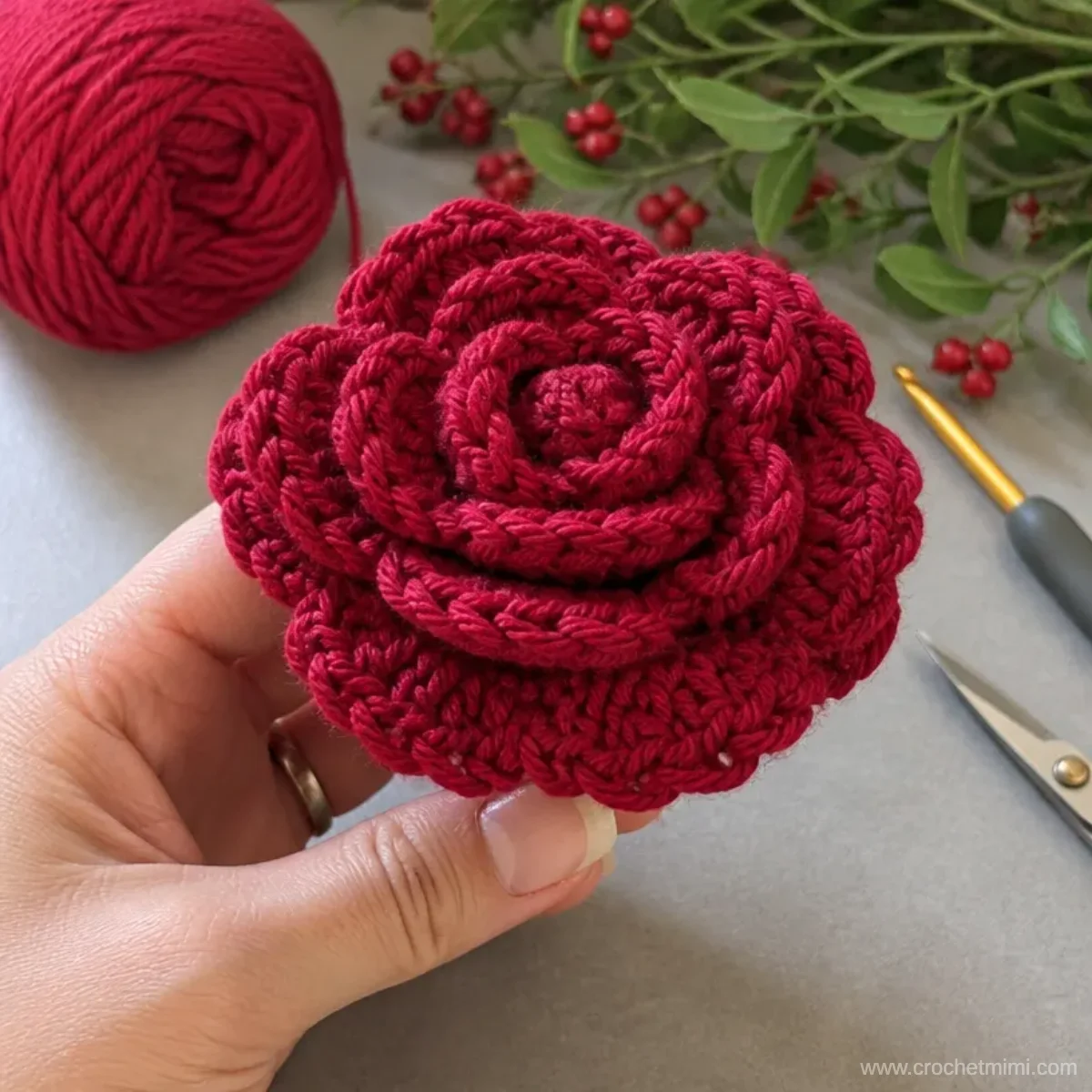
- Quick floral impact: A single red rose adds color and texture to a small display or handmade gift.
- Useful stitch practice: The pattern uses a magic ring, chain stitches, double crochet, slip stitching, and increases.
- Easy to customize: Red creates a classic rose appearance, while optional color changes can suit different seasons or occasions.
- Long-lasting decoration: Unlike fresh flowers, a crocheted rose can be displayed repeatedly with minimal care.
- Gift-friendly design: One flower or a small group can become a thoughtful handmade accent.
The petal shaping also makes this project useful for learning how crochet fabric can be manipulated into a three-dimensional form.
Crochet Mimi Tip: Keep the center firm when tightening the magic ring, but avoid pulling so hard that the stitches become difficult to work into.
Pattern Overview
This pattern makes one crocheted red rose. The construction begins with a magic ring containing 11 double crochets. After the ring is closed and joined, the next section begins with a chain 2 and a double crochet in the same stitch. Additional double crochets and increases create the petal shape. The flower is finished by weaving in the ends and manually shaping the petals.
The approved instructions do not specify a separate stem, leaf, wire, or bouquet assembly. The finished component is the crocheted flower itself, which can be displayed individually or arranged with other handmade flowers.
Useful Abbreviations
- ch: chain
- dc: double crochet
- sl st: slip stitch
These abbreviations use standard US crochet terminology.
Materials You’ll Need
- Crochet hook: Use the hook required for your chosen red yarn.
- Red yarn: This forms the complete flower.
- Scissors: For cutting the yarn after finishing.
- Yarn needle: For weaving in the yarn ends.
Keep the yarn tail long enough to secure neatly without pulling the flower out of shape.
Step-by-Step Crochet Instructions
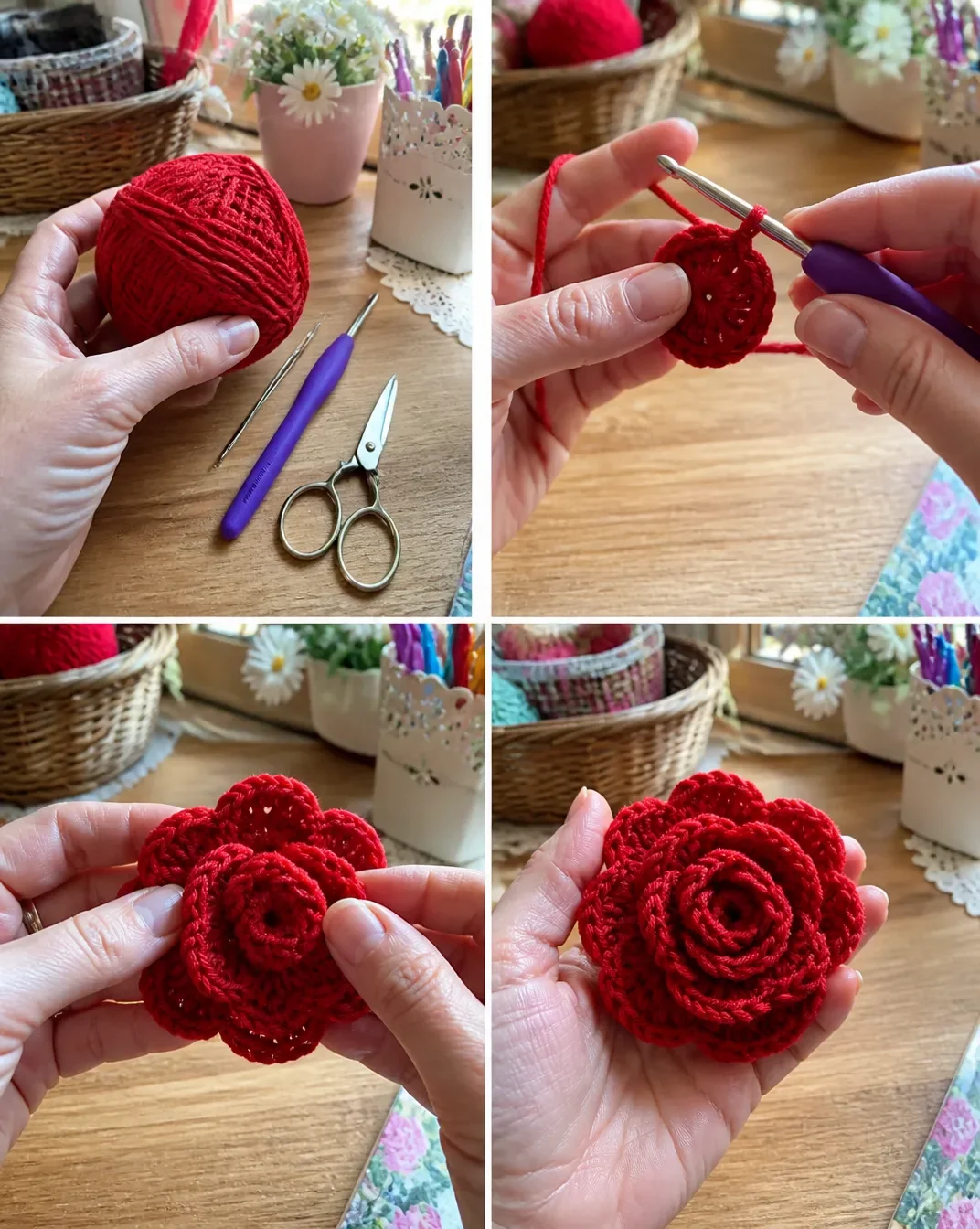
Follow the approved instructions in order. The wording below preserves the complete construction sequence.
Flower Center
- Start by making a magic ring.
- Chain 3, and then make 11 double crochets into the ring.
- Pull the ring tight and slip stitch to the top of the first double crochet.
The chain 3 begins the round, while the 11 double crochets form the central base of the flower. When closing the ring, pull it firmly enough to remove the opening while keeping the stitches comfortable to work with.
Petal Formation
- Chain 2, and double crochet in the same stitch.
- Continue to add double crochets in the next stitches, increasing to create petals.
The increases provide the extra fabric needed for the flower to expand and form petals. Work carefully into the next stitches so the petal section remains even. As the fabric grows, the piece may begin to curve naturally.
Finishing the Rose
- Finish off and weave in the ends.
- Shape the flower by manipulating the petals.
To shape the flower, gently curve and overlap the petal sections until the center resembles a rose. Avoid pulling the stitches aggressively; gradual shaping helps preserve the crocheted texture.
Creative Ways to Use Your Project
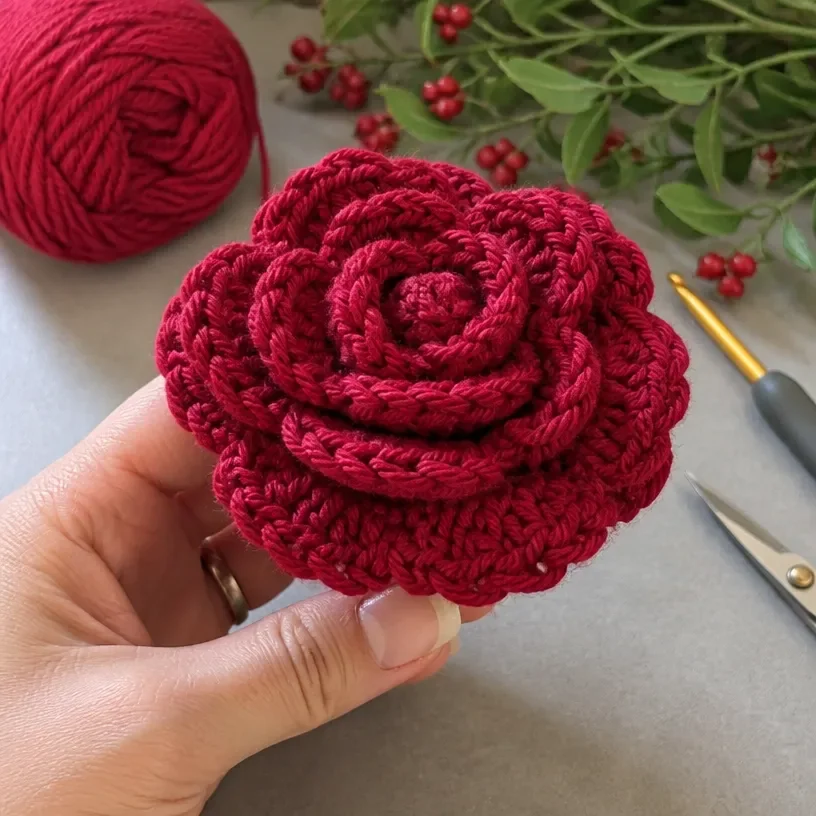
- Single-flower display: Place one rose in a narrow bud vase, small jar, or decorative bottle for a simple accent.
- Red rose arrangement: Crochet several roses and group them in a vase for a bold centerpiece.
- Handmade gift topper: Attach a finished rose to wrapped gifts, baskets, or a reusable gift bag.
- Romantic decoration: Use the flowers for Valentine’s Day, anniversaries, bridal-inspired displays, or date-night table settings.
- Seasonal centerpiece: Combine red roses with neutral décor for winter displays or with brighter colors for spring and summer.
- Mixed crochet bouquet: Pair the roses with other crocheted flowers, such as daisies, for added variety; a crochet daisy bouquet can provide a cheerful contrast to the deeper red petals.
For an arrangement, vary the flower heights or angle the petals in slightly different directions so the bouquet looks naturally full.
Caring for Your Crochet Project
Dust the rose gently with a soft cloth, clean makeup brush, or a low-air setting held at a safe distance. Take care around the petal edges, where fibers may catch or loosen if brushed too forcefully.
For small marks, use careful spot cleaning rather than soaking the flower. Apply only a small amount of suitable cleaning solution to a cloth, test it on an inconspicuous area, and avoid saturating the yarn. Follow the yarn manufacturer’s care instructions when they are available.
Store the rose in a clean, dry container away from direct sunlight, excessive heat, and moisture. If the petals become flattened, reshape them gently by hand and allow the flower to rest in its desired form.
Tips for Better Results
- Use steady tension: Consistent tension helps the center remain neat and makes the petal shaping more predictable.
- Count the foundation stitches: Confirm that you have 11 double crochets in the magic ring before closing it.
- Join carefully: When slip stitching to the top of the first double crochet, insert the hook into the correct stitch so the round closes cleanly.
- Watch the increase area: The second section creates fullness, so work the increases deliberately rather than adding them randomly.
- Avoid over-tightening: Tight stitches can make it difficult to insert the hook into the next stitch and can produce stiff petals.
- Shape after finishing: Weave in the ends before manipulating the petals so the flower stays secure during shaping.
- Layer the petals gently: Overlap or curve the petals gradually to create a rose-like form without distorting the center.
If making multiple flowers, try to maintain similar tension from one rose to the next so the arrangement looks cohesive.
Color and Styling Variations
The approved pattern uses red yarn, but color changes are an optional styling choice and do not change the original instructions.
- Deep romantic palette: Try burgundy, wine, or dark red for a dramatic arrangement.
- Soft floral palette: Use blush, pink, or coral for a lighter look.
- Classic neutral display: White, cream, or ivory can create a bridal-inspired flower.
- Autumn arrangement: Combine rust, deep red, and warm golden shades.
- Mixed bouquet: Pair red roses with crocheted flowers in cream, pink, or yellow.
- Monochromatic décor: Use several shades of red to create depth while keeping the arrangement coordinated.
Changing the yarn type or crochet hook may affect the flower’s size, texture, stiffness, and yarn requirements. If you make a substitution, expect the finished rose to look different from one made with the original materials. The approved pattern itself remains unchanged.
For a more formal floral arrangement, ideas from a crochet bridal rose bouquet can help guide color coordination and presentation.
Frequently Asked Questions
Is this crochet rose pattern beginner-friendly?
The pattern uses a small number of basic techniques, including a magic ring, chain stitches, double crochet, slip stitching, finishing, and shaping. Beginners who are comfortable with these techniques can follow the sequence carefully.
How many flowers does the pattern make?
The instructions make one crocheted flower. To create a bouquet or fuller display, repeat the pattern for each additional rose.
Can I use a different yarn color?
Yes. Red yarn is specified for the approved pattern, but another color can be used as an optional variation. Different colors will change the visual style without changing the stitch sequence.
What does shaping the flower involve?
Shaping means gently manipulating the completed petals by curving, overlapping, or arranging them until the flower resembles a rose. This is done after finishing and weaving in the ends.
Can I change the crochet hook?
A different hook can change the size, density, and texture of the flower. For the most consistent result, use the hook suited to your selected yarn and maintain even tension.
Does the pattern include a stem or leaves?
No stem or leaf instructions are included in the approved pattern. The supplied instructions create the flower component only, so any additional bouquet structure would be an optional project addition.
How should I keep the petals in shape?
Handle the petals gently and store the flower where it will not be crushed. If the petals flatten, reshape them by hand and let the rose rest in a dry position.
Can I make a bouquet from these roses?
Yes. Make multiple individual roses and arrange them together in a vase or other display container. You can also combine them with other handmade flowers for contrast.
Conclusion
This Easy Red Roses Crochet Pattern is a simple way to create a lasting floral accent from red yarn. Once the center and petal shaping are complete, the finished rose can be displayed alone, grouped into a bouquet, or given as a handmade gift. For more rose inspiration, explore this collection of free crochet rose patterns and these illustrated crocheted rose instructions.