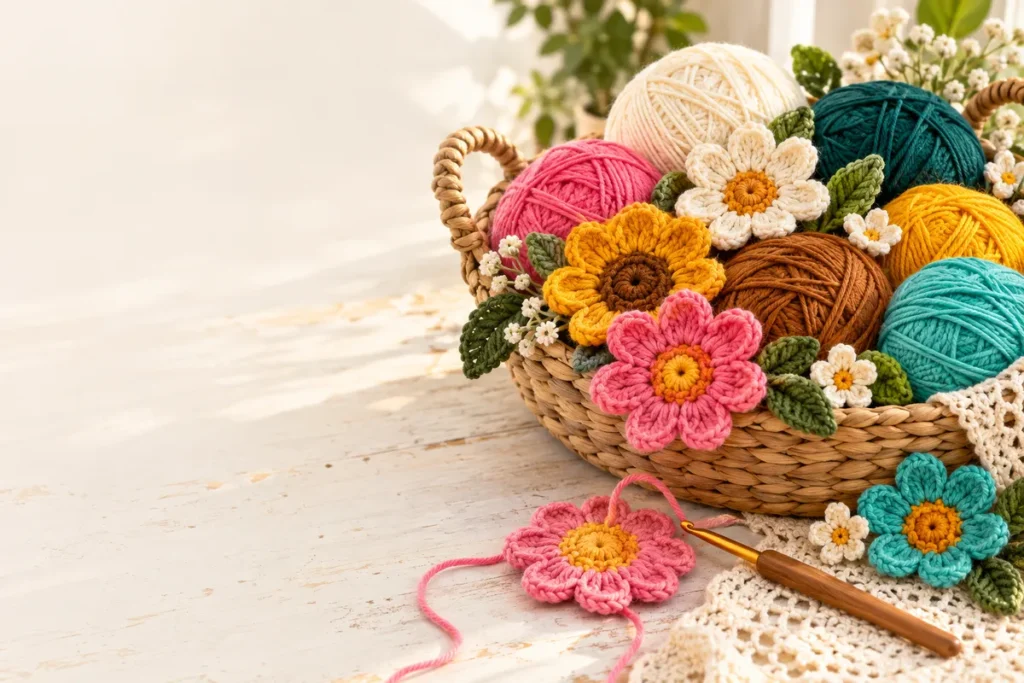

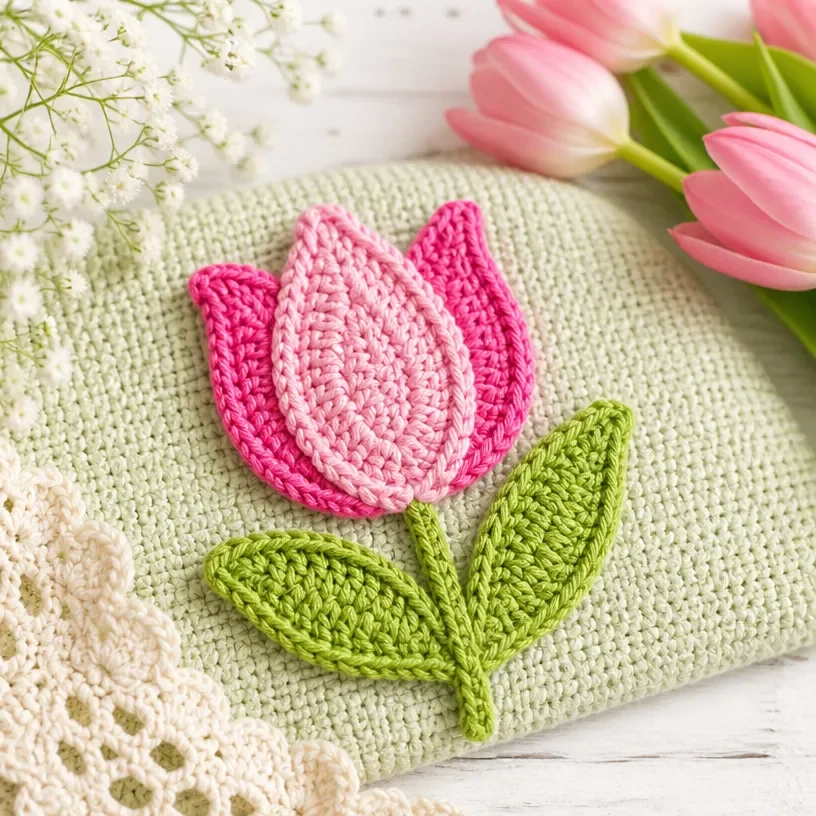
Crochet Tulip Applique Tutorial
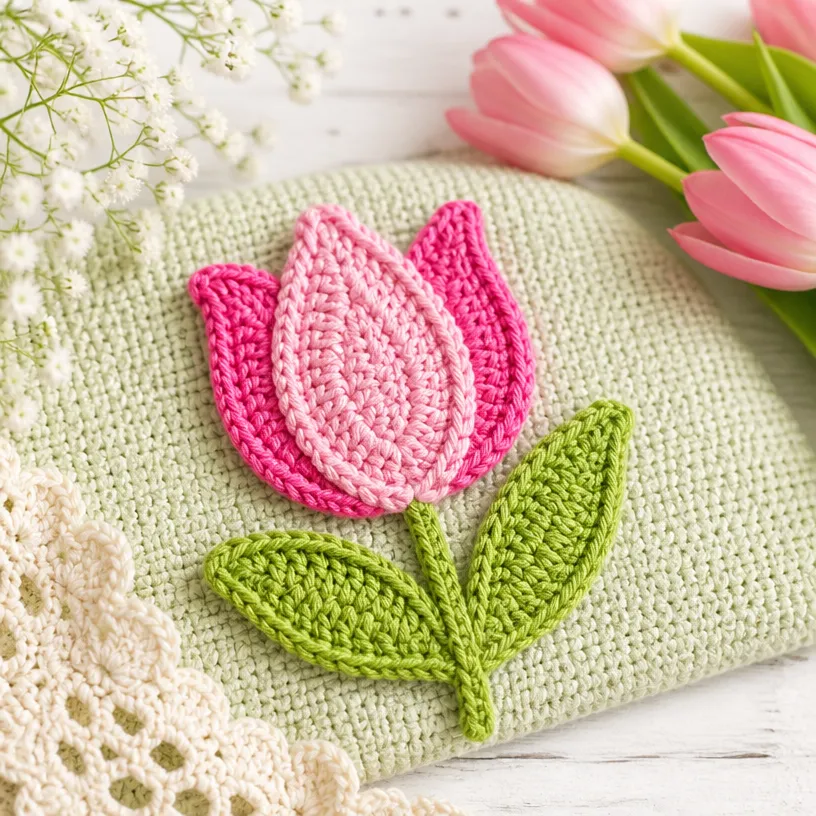
This Crochet Tulip Applique Tutorial presents a flower-focused project for adding a recognizable tulip shape to handmade decorations, gifts, and seasonal displays. Because the supplied project information does not include materials or crochet instructions, this article stays focused on what can be accurately established: the project is a tulip applique rather than a three-dimensional bouquet, and its primary role is decorative.
For readers interested in extending a tulip motif into a larger floral arrangement, the crochet tulip bouquet offers a related bouquet-centered direction. Here, however, the applique format remains the central design feature.
Understanding the Tulip Applique
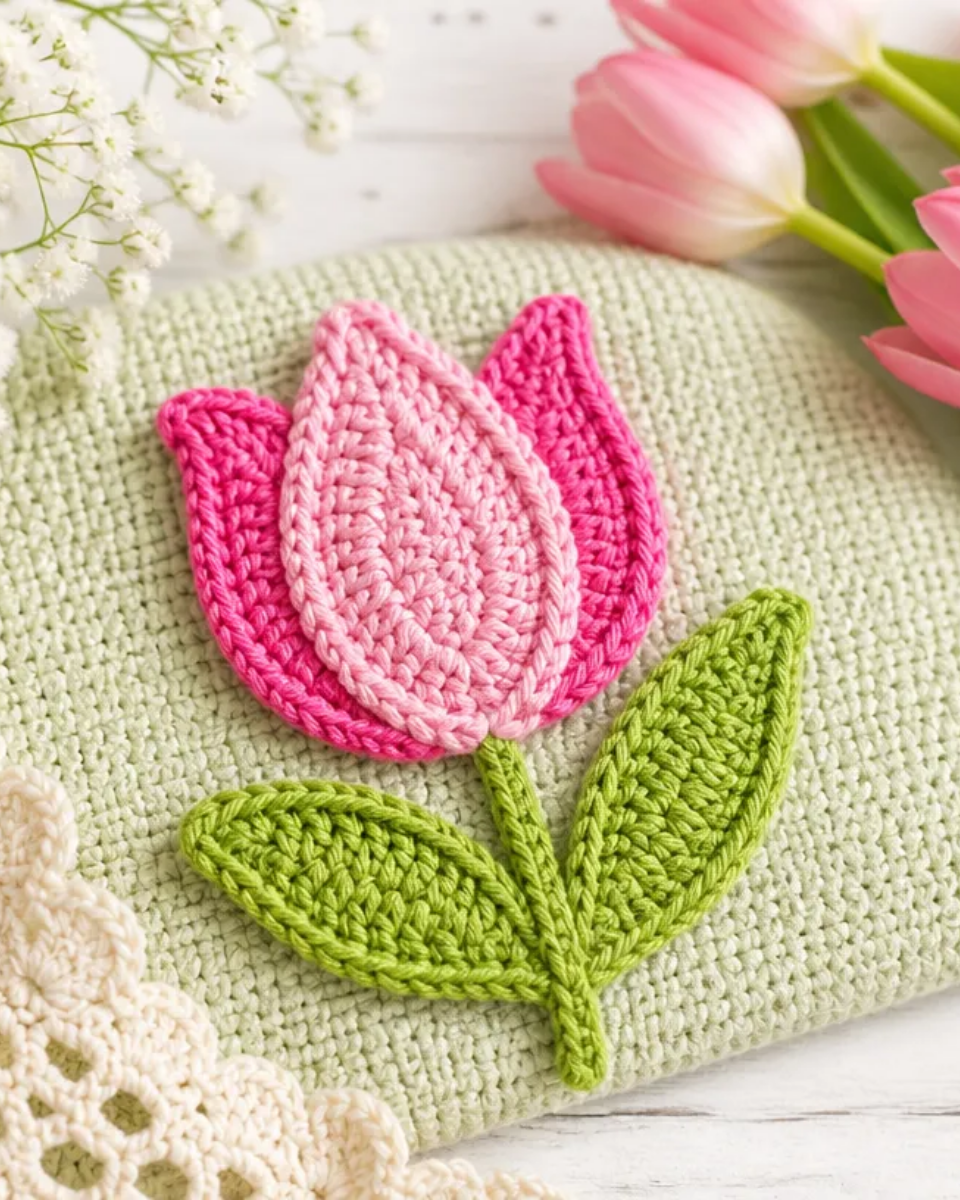
A crochet applique is a decorative crocheted motif intended to be placed on or alongside another finished item. In this case, the motif represents a tulip. The flat applique format distinguishes it from a stuffed flower, a standing stem, or a gathered bouquet.
That distinction matters when planning how to use the finished piece. A tulip applique can serve as a floral accent on a handmade project, contribute to a spring-themed arrangement of motifs, or become part of a broader decorative composition. The supplied information does not specify a joining method, finished size, yarn type, hook size, stitch pattern, or intended base item, so those details should not be assumed.
The defining visual characteristic is the tulip shape itself. Its usefulness comes from that clear flower identity: even as a single flat motif, it can communicate a seasonal floral theme without requiring a complete bouquet construction.
Materials
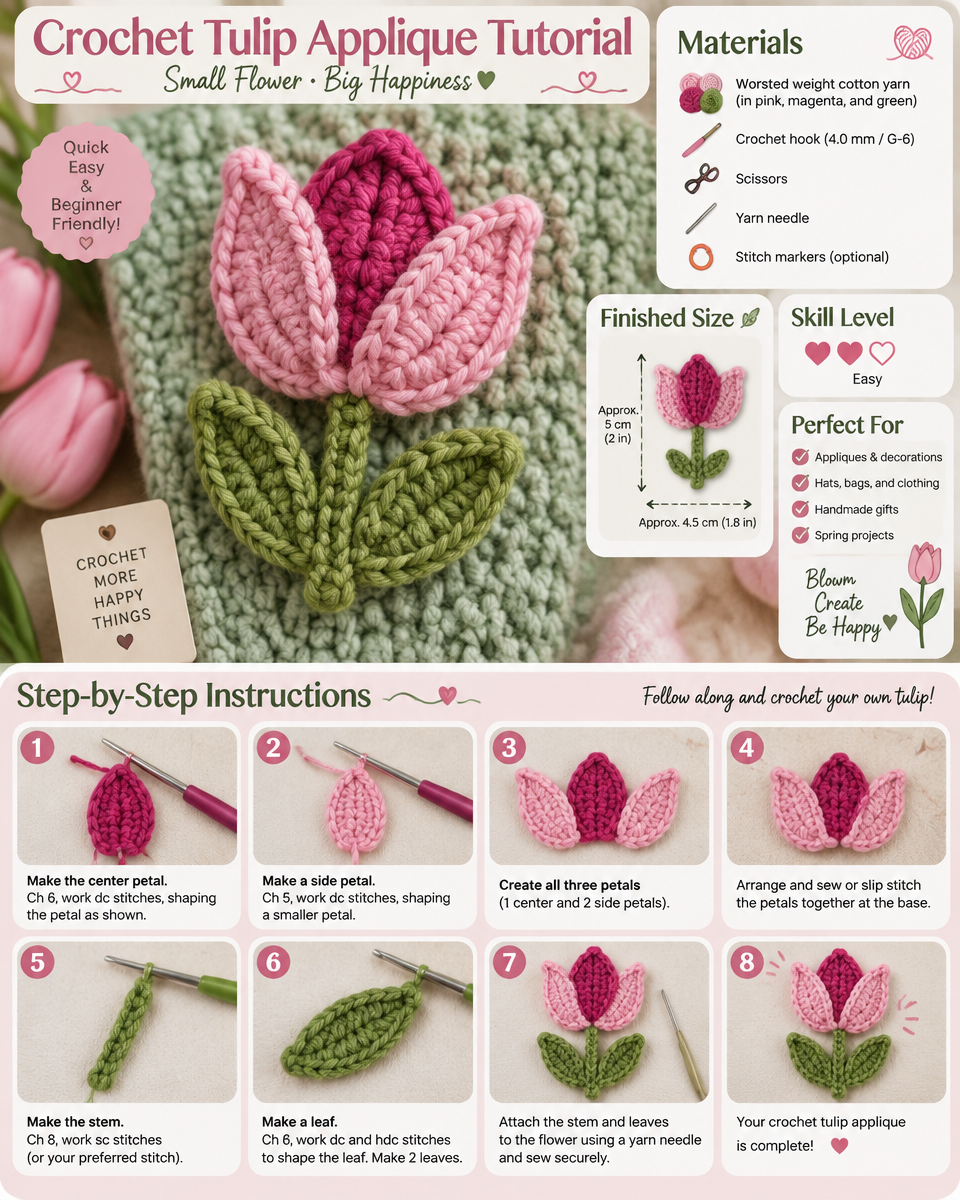
No materials were supplied for this project. Do not add yarn, a crochet hook, needle, scissors, stuffing, wire, glue, or other supplies unless they are provided in a complete project specification.
Before You Start
Since no technical instructions accompany the project information, there is no verified crochet sequence to reproduce here. In particular, the source does not establish:
- yarn fibre, colour, or weight
- crochet hook size
- stitch names
- stitch counts
- row or round counts
- measurements
- shaping instructions
- fastening-off instructions
- assembly or attachment method
These omissions are important because changing any of those details would mean inventing a pattern rather than documenting the supplied project. The correct next step is to work from the authoritative instructions when they become available.
A tulip applique can be considered alongside other flat crochet flower motifs when planning a decorative collection. For example, a crochet daisy flower has a different floral identity, while a tulip is generally recognized by its compact, cup-like blossom shape. That comparison is useful for design planning, but it does not provide substitute instructions for this project.
How to Use the Project Information
The available project information supports identification and editorial framing, but not technical reproduction. A reproducible tutorial requires a complete set of directions that explains how the tulip is formed from its first stitch through its finishing details.
When preparing to work on the project, separate confirmed facts from decisions that have not been supplied:
- Confirm that the intended motif is a tulip applique.
- Locate the complete materials list before beginning.
- Locate the complete crochet instructions before selecting tools or yarn.
- Follow the supplied construction order without substituting unverified stitch techniques.
- Use only the stated finishing and attachment method.
This approach prevents a common pattern-editing error: filling gaps with techniques that seem typical for crochet flowers but are not actually part of the documented design.
Planning a Floral Motif Collection
Although no colour plan or variation is supplied for this applique, the tulip motif can be considered as one element in a wider flower-first project. A collection might include several individual floral motifs, but each additional flower would need its own documented instructions rather than being inferred from this project.
For broader arrangement planning, the crochet bouquet color planning guide may help organize a floral palette. It should be treated as supporting design context only; it does not establish colours, materials, or construction details for this tulip applique.
A similar distinction applies when comparing flower silhouettes. A five-petal crochet flower may create a more open floral impression, whereas a tulip applique is identified by its own characteristic flower form. Choosing between motifs is therefore a visual decision, not a reason to alter the unavailable tulip instructions.
Display and Presentation Considerations
The source does not specify how the applique should be displayed or attached, so no particular mounting method can be presented as part of the tutorial. Its flat format does, however, make it conceptually suited to decorative use where a floral motif is placed against another surface or incorporated into a larger arrangement.
If combining motifs, preserve the tulip as the visual subject rather than treating it as interchangeable with every other flower. A daisy bouquet, for instance, creates a different overall impression from a tulip-centered composition; the crochet daisy bouquet provides a useful example of how flower choice changes the character of a floral display.
Any final placement, colour arrangement, border, or attachment should be based on the complete project instructions or on a separate, clearly documented design decision. None of those technical or finishing details can be supplied from the current project record.
Practical Notes
The most important practical note is to avoid beginning construction without the missing source details. A hook size, yarn type, stitch sequence, and finishing method all affect the resulting applique, so guessing would undermine the accuracy of the tutorial.
Keep the following limitations in view:
- The project is identified as a tulip applique.
- No materials list is available.
- No crochet instructions are available.
- No dimensions or stitch information are available.
- No assembly or attachment method is available.
- No supported variations are specified.
These are not optional pattern choices; they are information boundaries. Once a complete pattern is supplied, the tutorial can be expanded into a sequential construction guide without relying on assumptions.
Frequently Asked Questions
What is this project?
It is a crochet tulip applique: a flat decorative motif representing a tulip.
Does the supplied information include a materials list?
No. The project record contains no materials information, so specific yarn, hook, or finishing supplies cannot be named accurately.
Are crochet instructions included?
No. There is no stitch sequence, construction order, or finishing instruction in the supplied project information.
Can the applique be turned into a bouquet?
The supplied information does not provide bouquet construction or assembly instructions. A bouquet would therefore be a separate project rather than a documented step in this tutorial.
Can I change the colours or size?
No supported colour or resizing variations are provided. Any such change would require additional project instructions.
How should the applique be attached?
The source does not specify an attachment method. Use only the method provided with a complete version of the pattern.
Conclusion
This Crochet Tulip Applique Tutorial accurately identifies the project as a flat tulip motif while keeping its undocumented technical details open rather than guessing them. For related tulip inspiration, see the Crochet Tulip Applique resource and the egg and tulip applique pattern. With a complete materials list and stitch instructions, the project can be developed into a precise, reproducible crochet tutorial.