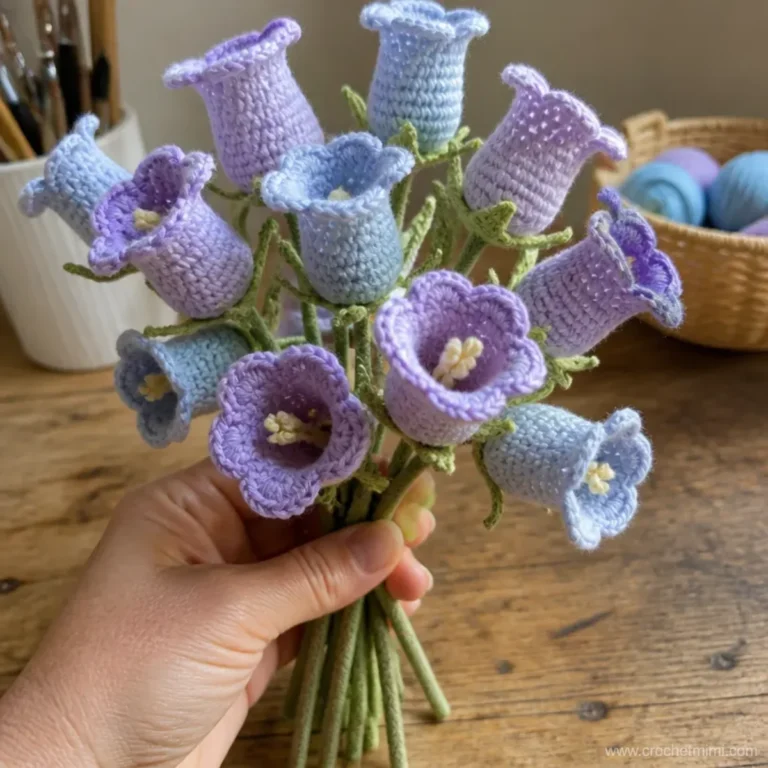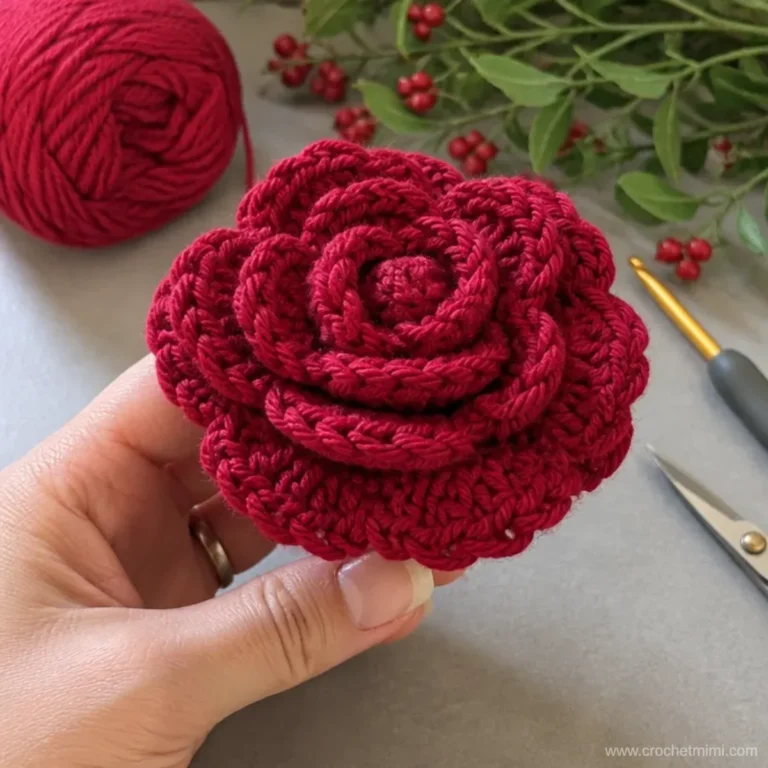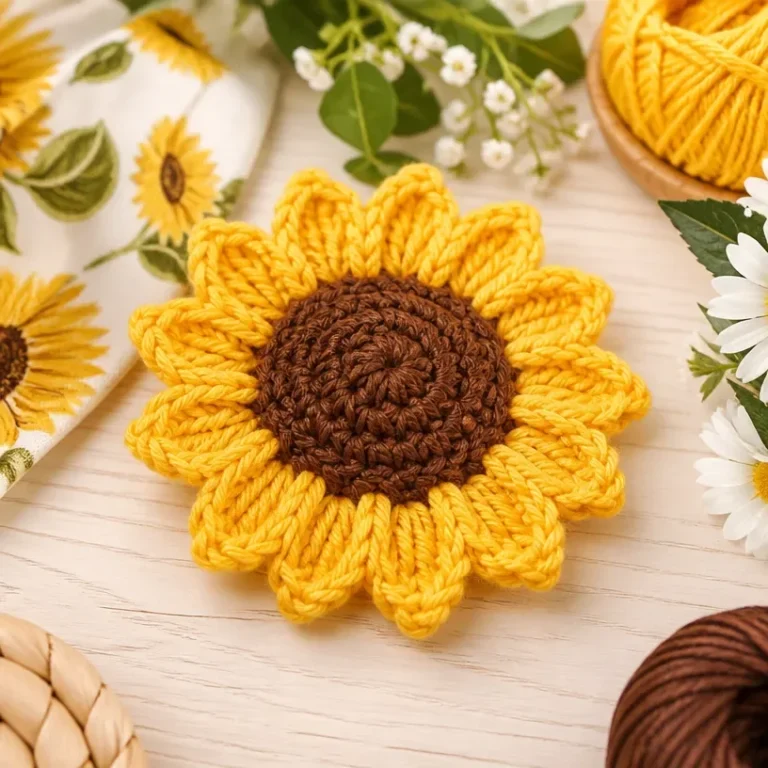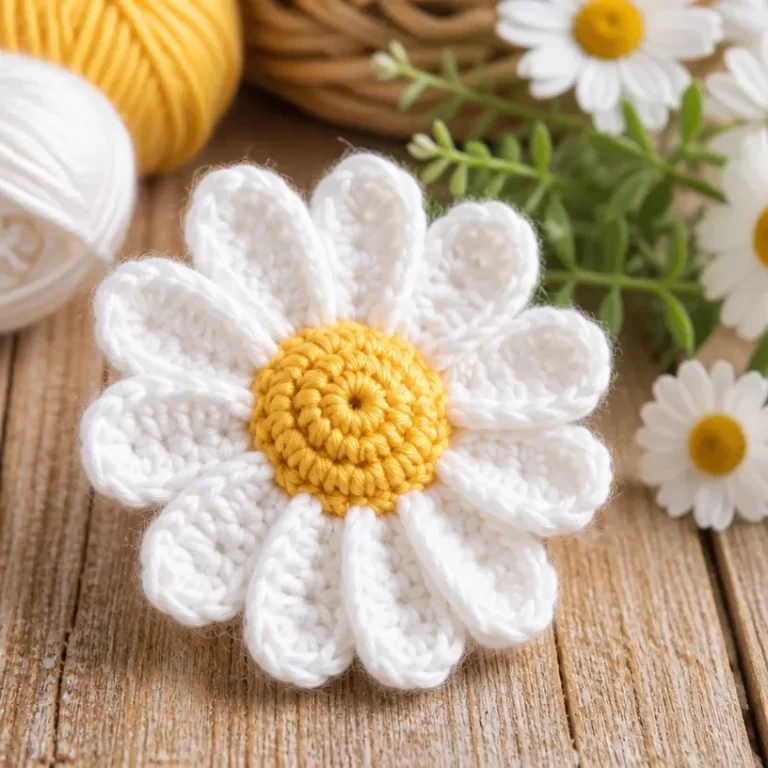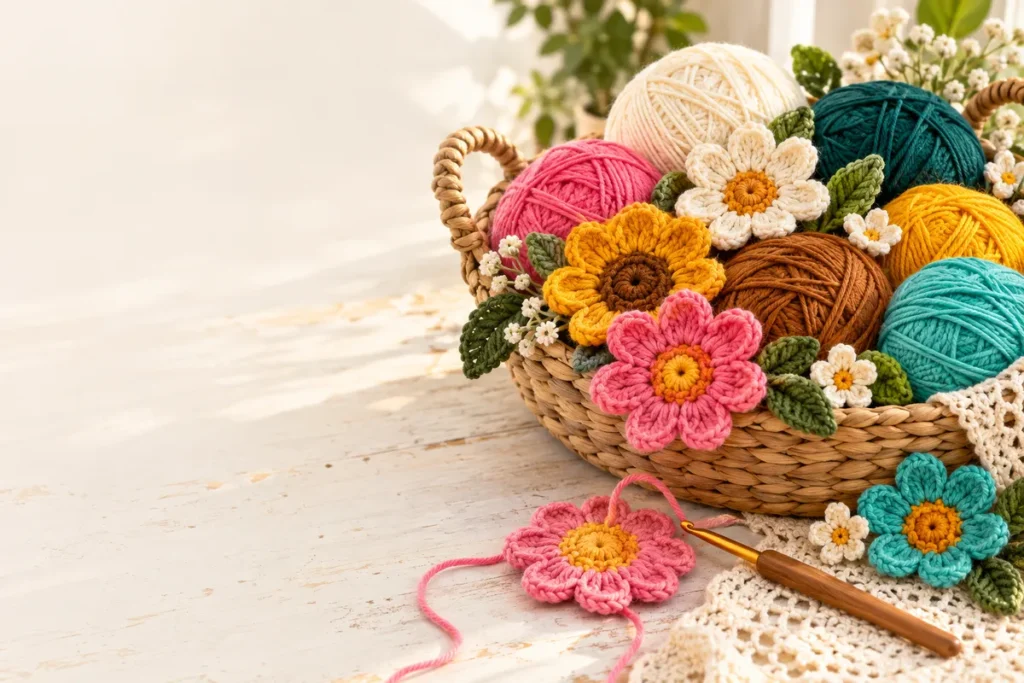

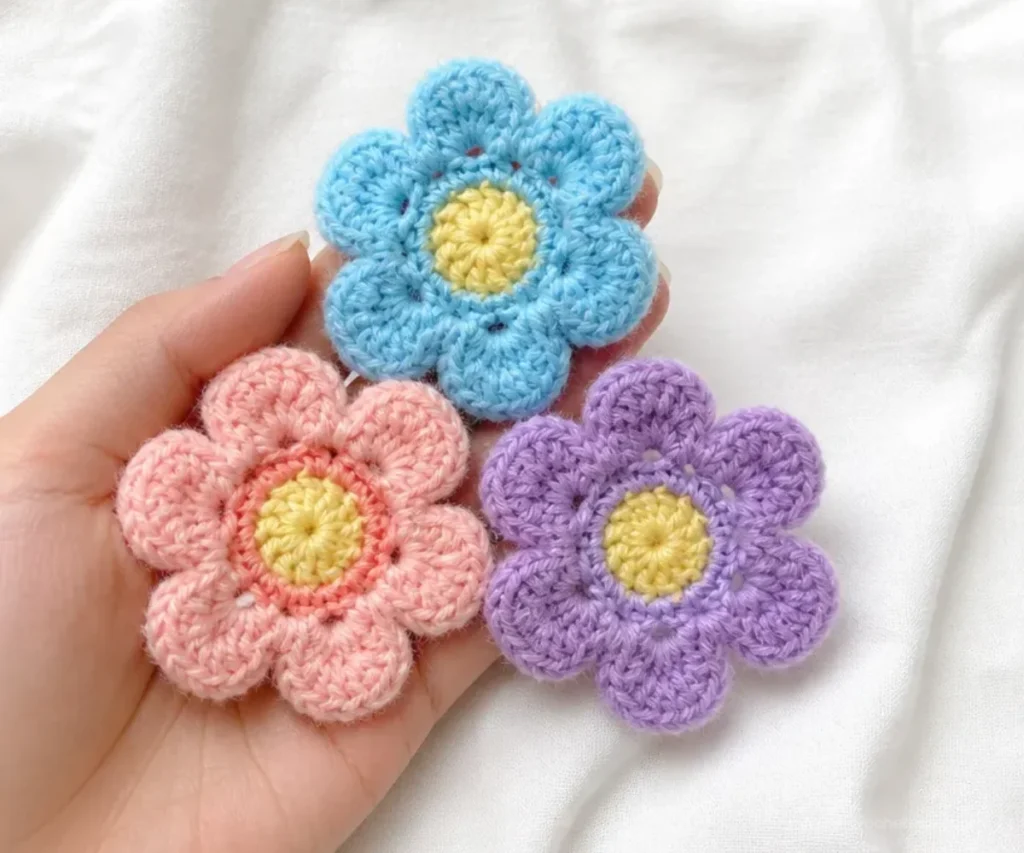
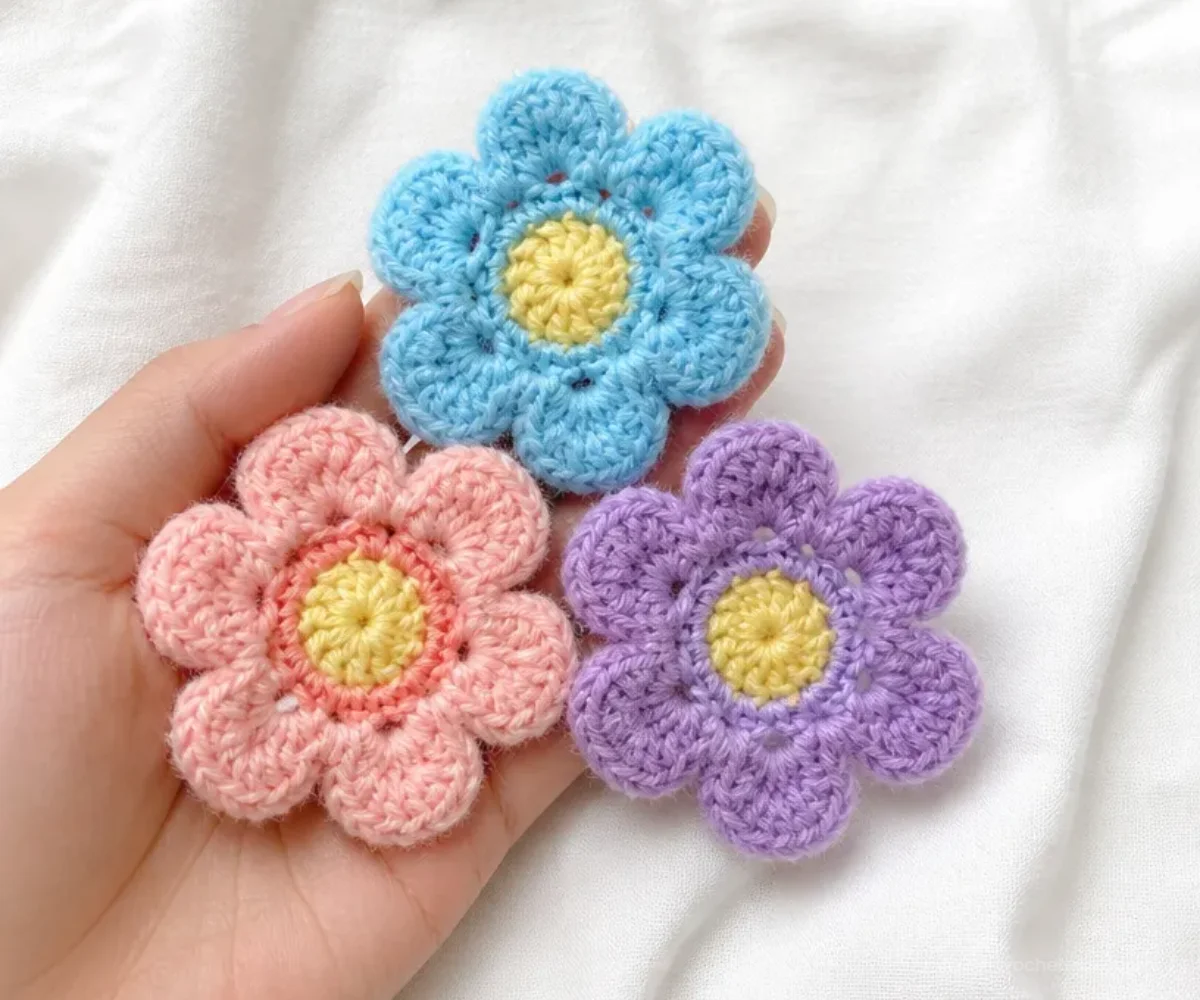
This Crochet Two-Color Small Flowers Pattern creates three cheerful six-petal flowers with contrasting centers and petals. The Lemony center is paired with Caribbean, Peachy, and Lavender for a bright, coordinated set that works beautifully in a small vase, gift wrapping, seasonal décor, or a handmade bouquet. The project uses simple rounds and basic stitches, making it a pleasant way to practice color changes and petal shaping. For another floral display idea, compare the arrangement style in this crochet daffodil bouquet pattern.
Why You’ll Love This Crochet Project
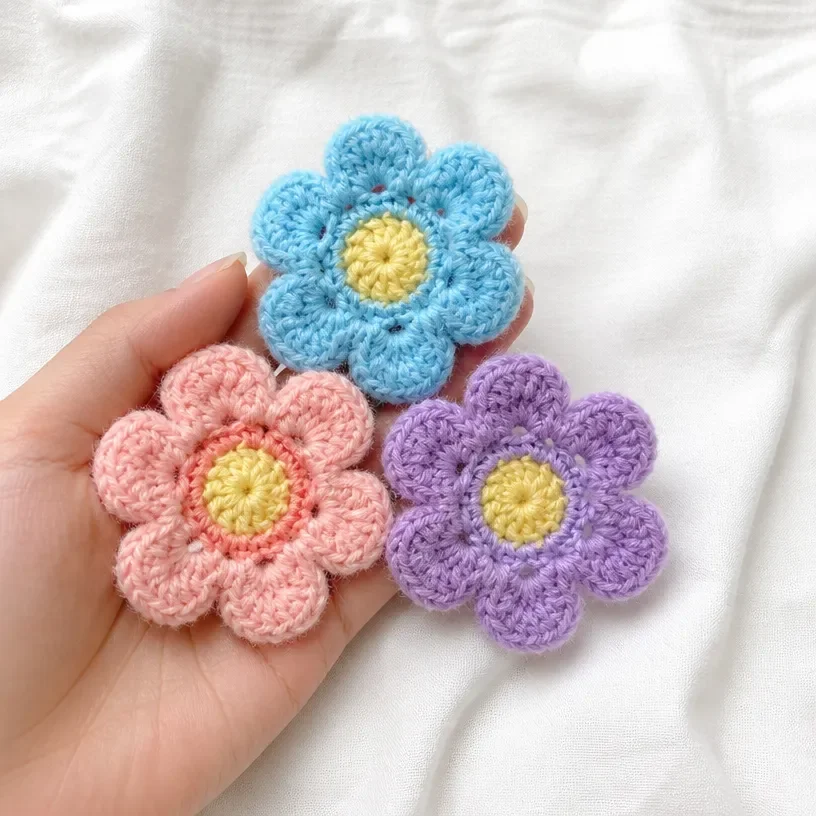
- Three coordinated flowers: You will make one flower in each of three color combinations: A and B, A and C, and A and D.
- Clear petal shaping: The final round turns each chain space into a defined six-petal flower using double crochet and treble crochet stitches.
- Useful color practice: The first round establishes the center color, while the second and third rounds introduce the contrasting color.
- Flexible décor: Finished flowers can be displayed together, placed individually in small containers, or used as decorative accents on gifts and craft projects.
- Approachable construction: Each flower is worked in three rounds, with no separate leaves, stems, stuffing, or assembly pieces required.
Crochet Mimi Tip: Keep the three color pairings together as you work so you can easily identify which contrasting color belongs with each center. You may also find Chic Crochet Aviator Hat Pattern useful.
Before You Start Crocheting
The project includes three small crochet flowers:
- One flower with Color A and Color B
- One flower with Color A and Color C
- One flower with Color A and Color D
Each flower begins with a four-chain ring. Round 1 creates seven chain-3 spaces in Color A. After fastening off, the second color is joined through the spaces for Round 2, which creates six chain-2 spaces. Round 3 works one petal in each chain-2 space, producing six petals.
The pattern uses US crochet terminology. The most important placement detail comes in Round 2: hold the flower with the right side facing and push each chain-3 space toward the center as you work. The hook is inserted through the wrong side of the chain-3 spaces and then into the center of the ring.
Useful abbreviations include:
- ch: chain
- sc: single crochet
- sl st: slip stitch
- dc: double crochet
- tr: treble crochet
- sp: space
If you enjoy adding other handmade flowers to a display, these beginner-friendly crochet red roses can provide a contrasting shape and color story.
Materials You’ll Need
- RED HEART® Scrubby Cotton™: 1 ball each
- 7760 Lemony Color A
- 7501 Caribbean Color B
- 7230 Peachy Color C
- 7503 Lavender Color D
- Susan Bates® Crochet Hook: 6 mm [US J-10]
- Yarn needle
Color A is used for the center round of all three flowers. Each flower then uses one different contrast color for Rounds 2 and 3.
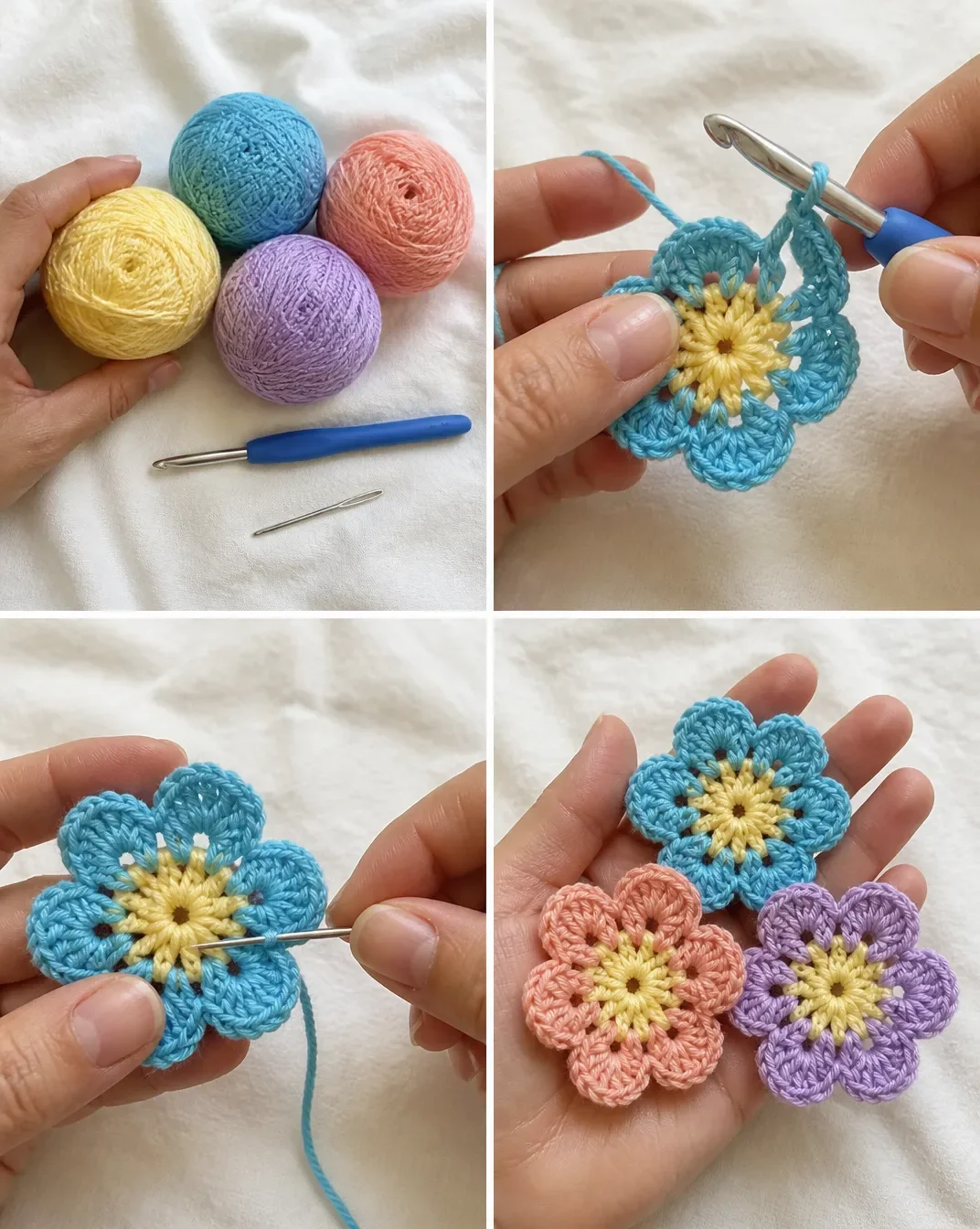
Step-by-Step Crochet Instructions
Flower Instructions
Make 3 flowers total: one each with A and B, A and C, and A and D.
Begin With Color A
For each flower, use Color A to begin.
- Ch 4; join with slip st to form a ring.
Round 1 Right Side
- Ch 4, which counts as the first sc, ch 3.
- *Sc in ring, ch 3; repeat from * 6 times.
- Join with slip st in first ch of beginning ch 7 ch-3 sps.
- Fasten off.
At the end of Round 1, there are seven chain-3 spaces around the center ring.
Note for Round 2
Hold the piece with the right side facing and push each ch-3 toward the center as Round 2 is worked.
Round 2
Use the appropriate second color for the flower: Color B for the first flower, Color C for the second, or Color D for the third.
- Inserting hook through wrong side of ch-3 spaces and then in center of ring, join 2nd color with slip st in any ch-3 space.
- Ch 3, which counts as the first sc, ch 2.
- Sc in next ch-3 space, ch 2; repeat from * 5 times.
- Join with slip st in base of beginning ch 6 ch-2 sps.
Round 2 creates six chain-2 spaces. Keep the chain-3 spaces pushed toward the center so the next round can form the petals cleanly.
Round 3 Six Petals
- Slip st in first ch-2 space.
- (Ch 3, dc, 2 tr, dc, ch 3, slip st) in same space petal made.
- (Slip st, ch 3, dc, 2 tr, dc, ch 3, sl st) in each ch-2 space around.
- Join in beginning slip st 6 petals.
- Fasten off.
Repeat the complete flower instructions for all three color combinations:
- Color A with Color B
- Color A with Color C
- Color A with Color D
Finishing
Weave in ends.
To keep the small flowers neat, thread the yarn needle through nearby stitches on the wrong side, secure the yarn discreetly, and trim only after the end is firmly woven in.
Creative Ways to Use Your Project
- Small vase arrangement: Group all three flowers in a narrow bud vase or decorative container for a bright tabletop accent.
- Gift decoration: Tie one finished flower to ribbon or yarn around a wrapped present.
- Spring display: Arrange the flowers beside other handmade botanical pieces for a colorful seasonal grouping.
- Coordinated centerpiece: Place the flowers in the center of a table with complementary napkins, fabric, or painted décor.
- Mixed crochet bouquet: Combine these compact six-petal flowers with larger blooms, such as the flowers in a blooming bouquet crochet blanket design, for varied floral inspiration.
- Craft embellishment: Sew or attach a flower to a finished crochet accessory, basket, pouch, or decorative textile, making sure the attachment method suits the item.
Caring for Your Crochet Project
These flowers are small and shaped through crochet stitches, so they are best handled gently.
- Dust them with a soft, dry cloth or use a gentle stream of air rather than rubbing the petals.
- For a small spot, dab carefully with a barely damp cloth and allow the flower to air-dry completely.
- Avoid soaking the flowers unless the yarn manufacturer’s care instructions specifically support that treatment.
- Keep them away from excessive heat, which can affect the yarn’s texture and cause the petals to lose their shape.
- Store them in a clean, dry container when they are not on display.
- Avoid compressing the petals under heavy items. If they flatten slightly, gently separate and reshape the six petals by hand.
- Keep the flowers away from prolonged direct sunlight to help preserve the brightness of the color combination.
Because the approved pattern does not include stems or wire, no structural supports need special handling.
Tips for Better Results
- Track the color pairings. Prepare A with B, A with C, and A with D before beginning so each flower receives the intended contrast color.
- Count the Round 1 spaces. Round 1 must finish with seven ch-3 spaces. Counting them before fastening off makes the next round easier.
- Pay attention to hook placement. In Round 2, insert the hook through the wrong side of the ch-3 spaces and then into the center of the ring as written.
- Push the chain-3 spaces inward. This positioning note is important because it helps the second color sit correctly around the center.
- Count the Round 2 spaces. The round should finish with six ch-2 spaces, one for each petal.
- Work each petal in the same space. For every petal, the ch 3, dc, 2 tr, dc, ch 3, and slip stitch are all worked in one ch-2 space.
- Watch the treble crochet stitches. The two tr stitches give the petals their height. Keep their yarn overs and pull-throughs consistent so the six petals look alike.
- Join carefully. Use the specified slip-stitch joins at the end of each round to keep the flower compact.
- Fasten off after the stated rounds. Round 1 and Round 3 include fastening instructions; follow those instructions without adding an extra round.
- Finish ends on the wrong side. Weaving the ends securely helps the front remain smooth and keeps the center from looking bulky.
For a different small-scale crochet project that also rewards consistent round counting, this beginner-friendly mandala crochet doily pattern offers useful practice with circular motifs.
Color and Styling Variations
The approved pattern uses Lemony for every center and three different contrast colors for the petals. You can keep the construction exactly the same while changing the visual arrangement in these optional ways:
- Single-color set: Use one contrast color for all three flowers for a coordinated bouquet.
- Pastel palette: Pair a soft center with pale blue, peach, lavender, or other gentle shades while maintaining the same two-color structure.
- Bright seasonal palette: Choose vivid contrast colors for spring and summer décor.
- Monochromatic arrangement: Use several shades from the same color family to create a more subtle display.
- Alternating center colors: If you change Color A between flowers, each flower will have a different center-and-petal relationship while retaining the same pattern.
- Mixed handmade display: Combine these flowers with other crochet blooms, textured leaves, or a decorative vase.
These are optional styling choices, not changes to the approved instructions. If you substitute a different yarn or hook, the flowers may vary in size, texture, stiffness, and yarn usage. A different fiber can also change how sharply the petals hold their shape, so make a sample flower before planning a larger arrangement.
Frequently Asked Questions
Is this pattern suitable for a beginner?
It uses basic crochet construction and only three rounds per flower, making it approachable for a crocheter who is comfortable with chains, single crochet, slip stitches, double crochet, and treble crochet. The Round 2 hook placement and treble crochet stitches deserve careful attention.
How many flowers does the pattern make?
The instructions make three flowers total: one with Colors A and B, one with Colors A and C, and one with Colors A and D.
What color is used for every flower center?
Color A, RED HEART® Scrubby Cotton™ in 7760 Lemony, is used to begin every flower.
Which colors are used for the petals?
The second color is B, C, or D, depending on the flower. These are 7501 Caribbean, 7230 Peachy, and 7503 Lavender.
What hook size should I use?
Use a Susan Bates® Crochet Hook measuring 6 mm [US J-10].
How many petals does each flower have?
Each completed flower has six petals. Round 2 creates six ch-2 spaces, and Round 3 works one petal in each space.
Do I need to make stems?
No. The approved materials and instructions do not include stems, floral wire, or other supports. The flowers can be displayed flat, grouped in a container, or attached to another craft project using an appropriate method.
Can I change the colors?
Yes. Color changes are an optional styling choice. Keep the approved sequence in mind: Color A forms the first round, and a second color forms Rounds 2 and 3.
How should I keep the petals in shape?
Handle the flowers gently and separate the six petals by hand if they become compressed. Storing them without heavy items on top helps preserve their shape.
Can I use another yarn?
A different yarn may work, but it can change the flower’s size, texture, stiffness, and yarn requirements. A different hook size can also affect the finished appearance, so test a sample before making a coordinated set.
Conclusion
This Crochet Two-Color Small Flowers Pattern is a compact way to create three colorful six-petal blooms with simple, repeatable construction. Display the finished flowers together, use them as handmade accents, or customize the palette for a special occasion. For additional floral inspiration, browse this simple crochet flower tutorial and these small crochet flower pattern ideas.